


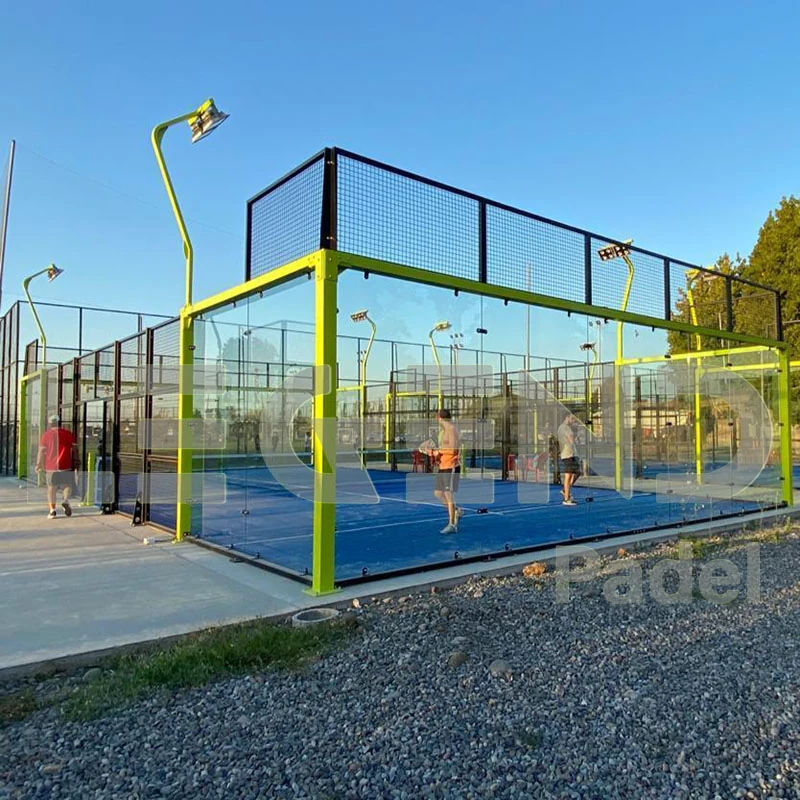
El món dels esports està canviant ràpidament. La Federació Internacional de Pàdel (FIP) ha publicat informes sobre l'esport’ Gran augment. El mercat està experimentant un impuls comercial com mai abans. A més, els nous fets de l'informe global de pàdel Playtomic mostren grans oportunitats per als propietaris de clubs. Posar diners en una cort de pàdel ofereix bons retorns. No obstant això, la formació esportiva requereix una reflexió acurada. Aquests són els 10 punts clau que cal saber abans de comprar la seva primera pista de pàdel. Això ajudarà a assegurar-se que obtingui beneficis duradors i mantenir les coses segures.
Entendre els requisits de lloc i espai
La planificació espacial precisa és la base de qualsevol club comercial d'èxit. Calcular mal el teu pla arquitectònic pot portar a greus colls d'ampolla operacionals.
#1. Dimensions oficials del partit vs. Pegada requerida real
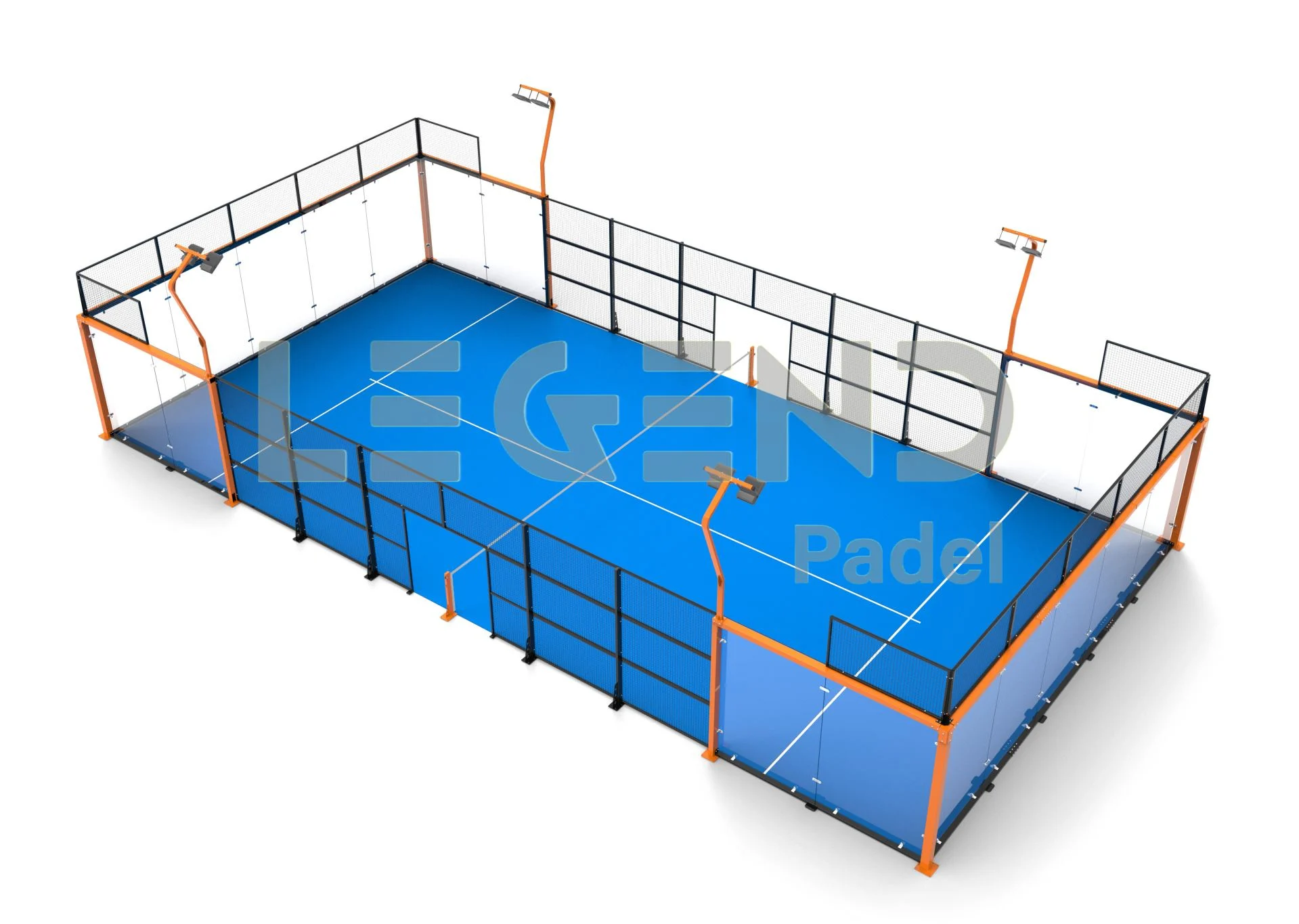
Mentre que les directrius oficials dicten una àrea de joc estàndard de 20 metres de longitud i 10 metres d'amplada, el càlcul de la seva pegada total de la instal·lació és on molts inversors fracassen. Ha d'assignar espai addicional per a zones de seguretat, camins de jugadors i seients d'espectadors. La implementació d'un pla de disseny personalitzat assegura que fins i tot en espais comercials estrets, el flux funcional romangui sense obstacles, evitant entorns aglomerats i insegurs per als seus membres.
# 2. Regles d'alçada crítica del sostre per a les corts de pàdel interior
Les instal·lacions interiors afronten el repte únic de les limitacions d'espai vertical. El joc avançat depèn en gran mesura dels tiros defensius del lob, el que vol dir que si el sostre és massa baix, l'experiència del partit professional es arruïna instantàniament. Es recomana un lliurament mínim sense barreres de 8 metres per acomodar torneigs professionals i satisfer jugadors d'alt nivell sense obstruccions estructurals.
Avaluació de materials judicials i característiques de seguretat
El maquinari de la seva instal·lació dicta la seva vida útil i la seguretat dels seus atletes. Els inversors moderns prioritzen materials d'avantguarda i resistents sobre infraestructures anticuades.
# 3. La necessitat de vidre resistent als impactes i esgrima anti-escalada
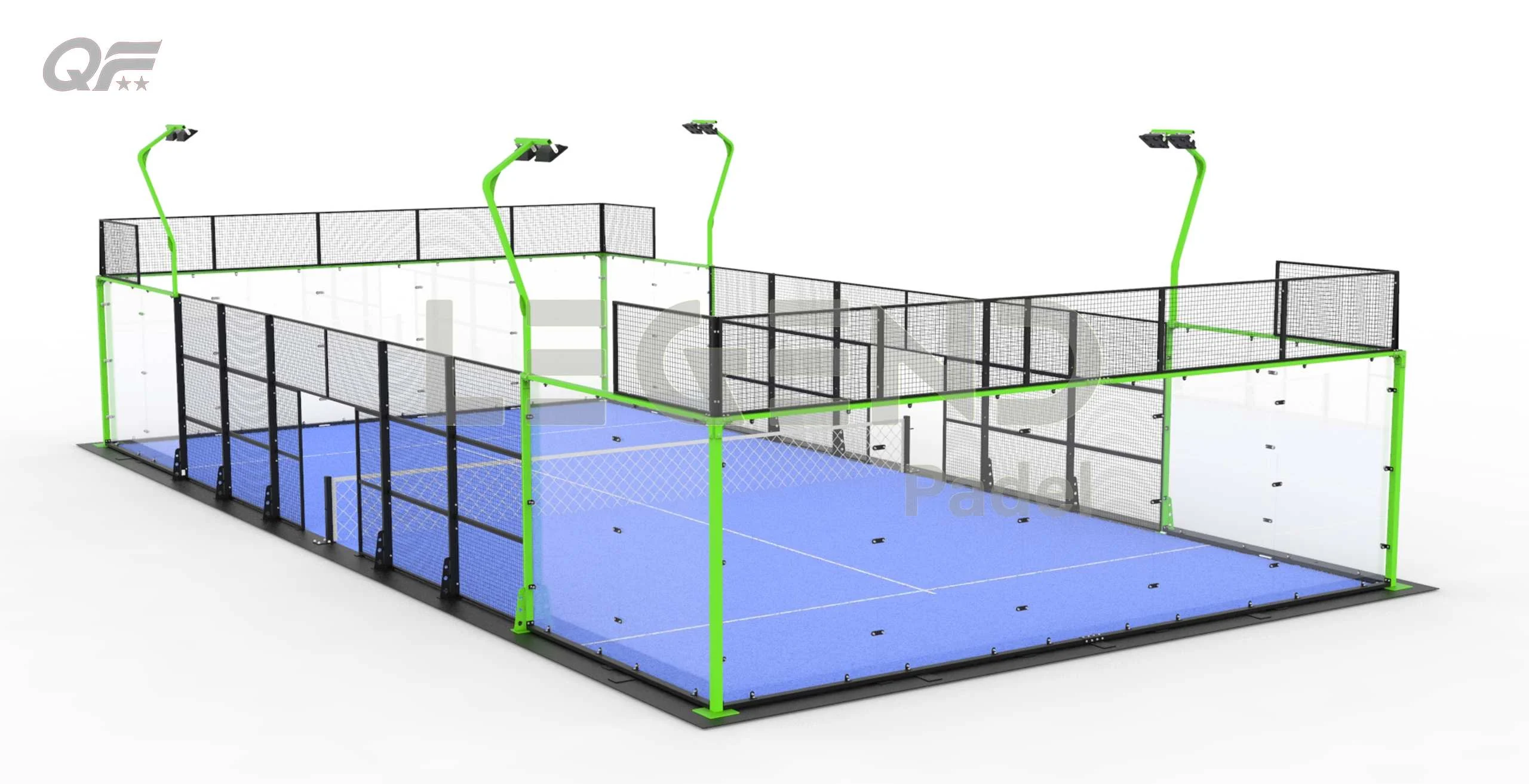
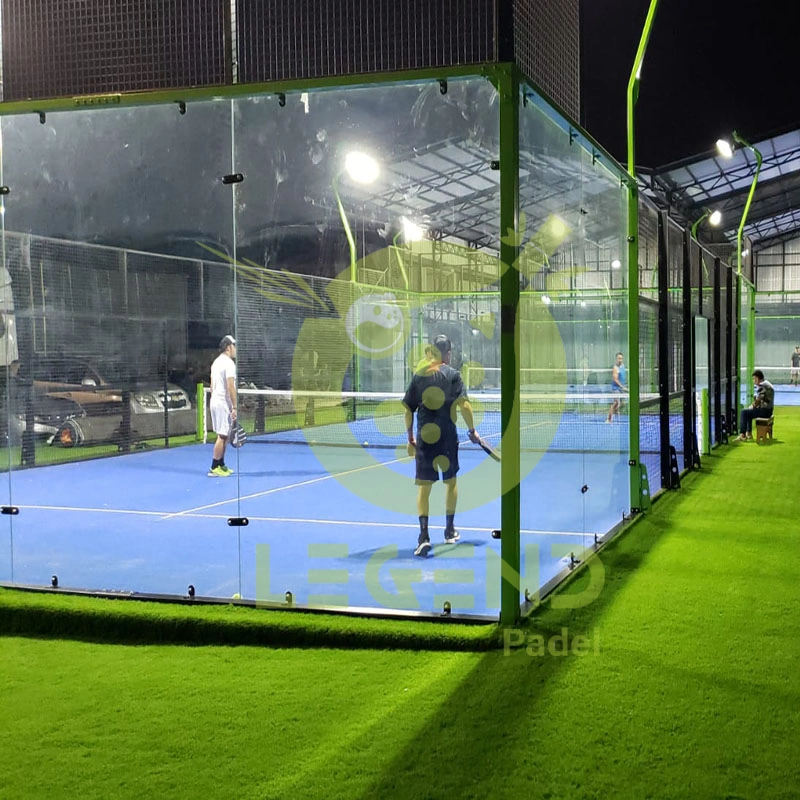
Per mantenir els jugadors segurs i deixar que els observadors vegin bé, les parets exteriors utilitzen només vidre i xarxa. Les parets són de vidre endurit. D'aquesta manera, els impactes ràpids no trenquen la construcció. Per donar la millor configuració, vam fer el Cour de Padel Pro Panoramique PD04. Utilitza vidre temperat sòlid de 12 mm de gruix que segueix exactament l'estàndard europeu EN12150-1. A més, la tanca té un disseny que deixa d'escalar per a un joc segur. Les peces d'acer reben un spray especial dues vegades. Això proporciona una bona protecció contra l'oxidació i l'usura.
# 4. Per què has d'escollir l'ecològic, césped artificial certificat
La superfície de joc dicta el rebot de la bola i la protecció biomecànica. És vital utilitzar prata artificial ecològica certificada per la FIFA. Proporcionem grama artificial de filament texturat d'alta qualitat de 12mm d'alçada on la fibra encapsula completament la sorra, assegurant un risc mínim d'abrasió. Això garanteix una excel·lent absorció de xocs i una resistència al desgaste superior contra el trànsit diari pesat de peus.
Actualitzar l'experiència del jugador amb la tecnologia
La digitalització i la tecnologia intel·ligent són els principals diferenciadors dels clubs esportius moderns. La integració temprana de la tecnologia assegura que la seva instal·lació sigui altament competitiva.
# 5. Invertir en sistemes d'il·luminació intel·ligents per a la brillantor adaptativa
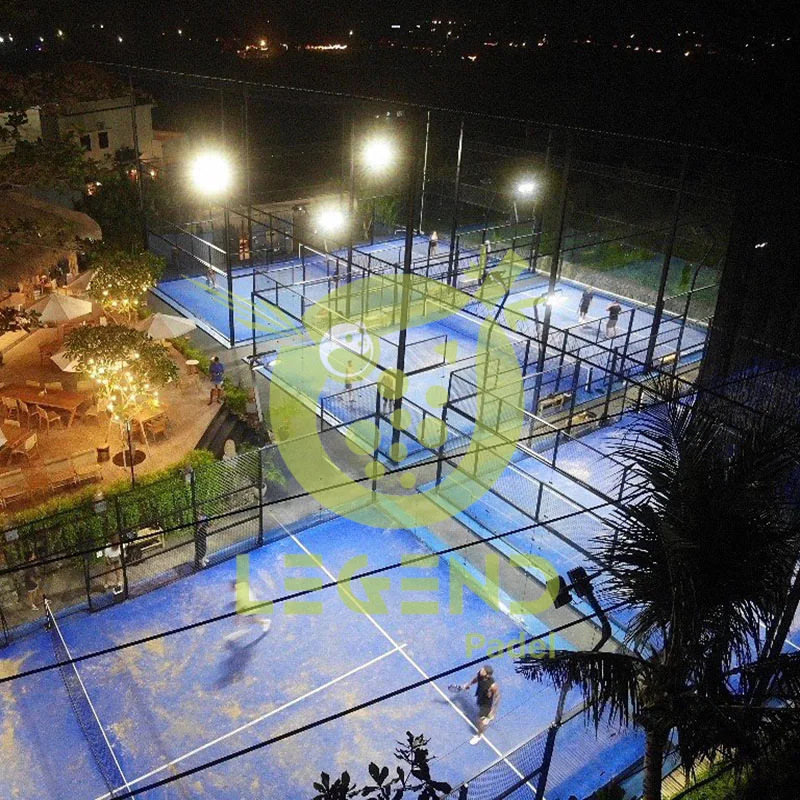
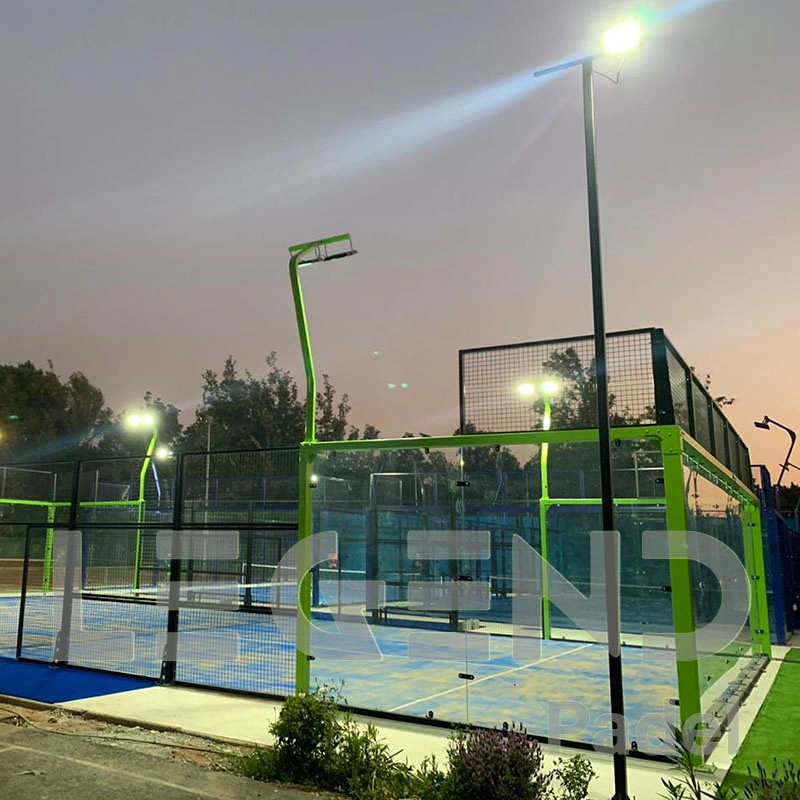
Les llums dolentes creen un brillant brillant i bloquegen les vistes durant les imatges altes clau. Les noves configuracions necessiten llums que canvien per encaixar. El lloc té un sistema de llum intel·ligent. Es pot establir la brillantor en funció del que es necessita. Amb bombetes LED de 200W, els propietaris poden donar llum uniforme sense taques fosques. Això millora els jocs nocturns i estalvia energia.
#6. Preparar el seu tribunal per a la integració de SaaS i gestió digital
La integració digital impulsa el futur de la gestió del club. Abans de construir, assegureu-vos que la vostra infraestructura suporti ecosistemes digitals. Per tal d’impulsar aquesta tendència, vam introduir la Smart Padel Cour-PD04EÉs la primera Smart Padel Court del món. Aquest model disposa d'una porta elèctrica, un sistema de puntuació LED integrat i capacitats de reproducció de monitorització. El pre-cableatge dels teus tribunals per a aquestes característiques digitals personalitzades racionalitzarà les teves operacions diàries i augmentarà les teves taxes d'ocupació del tribunal.
Navegació de pressupostos i costos ocults
La compra d'infraestructures esportives pesades a través de les fronteres implica una planificació financera complexa. Centrar-se únicament en el preu de base és una trampa perillosa.
#7. Identificació de costos ocults en l'enviament i la logística globals
El preu de fabricació és només part de l'equació. Els compradors estrangers han de tenir en compte de manera proactiva les fluctuacions del transport marítim de mercaderies, les taxes de despatx i el transport interior. Les normes d'embalatge són igualment crucials per assegurar que els materials arribin amb seguretat. Sempre demanem un pressupost transparent que cobreixi una logística especialitzada i segura.
#8. Equilibrar la seva inversió inicial amb el manteniment a llarg termini
Optar per infraestructures barates porta a despeses de reparació exorbitants. Invertir en materials d'acer de primera qualitat amb tractaments de superfície avançats redueix dràsticament la necessitat de manteniment constant. Un pressupost inicial lleugerament superior assegura un cicle de vida molt més llarg, proporcionant en última instància un retorn de la inversió molt més fort.
Escollir el soci de fabricació adequat
La seva instal·lació és tan fiable com la fàbrica que la produeix. Associar-se amb un fabricant que té un historial global comprovat és la seva decisió més crítica.
#9. L'avantatge estratègic de les solucions de compliment d'una sola parada
Coordinar diferents proveïdors per al disseny i la instal·lació és un malson logístic. Els compradors B2B es beneficien immensament d'un enfocament integral. Des de la consulta preliminar, la mesura del lloc, el disseny de l'esquema, fins a la construcció, oferim un servei de parada única. Això assegura que la cort instal·lada final coincideix amb la seva visió arquitectònica exacta i sempre està en el millor estat d'ús.
#10. Verificació de l'experiència d'exportació global i certificacions de qualitat
À Esports LlegendarisHem estat una empresa que barreja investigació, fabricació i venda des del 2007. Els nostres tribunals han visitat més de 60 països i àrees de sis continents. Donem ajuda personalitzada per adaptar-se a diferents desitjos i gusts en els mercats mundials. Tots els nostres materials segueixen les regles verdes i tenen la certificació del sistema de qualitat ISO9001. Això aporta un treball de primer nivell a la seva construcció.
FAQ (questions fréquentes)
P: Quant espai total es requereix per instal·lar una pista de pàdel professional?
R: Mentre que la mida oficial de la cort és de 20 metres de longitud i 10 metres d'amplada, necessita una pegada real una mica més gran per acomodar marcs estructurals, passerelles i zones d'esgotament de seguretat.
P: Quin tipus de vidre s'ha d'utilitzar per al recinte de la cort de pàdel?
R: Les parets solen estar fetes de vidre temperat. Per a la màxima seguretat i vistes clares, utilitzem vidre temperat de 12 mm de gruix que compleix estrictament amb l'estàndard europeu EN12150-1.
P: Per què es recomana la gespa artificial sobre altres superfícies per a una pista de pàdel?
R: Utilitza prata artificial respectuosa amb el medi ambient i està certificada per la FIFA. La grama de filament texturat d'alta qualitat, on la fibra encapsula completament la sorra, proporciona la millor adherència i el mínim risc d'abrasió.
P: Com millora la il·luminació intel·ligent l'experiència de la cort de pàdel interior?
R: Un sistema d'il·luminació intel·ligent pot ajustar la brillantor segons les necessitats d'ús. Això elimina el resplendiment dur durant els lobs i assegura que els jugadors tinguin una visibilitat perfecta.
P: Puc obtenir un disseny de pista de pàdel adaptat específicament al meu club ’ dimensions úniques?
R: Sí, oferim serveis personalitzats. Des de la consulta preliminar fins al disseny del esquema, oferim un servei de parada única per assegurar que el disseny s'adapte perfectament al seu espai comercial.