

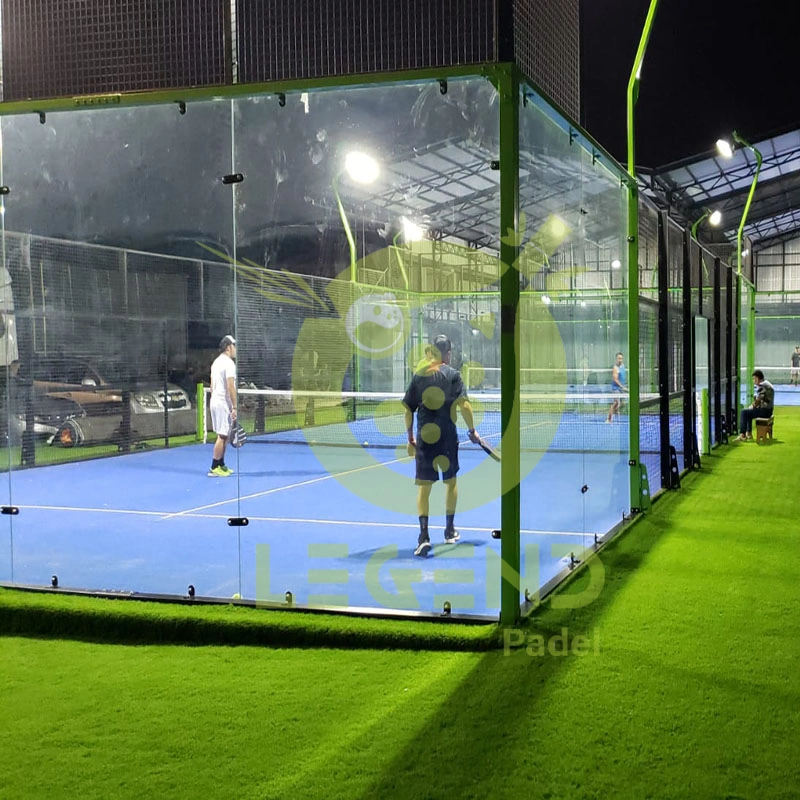
The padel court cost is rarely just the number shown on a factory quotation. Club operators, developers, hotels, sports centers, and distributors ask a better question. They want to know the full budget needed. This budget moves a court from manufacturing all the way to a ready commercial facility.
A factory-direct court from China usually costs about USD 10,000–20,000 per set. This depends on court type, structural specifications, equipment configuration, order quantity, and customized padel court requirements. For a UK-bound project, buyers can use approximately USD 20,000 per court as an early-stage budget reference. This estimate mainly covers the court itself and major shipping and import-related expenses. The final project cost will still depend on site preparation, installation, local labor, taxes, and other site-specific conditions and project requirements.
That difference matters as padel grows around the world. Global court numbers exceeded 50,000 in 2024. More growth is expected. Buyers now need a clear budget structure. This structure considers the full project rather than equipment price alone.
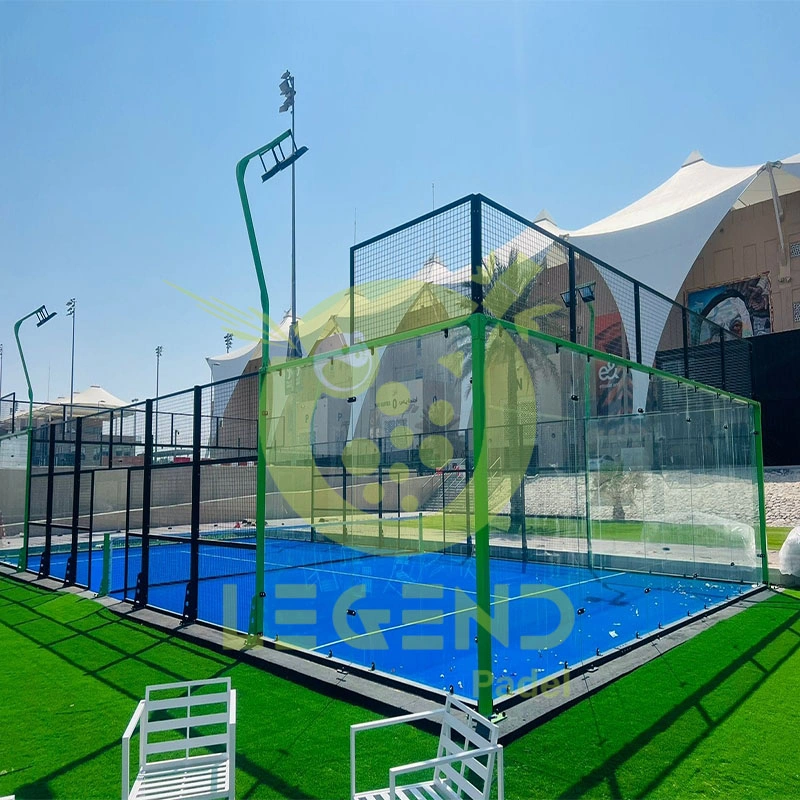
How Much Does a Padel Court Cost From a Manufacturer?
The initial padel court price depends a lot on court type and specification. A standard commercial court, panoramic model, and tournament-oriented super panoramic court meet different business needs.
Factory Price Depends on Court Design and Specification
For B2B sourcing, the equipment itself usually falls between approximately USD 10,000–20,000 per court. The exact padel court factory price varies with structural configuration, glass, turf, lighting, surface treatment, accessories, branding, and order volume.
Le Parcours classique dégénéré - pd01b from LEGEND SPORTS is a regulation-size 20 m × 10 m standard court with 12 mm artificial turf, 12 mm tempered glass, and eight 200W LED floodlights. It fits commercial projects where normal configuration and cost control are priorities.
Some projects value spectator visibility and premium presentation. They may choose the Pro Panoramic Padel Court-PD04 instead. It has 100 × 100 × 3 mm columns, 100 × 50 × 3 mm cross bars, 12 mm tempered glass, and eight 200W LED lights. These structural differences influence the cost of a panoramic padel court and the type of venue it best supports.
The Lowest Court Price Is Not Always the Lowest Project Cost
A quotation should be compared by specification rather than total price alone. Buyers should check the steel structure, tempered glass, artificial turf, lighting system, doors, hardware, surface treatment, packaging, and technical support.
Walls are usually made of tempered glass. Mesh fencing completes the enclosure. Buyers should therefore pay attention to glass thickness, structural stability, mesh construction, corrosion protection, and connection details.
China Padel Court Manufacturer vs Local Supplier: Which Is Better?
Buyers comparing a China padel court manufacturer with a local supplier should look beyond the quoted equipment price. Factory-direct sourcing from China can offer more competitive pricing by reducing intermediary costs, while also providing greater flexibility for multi-court and customized projects.
Benefits of Buying From a China Padel Court Manufacturer
Sourcing directly from a China padel court manufacturer can provide more flexible options for court models, colors, logos, lighting systems, structural configurations, and other project-specific requirements. Direct communication with the factory also makes it easier to confirm technical details before production.
LEGEND SPORTS can support international shipping to the buyer’s local seaport and provide customized court solutions according to project requirements. The company also supports product customization as a source factory. For multi-court projects, factory-direct procurement can also provide greater flexibility in bulk purchasing, court combinations, branding, and configuration planning.
Compare Total Project Cost, Not Just Factory Price
A local supplier may offer advantages in local coordination, installation, and after-sales communication, but buyers should compare the complete project scope rather than the equipment price alone. Shipping, import duties, taxes, local transportation, installation, site preparation, and labor can all affect the final cost.
The best sourcing decision therefore depends on total project cost, customization requirements, order quantity, delivery schedule, and the level of local installation support required.
What Costs Should Be Added to the Padel Court Factory Price?
The total padel court cost increases after manufacturing. Freight, customs procedures, local transportation, site preparation, electrical work, and installation all need separate consideration.
Shipping, Customs, Duties, and Local Delivery
International freight is one of the biggest variables in an imported padel court project budget. Destination port, number of courts, packaging, route, exchange rate, import policy, and local delivery can all affect the final figure.
For a UK project, buyers can use approximately USD 20,000 per court as an early-stage budget reference. This estimate mainly covers the court itself and major shipping and import-related expenses. A four-court project could therefore use approximately USD 80,000 as an initial reference for court purchasing, shipping, and import-related costs. The final project cost will also depend on site preparation, installation, local labor, taxes, permits, and other project-specific requirements.
At LEGEND SPORTS, we can help arrange shipment to the buyer’s local seaport and calculate freight according to the destination.
Installation and Local Project Expenses
The padel court installation cost depends on local labor rates, lifting requirements, access conditions, electrical preparation, permits, and the work completed before the equipment arrives.
A practical B2B budget should separate the project into court equipment, shipping and import-related expenses, and local site and installation costs. This approach stops buyers from comparing a factory price with a completed local project price as though they represent the same scope.
How Site Conditions Change the Total Padel Court Cost
Two identical courts can have different final budgets. This happens because they are installed at different sites.
Outdoor Padel Court Cost Factors
An outdoor Le Tribunal dégénéré cost must account for drainage, weather exposure, corrosion protection, lighting, ground preparation, and local environmental conditions.
LEGEND SPORTS applies two spraying processes to improve anti-rust and anti-corrosion performance. Coastal, humid, or exposed locations should therefore be discussed during specification planning.
A two-court outdoor project in Ecuador also shows how roof coverage can support more consistent use during changing weather. Weather protection can affect both initial spending and operating availability.
Indoor Padel Court Cost Factors
An indoor padel court cost is influenced more by ceiling height, lighting, ventilation, access, and building layout.
A standard court uses a 20 m × 10 m playing area. For indoor projects, at least 8 m of roof height is recommended. A height of 9–12 m is more suitable for competition use.
A Canadian indoor club project using black structures and black turf also demonstrates how customized padel court design can strengthen venue identity without changing the basic court footprint.
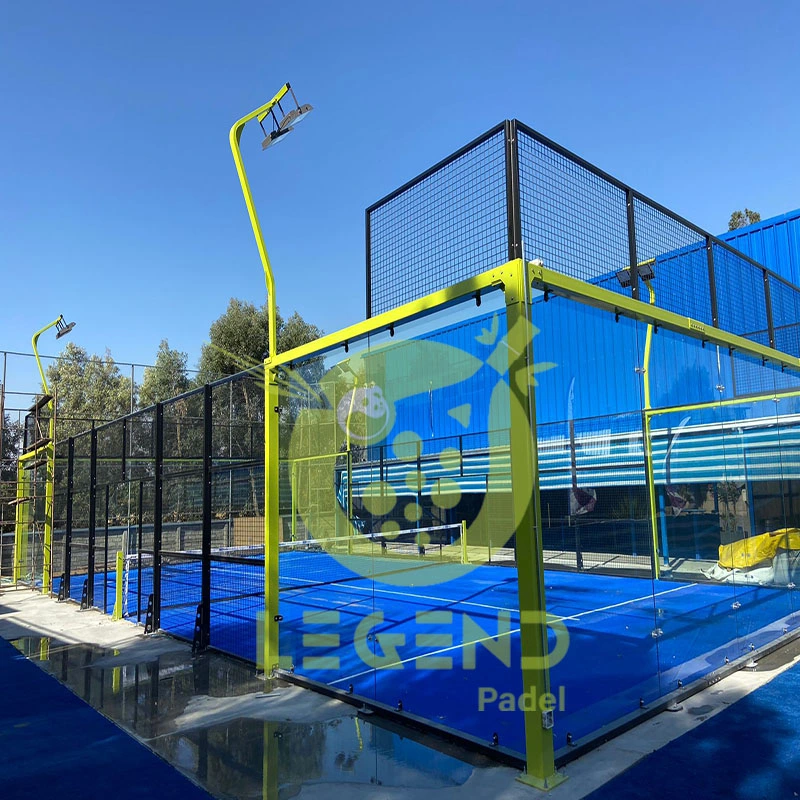
How Court Type Changes a Padel Project Budget
The right question is not simply whether one model costs more. Buyers should ask what commercial function the extra investment serves.
Standard vs Panoramic Padel Court Cost
A standard model such as the Classic Padel Court-PD01B suits facilities where normal operation and budget control are priorities.
Le Pro Panoramique Padel Cour-PD04 provides a more open visual experience for premium clubs, hotels, resorts, and spectator-oriented venues.
For higher-level event or central-court applications, the Extreme Super Panoramic Padel Court-PD06 is designed around professional tournament use.
The standard vs panoramic padel court cost decision therefore depends on whether the project prioritizes efficient court capacity, premium presentation, spectator visibility, or event use.
Specialized Courts Can Change Site Economics
Not every project needs a conventional 20 m × 10 m court.
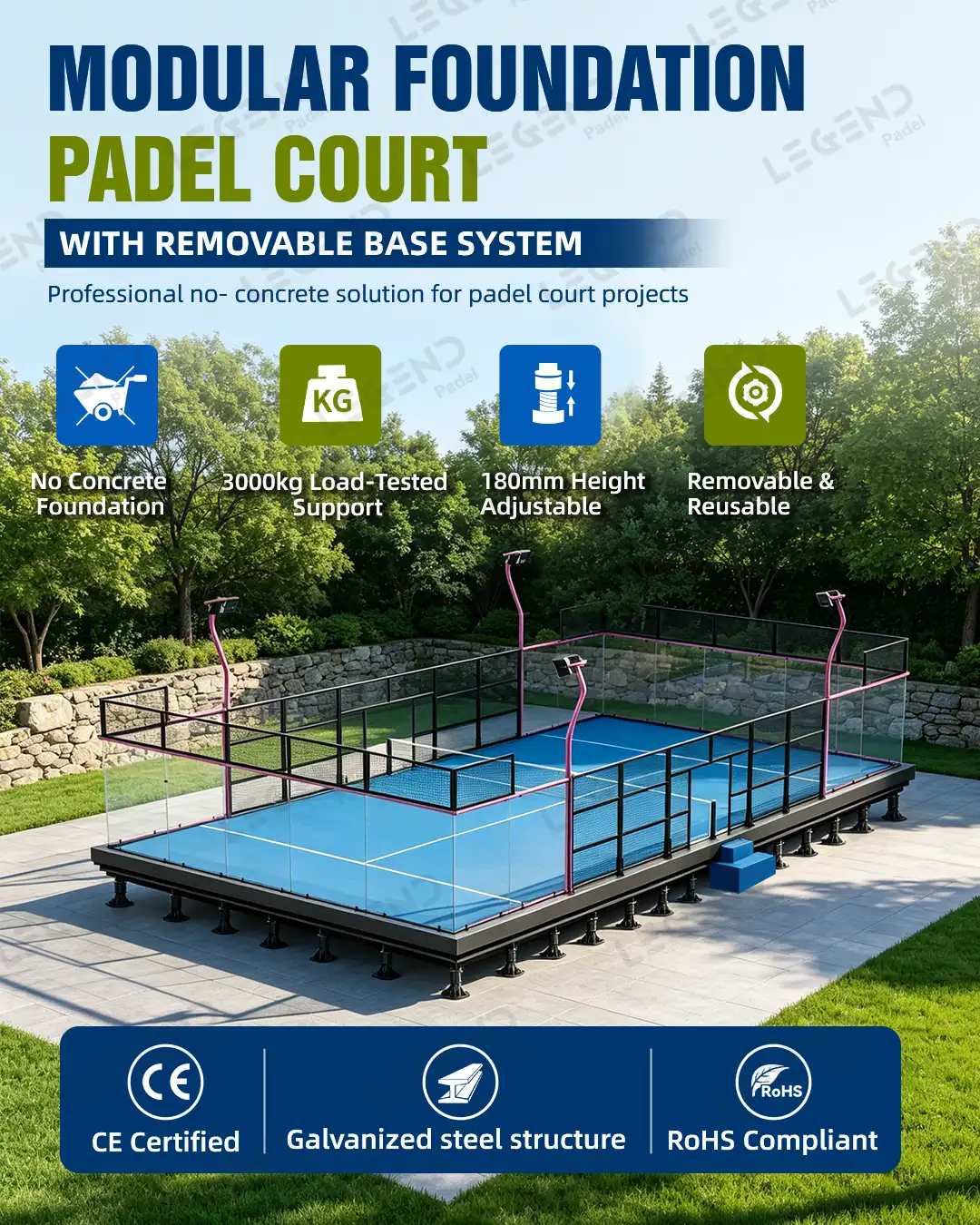
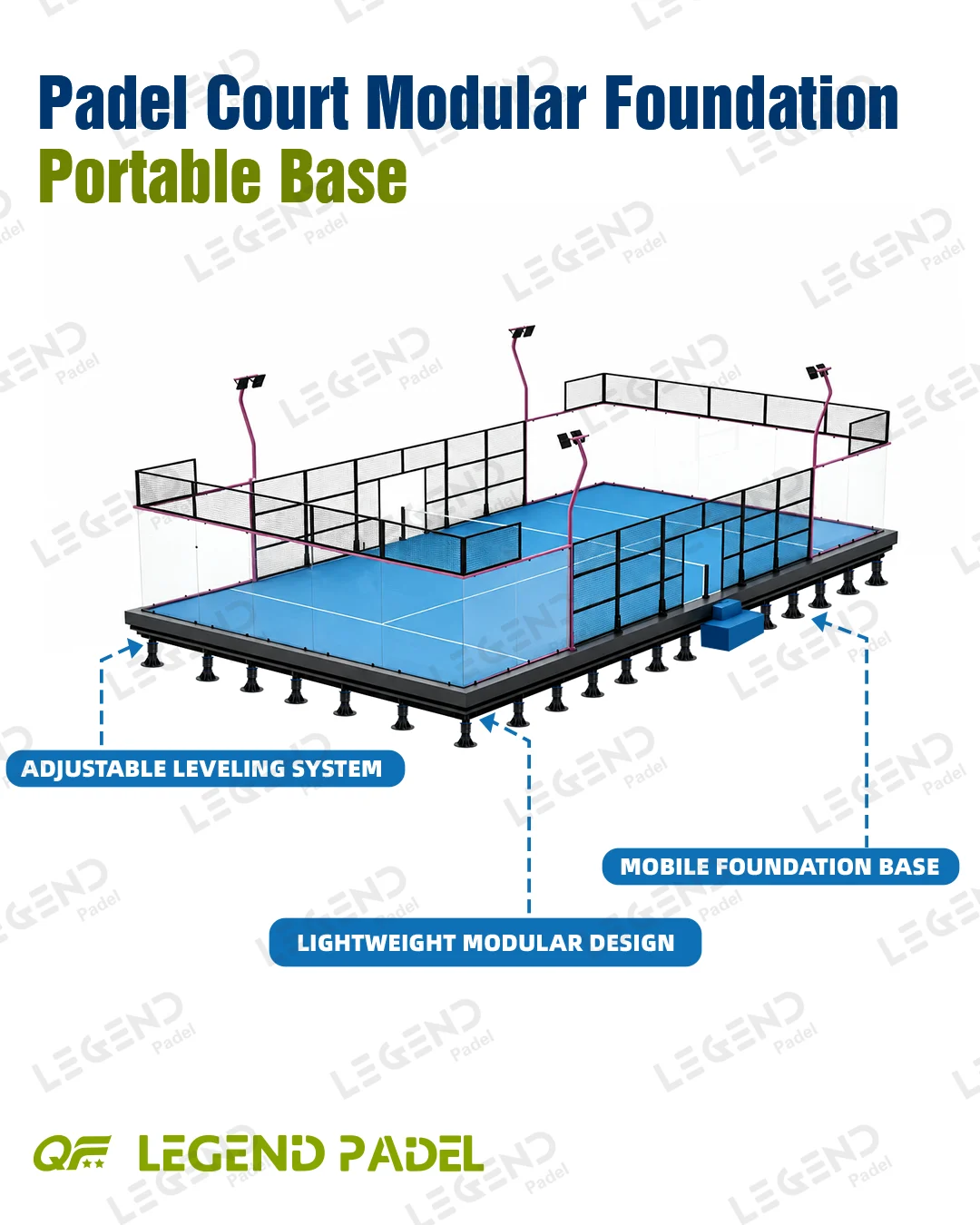
The Mobile Pro Padel Court-PD05 uses a self-fixing design intended to protect the original floor and allow easier assembly and disassembly. It can be useful where permanent site changes are undesirable.
The Single Padel Court-PD07 uses a 20 m × 6 m layout for two players. For constrained sites, it can make padel possible where a full doubles court would not fit.
This means padel court project cost should always be evaluated together with land use and commercial purpose.
How to Budget a Multi-Court Padel Project
Around 7,000 new courts were built worldwide in 2024. Club openings also increased. Growth is spreading across Europe, the United States, Asia, and the Middle East. This makes multi-court padel project cost planning increasingly important.
A four-court facility may use approximately USD 80,000 as an early reference for the courts plus major shipping and import-related expenses when the indicative USD 20,000-per-court figure applies. The complete project budget should then add site preparation, drainage where required, electrical work, installation, labor, permits, and other local expenses.
Multi-court venues do not need to use the same specification everywhere. A club can combine standard courts for regular bookings with a panoramic or super panoramic court for events, premium sessions, sponsorship visibility, or finals.
At LEGEND SPORTS, we support this type of planning through customized padel court solutions, court configuration options, colors, logos, structural finishes, and project-oriented technical support.
FAQ (questions fréquentes)
Q: What is the average padel court cost when buying from a manufacturer?
A: The equipment price can generally be estimated at around USD 10,000–20,000 per court when sourcing directly from a Chinese manufacturer. The final price depends on court design, structural specifications, turf, tempered glass, lighting, quantity, and customized padel court requirements.
Q: Does the padel court cost include shipping and installation?
A: Not necessarily. A factory quotation may cover the court equipment while freight, customs clearance, duties, taxes, local delivery, electrical work, site preparation, installation, labor, and permits are calculated separately.
Q: Why does the padel court installation cost vary between projects?
A: The padel court installation cost depends on local labor, site access, lifting requirements, electrical preparation, indoor or outdoor conditions, and the amount of work completed before installation begins.
Q: How can buyers estimate the cost of a multi-court padel project?
A: Start with the court equipment and estimated landed cost. Then add site preparation, drainage where necessary, electrical work, installation, local labor, permits, and other project-specific expenses. If you are planning a padel court project, tell us your destination country, number of courts, indoor or outdoor requirements, and expected project timeline. LEGEND SPORTS can help you review the court configuration, shipping requirements, and key cost factors to prepare a more practical preliminary budget for your project