

What Should You Know Before Building a Padel Court?
How Does the Purpose of the Court Affect Design and Construction?
The planned use of a padel court—whether private or commercial—greatly shapes its design and building needs. Private courts often focus on looks, smaller setups, and basic elements. On the other hand, commercial courts require stronger build quality, top-tier materials, and adherence to global rules. This setup handles lots of play without issues.
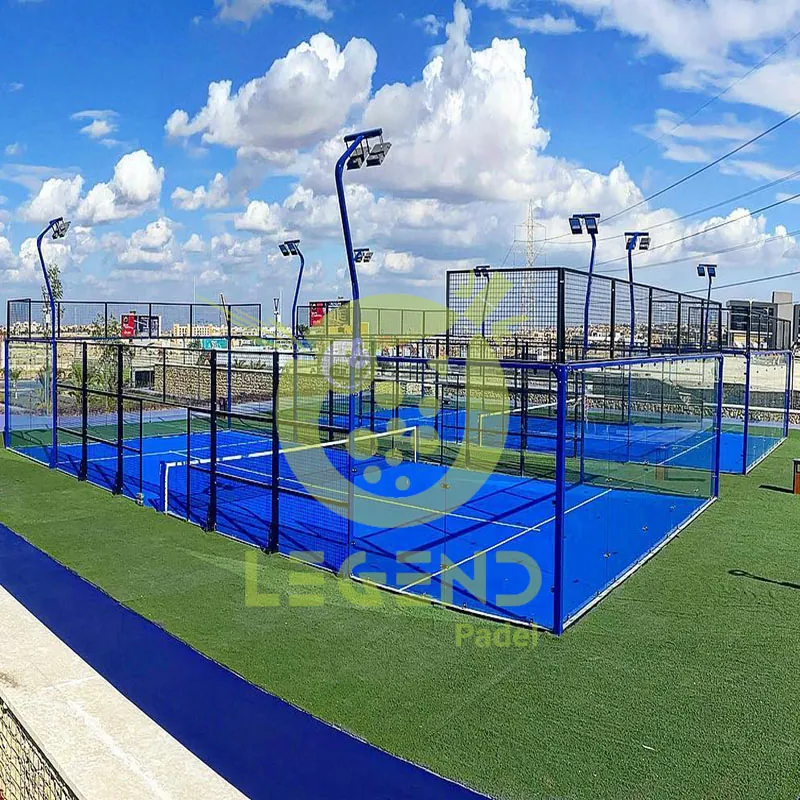
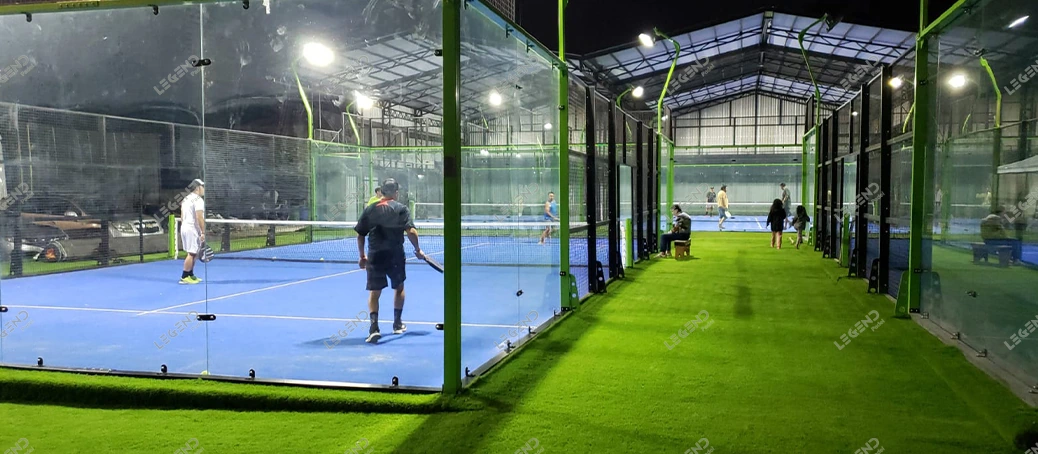
For setups with multiple courts, like those in sports clubs or event spots, you must think about space use, entry management, and extras such as viewing areas and club rooms. For example, LEGEND SPORTS has set up 8 padel courts at the Cangzhou Sports Center. These can host events at a national level. Now the Cangzhou paddle tennis court has been officially opened and is open to the public free of charge.
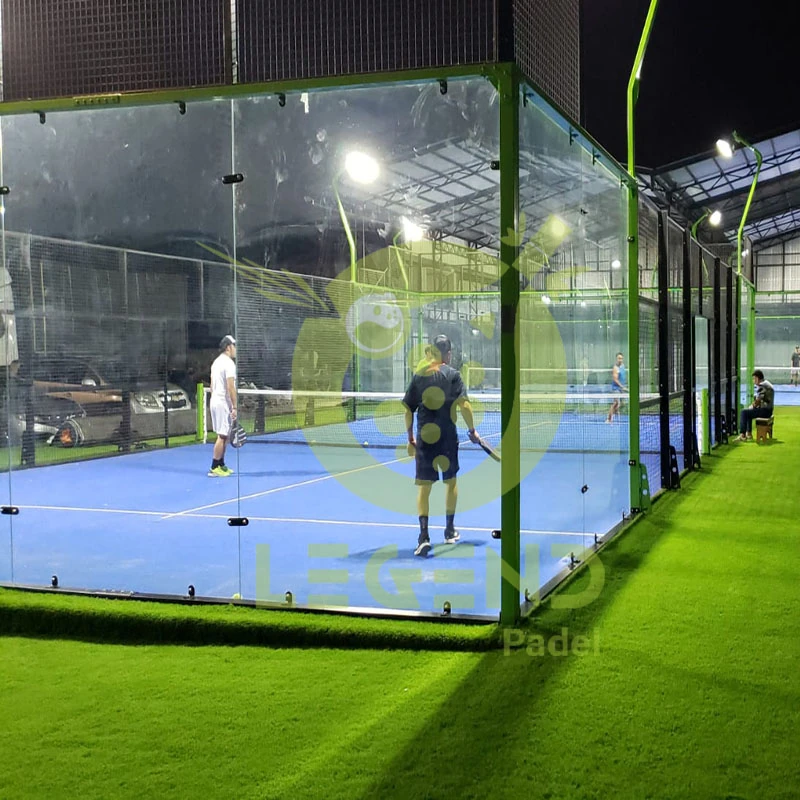
Indoor padel courts bring extra challenges. Lighting setups need to provide even, shadow-free light. Ceiling heights should reach at least 8 meters for regular games or 9–12 meters for pro events. Indoor roof height is recommended to be ≥8m (9-12m required for competition court). Good airflow and sound control are also key. They help create a pleasant space for players.
What Are the Key Regulations and Dimensions for Padel Courts?
To build a padel court that meets rules, you must follow exact size standards. International standard size: Competition area is 20m (length) x 10m (width), with a minimum total floor area of 11m x 21m to include peripheral zones.
The net height, service lines, and court lines must match the International Padel Federation rules. This ensures fair play and safe conditions for players. Getting these lines right matters a lot. Even small errors can mess up the game. They might also bar the court from official matches.
How Important Is Site Selection and Ground Preparation?
Proper site selection is foundational to long-term court performance. A well-drained location prevents water accumulation that could damage turf or steel frames. Accessibility is equally important, especially for commercial venues that expect high foot traffic.
Check the soil before starting work. This avoids later sinking problems that cause bumpy surfaces or off-kilter glass. Plus, how the court faces the sun impacts play. A north-south setup cuts down on glare at dawn or dusk for outdoor courts.
For indoor options like the Smart Padel Court-PD04E, which has an electric door and LED scoring system, the plan includes adding smart features to the build. It does this without hurting the structure or sight lines.
What Materials Are Used in High-Quality Padel Court Construction?
What Are the Best Surface Options for Performance and Durability?
The playing surface shapes how the ball acts and how comfortable players feel. The top synthetic turf works well. It gives steady bounce, hold, and cushioning. LEGEND SPORTS picks 12mm fine-textured filament artificial turf with double PP+PU adhesive and a density of 46,200 stitches/m². The playing surface is fitted with 12mm high-quality textured filament artificial turf, designed to fully encapsulate sand for minimal abrasion risk.
Sand fill from 60–100 mesh aids grip and keeps turf strands steady. These details provide the best results in various weather conditions. They also reduce damage, even with heavy play.
Why Are Tempered Glass Walls Essential for Padel Courts?
Tempered glass forms a key part of today’s padel court builds, mainly in wide-view styles. Its toughness keeps things safe. At the same time, it gives great ball bounce and clear views for watchers.
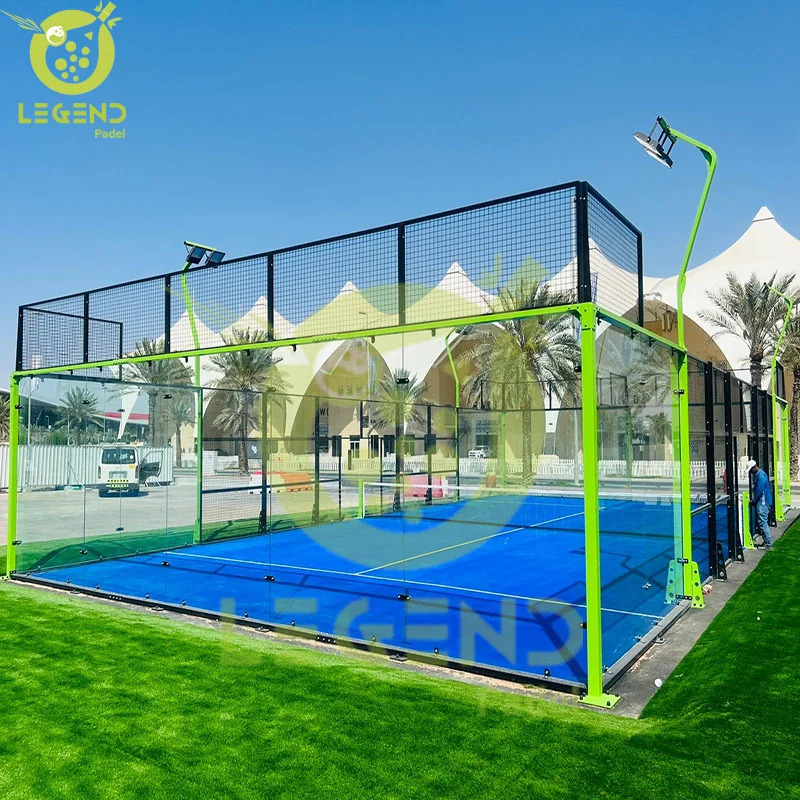
LEGEND SPORTS uses 12mm thick tempered glass panels sized at 2995mm x 1995mm. These beat normal glass in strength. They also follow European EN12150-1 safety standards. Safety and visibility are enhanced by 12mm thick tempered glass panels (18 pieces, size 2995mm x 1995mm), exceeding the strength of ordinary glass and conforming to Europe’s EN12150-1 standard. This setup allows full views in open designs like the Pro Panoramic Paddle Court PD04.
Which Fixtures Complete a Functional Padel Court Setup?
A pro padel court includes steel frames from SPHC steel materials, net systems that meet contest rules, and LED lights for steady brightness. For example, Smart Padel Court-PD04E has eight 200W LED floodlights that deliver 300 Lux at a color temperature of 6500K. Illumination is provided by eight 200W LED floodlights (6m height), delivering 300 Lux at 6500K color temperature with 180-220V/50Hz input.
How Do Indoor vs Outdoor Padel Courts Compare in Implementation?
What Factors Influence Indoor Padel Court Design?
Indoor courts need certain building rules. Ceiling heights must not block the ball’s path—best at no less than 8 meters. The right HVAC systems keep the air fresh and the temperature steady during long games.
Sound control helps a lot, too. It cuts down echoes in closed areas and boosts the player setup. LEGEND SPORTS’ installs, like the black indoor club in Canada, show how color changes aid branding. Yet they keep a strong tech quality. The steel structure and the grass are all black, which looks more professional.
What Challenges Come with Outdoor Padel Court Construction?
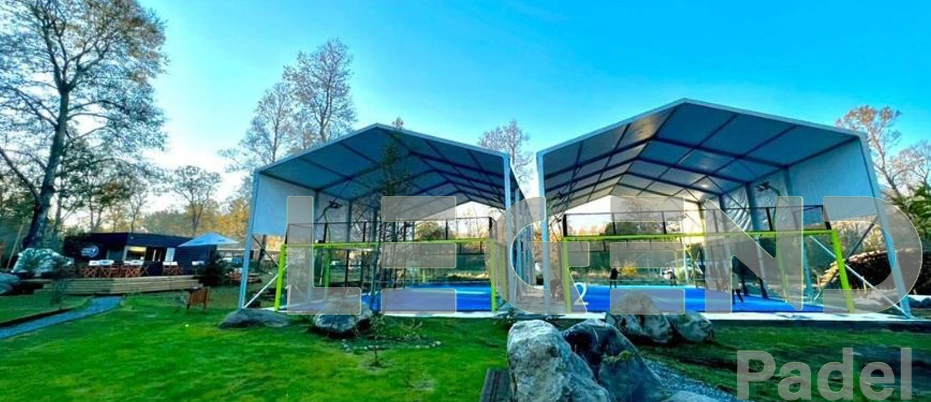
Outdoor courts deal with issues like sun exposure, rain, wind, and changing temperatures. Strong materials help, such as hot-dip galvanized steel frames with rust-proof coatings. They lengthen the court’s life.
To cut wind effects, use net fences or smart plant placements. Yearly care, like even sand spread or glass cleaning, is needed. You just need to clean the floor regularly, fill the sand layer, check the lighting system, and check the screws.
How Can You Ensure Long-Term Success After Installation?
What Maintenance Practices Keep Your Padel Court in Top Shape?
Steady care is vital to keep performance and looks strong. Each day, brush the synthetic turf to spread sand evenly. Also, clean glass panels for clear sight. Weekly checks should look at net tightness, light function, and hold-down bolts. You just need to clean the floor regularly, fill the sand layer, check the lighting system, and check the screws.
When Should You Plan for Resurfacing or Upgrades?
Look for clues like flat turf strands, dull lines, or bad ball bounce. They signal time for new surfacing. Based on how much use it gets—mainly in busy spots—resurfacing happens every 3–5 years.
Updates, such as adding smart tools (like Smart Padel Court-PD04E’s LED scoreboard) or swapping turf colors, keep places fresh for users. They also help stay strong in the sports field.
How Can Technology Enhance Club Management Around the Court?
Today’s padel clubs gain from software that handles bookings, follows memberships, takes payments, and sets up coaching. Smart courts like PD04E include built-in video watch systems. These aid practice and draw players who like tech.
Who Is LEGEND SPORTS, and How Can We Support Your Project?
What Sets LEGEND SPORTS Apart in the Padel Industry?
LEGEND SPORTS focuses on fine padel court building with custom fixes for indoor spots. With over 220 experienced staff, including 32 senior engineers and hundreds of advanced machines. Currently, we have more than 220 experienced employees, including 32 senior engineers. We combine R&D strength with global installation expertise.
We provide various models such as Classic Paddle Court PD01B, Pro Panoramic PD04, Smart Paddle Court PD04E, Extreme Super Panoramic PD06, Mobile Pro PD05, and Single Paddle Court PD07. All can change to fit what clients want.
What Other Products Does LEGEND SPORTS Offer Beyond Courts?
Aside from padel courts, LEGEND SPORTS supplies custom sports flooring systems for indoor spots, pro LED lights tuned for racket sports areas, and add-ons like viewer seats and scoreboards. Custom sports flooring systems suitable for various indoor applications.
Our skill in full-service setups makes us a solid partner for sports builds around the world.
FAQ
Q: What are the standard dimensions of a padel court?
A: International standard size: Competition area is 20m (length) x 10m (width), with additional space recommended around the perimeter to meet installation requirements.
Q: How do I choose between indoor and outdoor padel court options?
A: Choose indoor if you need climate control or year-round playability; choose outdoor if you have ample space and want lower upfront building costs. Ensure materials are suited for weather conditions—LEGEND SPORTS’ PD06 model is ideal outdoors.
Q: Which type of glass is best for padel courts?
A: Always opt for 12mm tempered glass panels as they offer superior safety, durability, and clarity compared to regular glass. They’re standard in all LEGEND SPORTS court models.
Q: When should I consider resurfacing my padel court?
A: If you notice uneven bounce or worn turf fibers—even before visible damage—it’s time to resurface. Commercial courts typically need attention every 3–5 years based on usage levels.
Q: What are some top features available in smart padel courts?
A: Smart padel courts like LEGEND SPORTS’ PD04E offer innovations such as electric doors, LED scoring systems, camera monitoring for playback analysis—all aimed at improving game management and user engagement.