


“Premium” is not an official grade, and a higher invoice alone proves nothing. For a club, hotel, resort, or tournament venue, the useful test is what players and operators experience: repeatable play, safe movement, clear sightlines, a convincing venue image, and fewer operational surprises. As supply grows, buyers have to distinguish a photogenic court from a dependable court system.
Which Padel Court Features Matter Most for Playability and Safety?
Feature 1: FIP-Aligned Geometry and Unobstructed Playing Space
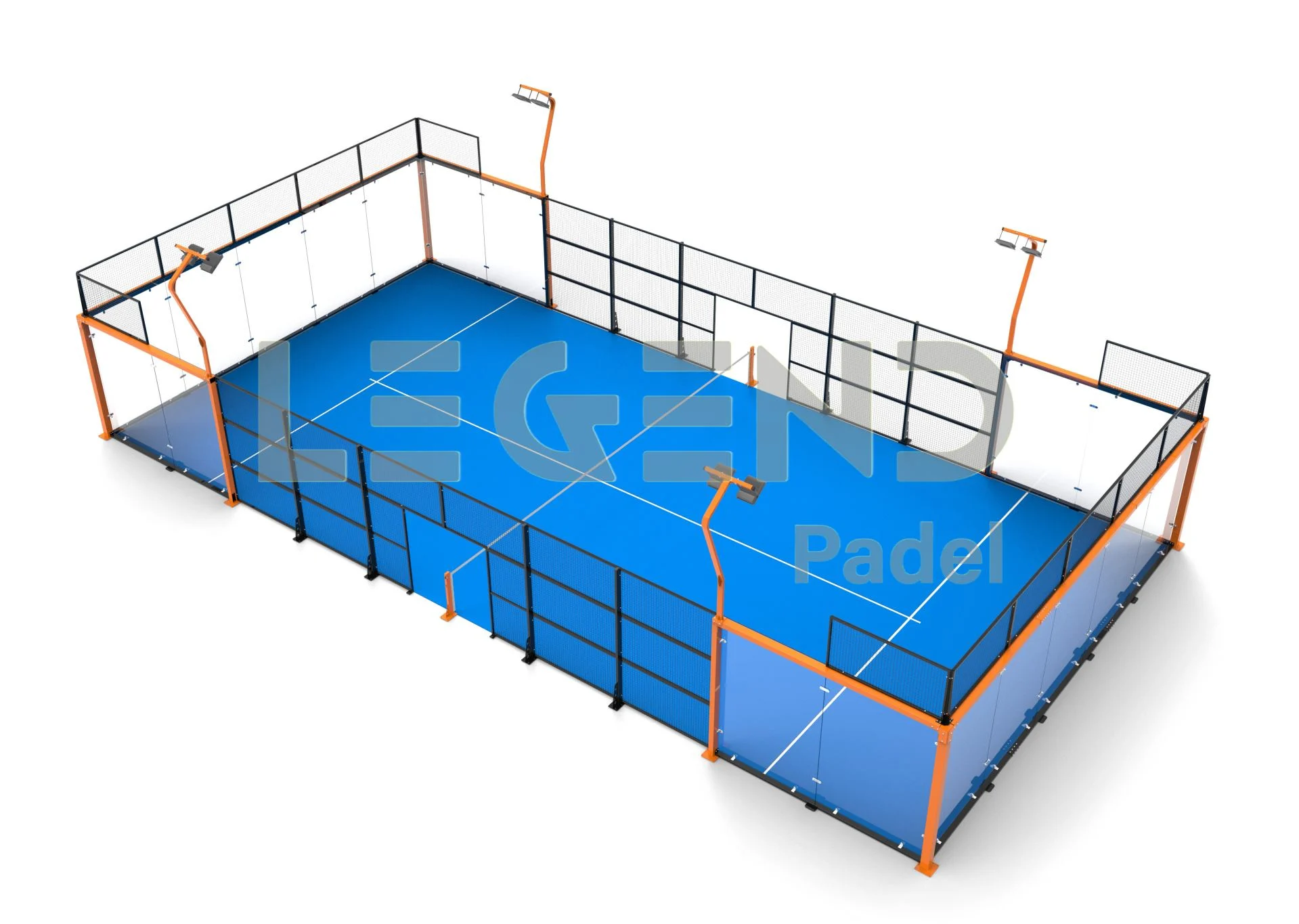
The standard doubles playing area is 20 m by 10 m, with enough clearance for lobs, movement, entrances, and safe access. A premium court protects that geometry during installation: lights, brackets, roof elements, and other services should not intrude into effective playing space. Confirm the total floor area and clear height before approving a layout, especially for indoor projects.
Feature 2: Predictable Rebound Through a Safe Glass-and-Mesh Enclosure
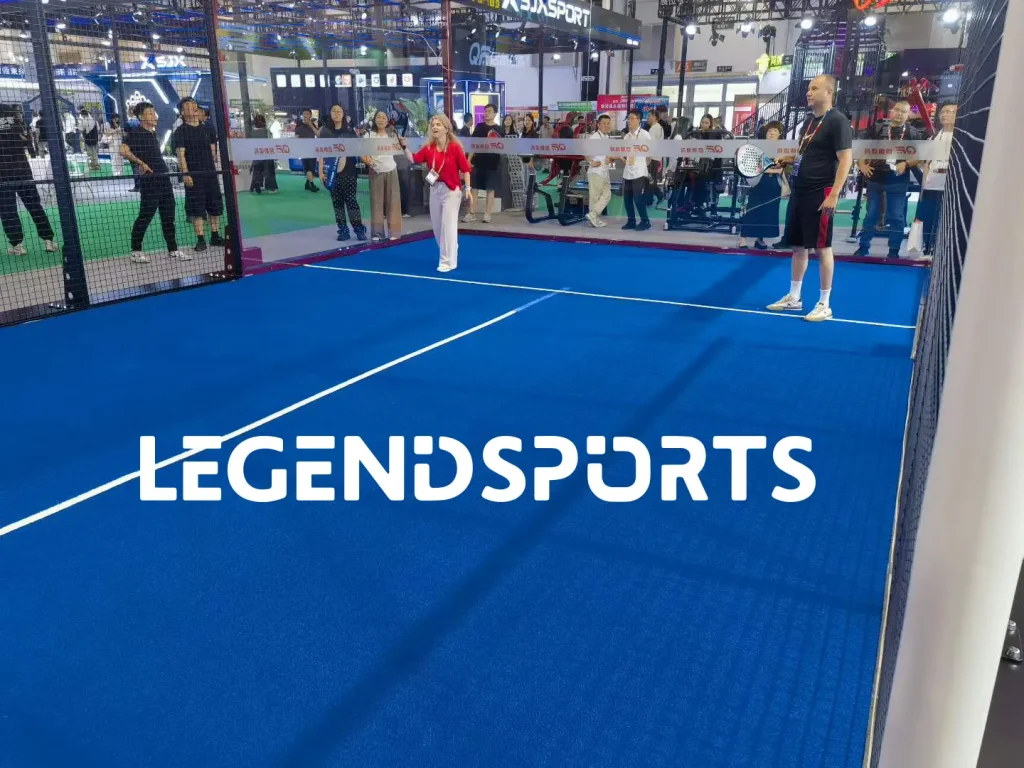
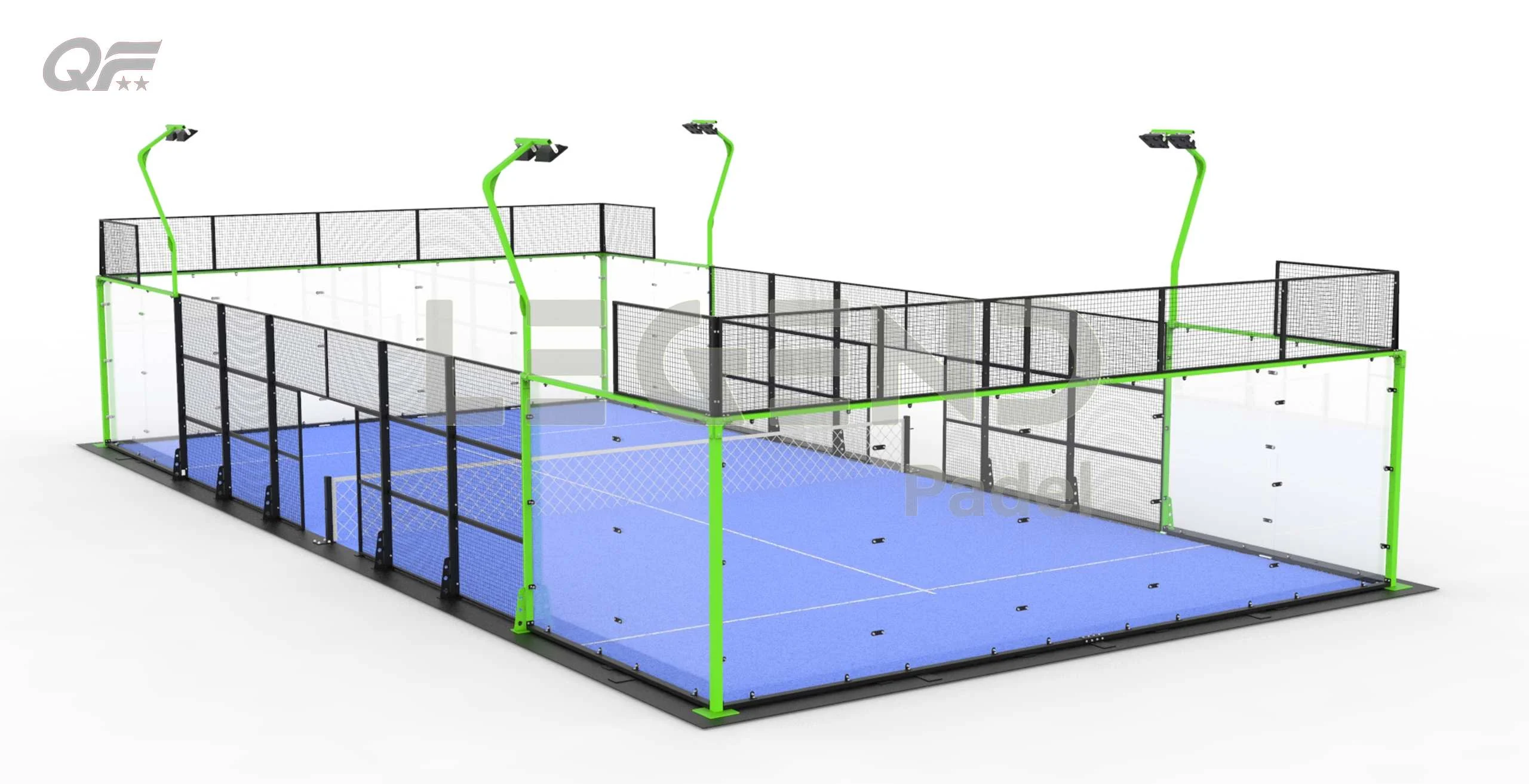
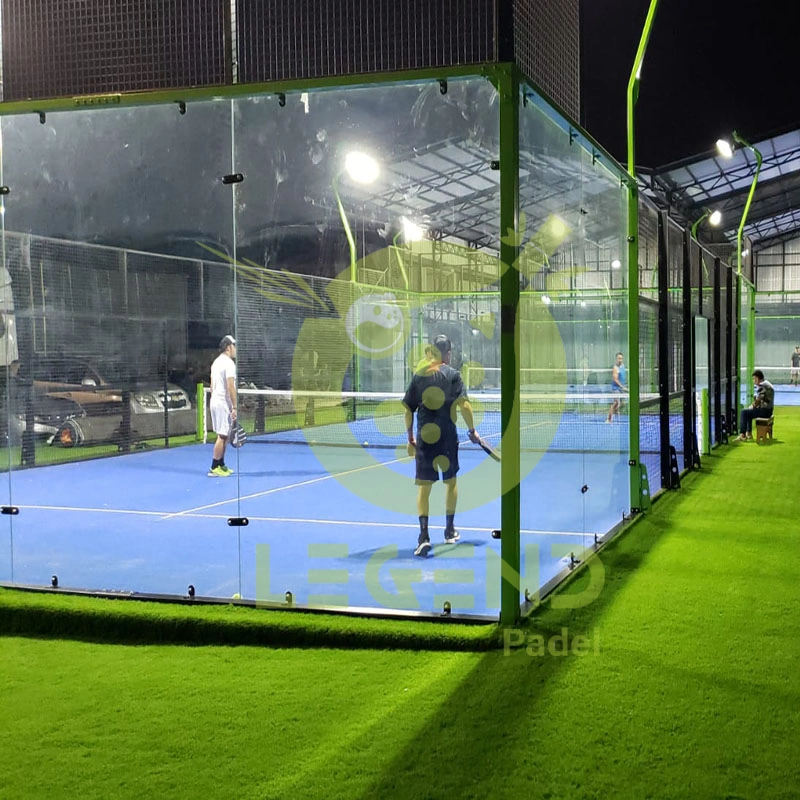
Padel court glass walls are part of the game, not just a fence. Flat joints, accurate fixing, stable metallic mesh, and the absence of dangerous projections help produce predictable rebound and safe visibility. The Pro Panoramica Padel Corte-PD04 uses 12 mm tempered glass and metallic mesh; its breakage behavior is designed to reduce sharp fragments if a panel fails.
Feature 3: High-Performance Turf for Grip, Slide, and Consistent Ball Speed
Players notice whether the surface supports controlled turning, lateral movement, and repeatable bounce. A 12 mm textured filament artificial turf system can hold sand through its fibers, helping balance grip, abrasion resistance, and playing feel. Operators should also ask how sand distribution, cleaning, and high-traffic wear will be managed, because surface specification affects maintenance frequency.
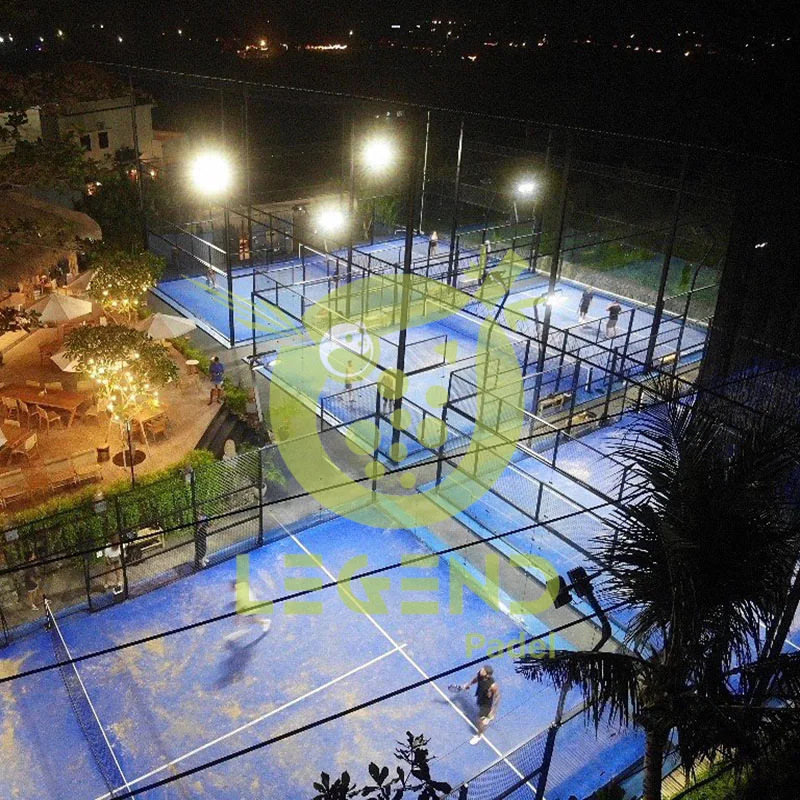
Feature 4: Uniform, Low-Glare Lighting for Consistent Evening Play
The useful lighting questions are whether illumination is even, whether glare reaches players or spectators, where fixtures sit, and what the venue will host. A standard panoramic setup may use eight 200 W LEDs and about 300 lux for club play; tournaments or broadcast work may call for another plan. Check players, officials, cameras, and nearby properties before fixing the layout.
Which Premium Padel Court Features Improve Spectator and Venue Experience?
Feature 5: Panoramic Sightlines That Reduce Visual Obstruction
A panoramic padel court can make matches easier to watch, coach, film, and share. It can also turn a flagship court into a visual center for a hotel, resort, or commercial club. Panoramic design is not automatically the best choice for every court: spectator demand, venue positioning, roof conditions, and budget should determine where it adds value.
Feature 6: Custom Design That Integrates With the Venue Brand
A branded padel court should support the venue without harming ball visibility. Buyers can coordinate turf color, frame finish, logo placement, and a consistent visual language across multiple courts. LEGEND SPORTS supports customized turf, structure colors, and logos, allowing a project to distinguish a showcase court while keeping regular courts visually coherent.
Feature 7: Smart Court Technology for Scoring, Access, and Replay
Digital readiness is a practical 2026 differentiator. Electric doors, LED scoring, controlled access, monitoring, replay, and future booking links can help with tournaments and coaching. None is compulsory on every premium court. Add a feature when it removes an operating headache and when a local team can service it.
A smart court may include an electric door, an LED scoring system, and monitoring playback. Those functions should be treated as an operating package: confirm the power supply, control responsibilities, software compatibility, and service plan before adding them to a commercial specification.
Which Premium Padel Court Features Protect Long-Term Performance?
Feature 8: A Structure Engineered for Climate and High-Frequency Club Use
A durable padel court must match its site and use pattern. Daily bookings, coastal humidity, wind exposure, connection integrity, corrosion protection, and installation accuracy all matter. A single steel thickness does not define quality. Site-specific engineering, surface protection, stable joints, and reliable manufacturing are better indicators of commercial padel court durability.
Il durable padel court materials guide explains why glass, turf, climate, and structural choices should be assessed together rather than as isolated specifications.
The PD04 specification pairs 12 mm tempered glass with 12 mm textured filament turf, while eight 200 W LED floodlights provide a standard club-use lighting arrangement. Buyers can also request turf colors, steel finishes, logos, and glass options when the venue requires a branded configuration.
Feature 9: Drainage and Weather Planning That Protect Court Availability
Drainage is about keeping the playing area usable, while structural durability is about keeping the enclosure stable. Plan surface water direction, rainfall response, indoor or outdoor placement, and whether a roof is justified. Indoor/outdoor balance and weather conditions can affect availability, pricing, and revenue, so weather planning belongs in the operating model, not only the construction checklist.
Feature 10: Maintenance-Friendly Design and Replaceable Components
The court is only premium if it can stay that way. Plan turf cleaning, sand redistribution, lighting checks, glass inspection, fastener reviews, and replacement-part access. Labeled components and readable maintenance notes reduce downtime long after the opening event.
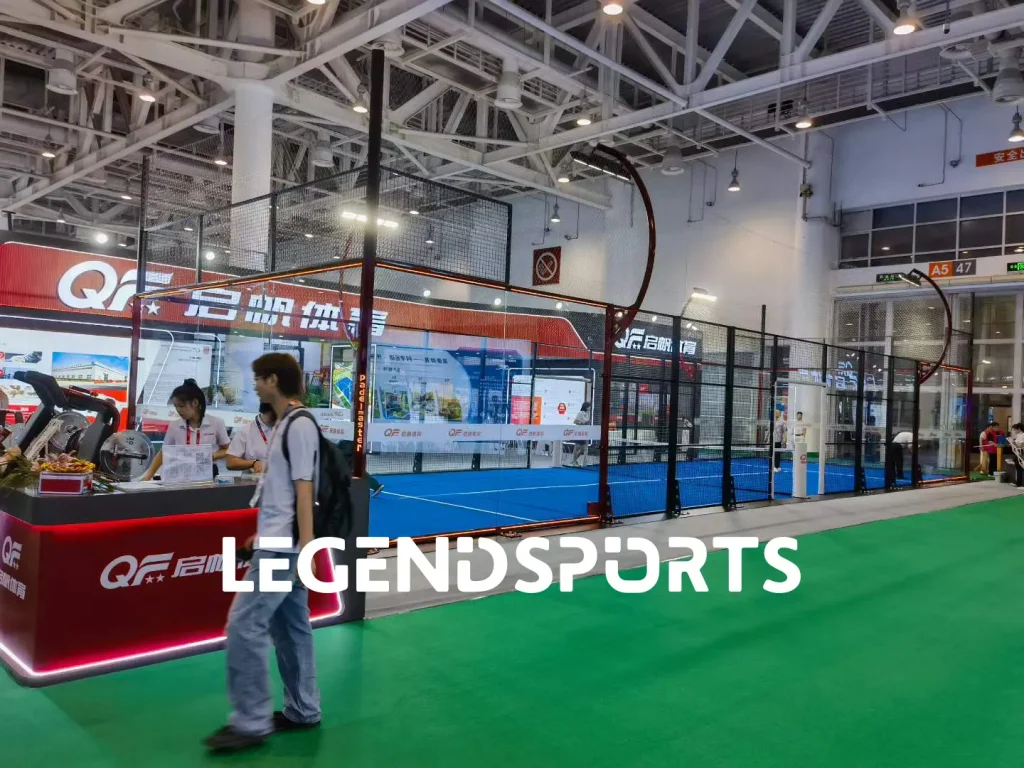
How Should Buyers Compare Premium Padel Court Options Before Ordering?
Match the Padel Court Type to the Venue and Revenue Model
Choose fit-for-purpose equipment rather than the configuration with the most features. A high-frequency club may prioritize standard courts and easy maintenance; a resort may prioritize panoramic presentation; a tournament venue may need a reinforced center court; an indoor project may value year-round availability; and a temporary event may need a mobile system. Compare the model with the revenue plan, not with a generic premium label.
Verify Padel Court Documentation, Installation Support, and Export Readiness
Before ordering, ask what the quotation includes, whether installation drawings are supplied, how glass is protected during shipping, how parts are labeled, who answers installation questions, and how replacement components are obtained. The LEGEND SPORTS padel court product range shows several court categories, while the supplier’s export and installation experience should be verified against the specific project scope.
Compare Padel Court Lifecycle Value Instead of the Lowest Initial Quote
The useful comparison is purchase price plus shipping, installation, maintenance, downtime, replacement parts, energy use, and player experience. LEGEND SPORTS was founded in 2007 and describes an R&D, production, and sales system for customized court projects. We can discuss model selection, export arrangements, and installation guidance, but the buyer should confirm site engineering and local compliance before committing.
Buyers can use the same evidence to ask for drawings, component labels, and maintenance documentation before approval. Clear records make routine inspection easier for a local operator and reduce uncertainty when replacement parts are needed.
That service capacity can support documentation, installation questions, and replacement planning after delivery.
Domande frequenti
Q: What features should a premium padel court have in 2026?
A: Look for compliant geometry, a safe enclosure, steady turf, controlled lighting, useful sightlines, sensible customization, serviceable technology, climate planning, drainage, and replaceable parts.
D: Qual è la dimensione standard di un paddle court?
A: The standard doubles playing area is 20 m long by 10 m wide. Buyers must also plan clearance, access, structure, and safe circulation around it.
Q: Is a panoramic padel court better for clubs and tournament venues?
A: It can improve sightlines and presentation, but the best choice depends on spectators, cameras, venue positioning, climate, and budget.
Q: What type of glass and mesh should a padel court use?
A: Specify safely fixed tempered glass with a compatible metallic mesh enclosure, accurate joints, and no hazardous projections. Confirm the applicable local and competition requirements.
Q: How much maintenance does a premium padel court need?
A: Routine cleaning, sand management, lighting checks, glass inspection, and fastener reviews are normal. The frequency depends on traffic, weather, and the manufacturer’s maintenance guidance.