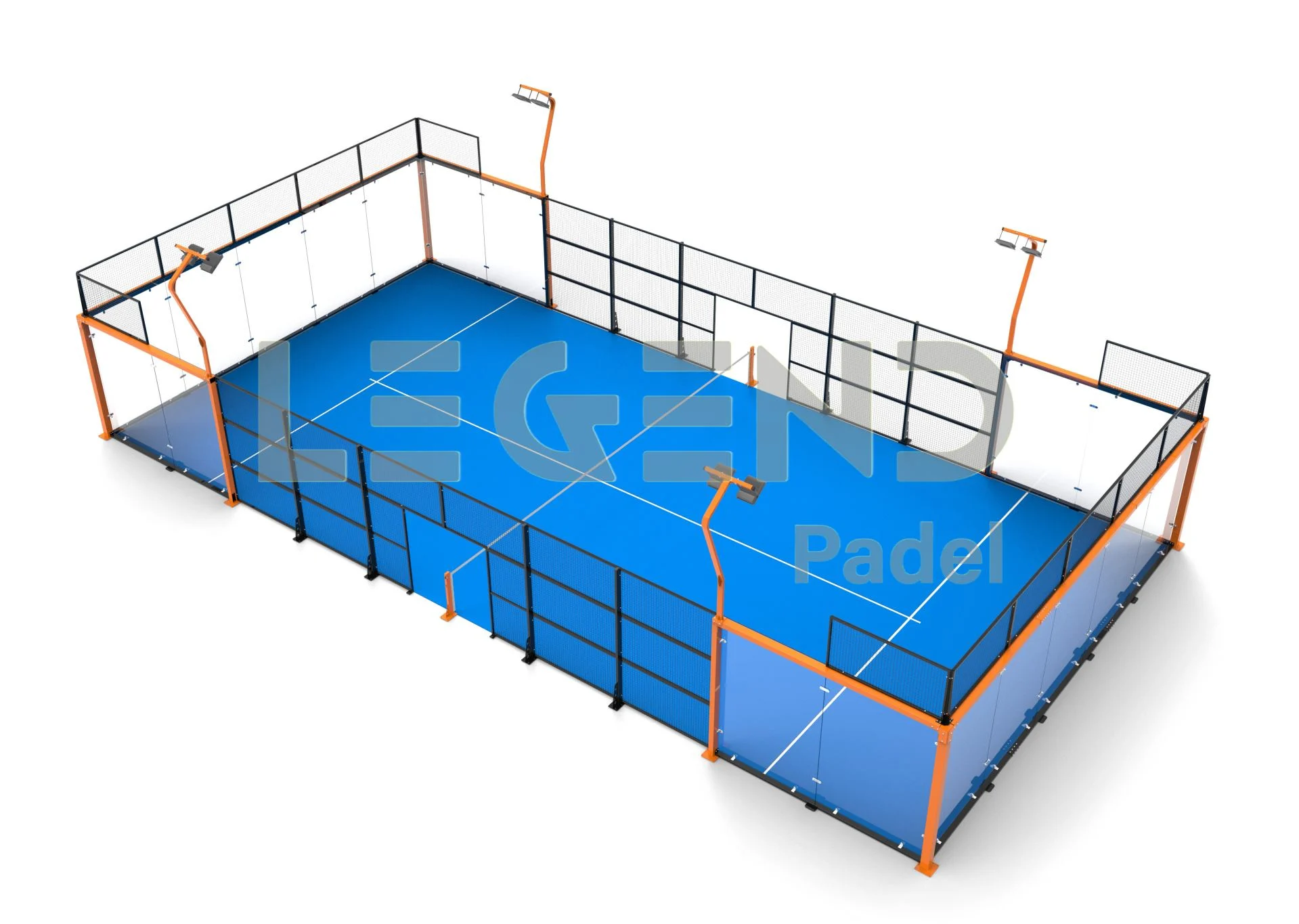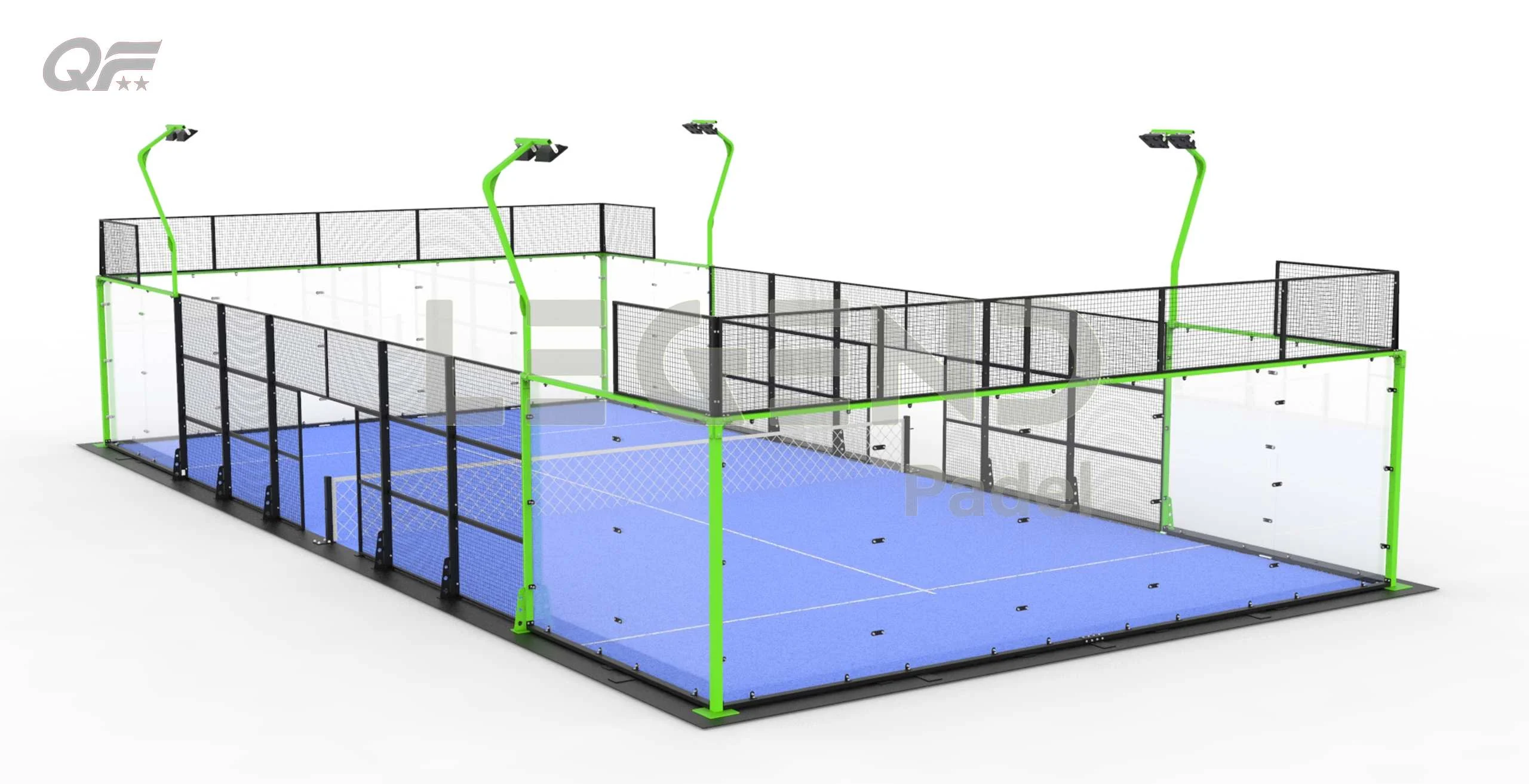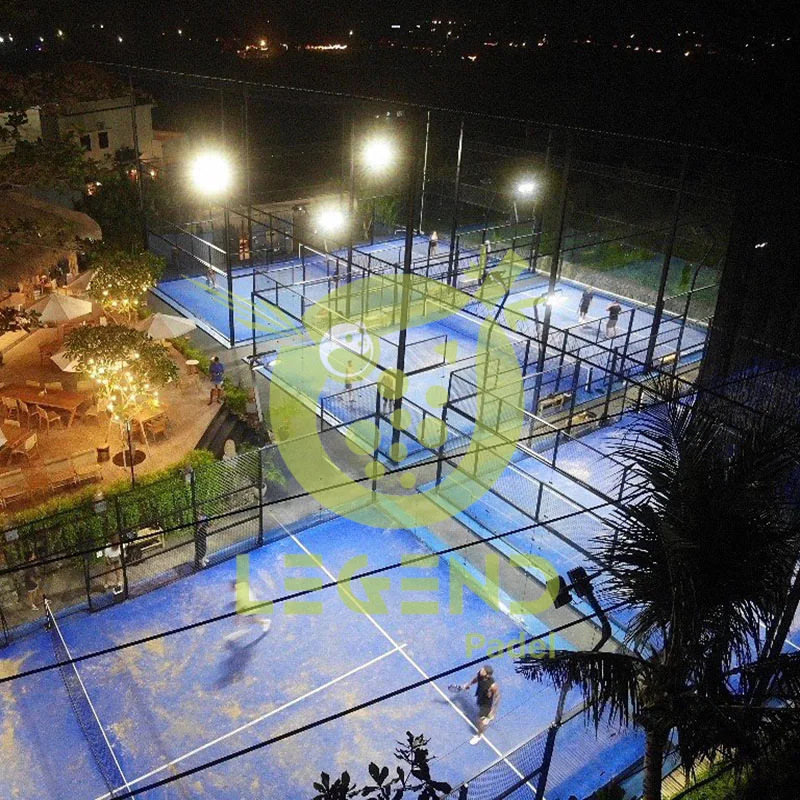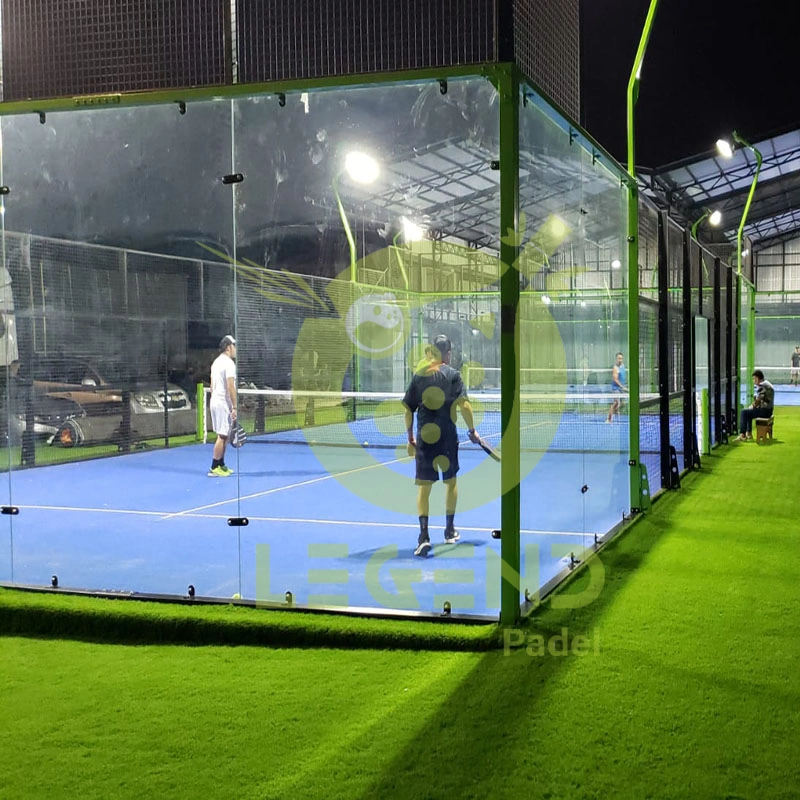



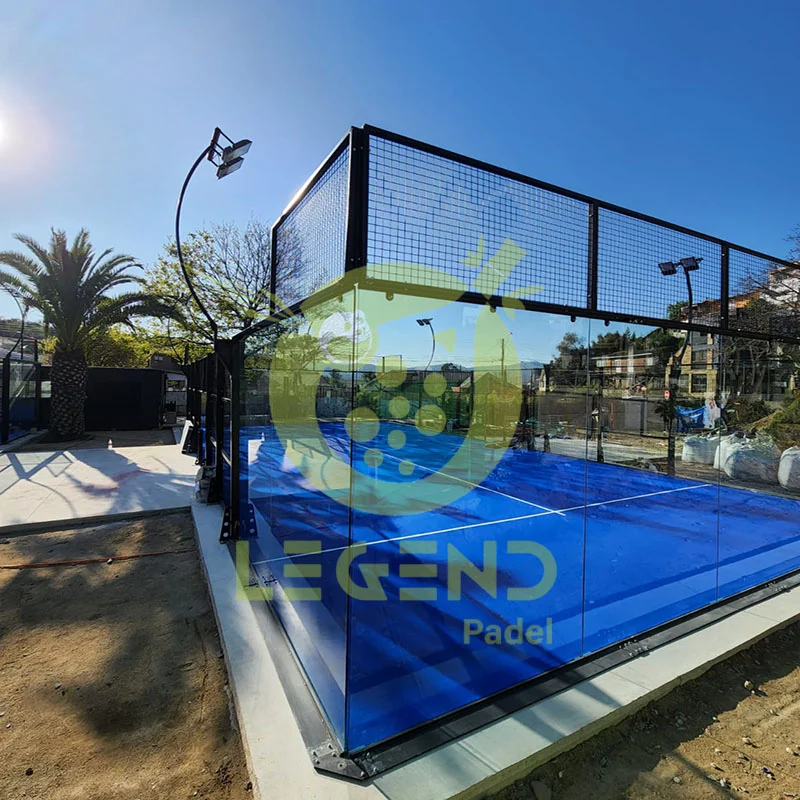
Un campo da padel personalizzato è molto più di un semplice cambio di colore. Si tratta di coordinare la struttura, la superficie di gioco, la grafica, l'illuminazione e il contesto del luogo, garantendo al contempo sicurezza e giocabilità ottimali.
Cosa include esattamente un campo da padel personalizzato?
Quali parti di un campo da padel possono essere personalizzate?
La personalizzazione può riguardare i colori delle strutture in acciaio, i colori del manto erboso artificiale, i loghi e l'identità del marchio, la stampa su vetro, la configurazione dell'illuminazione a LED e la personalizzazione delle reti. Può estendersi anche alla numerazione dei campi, alla grafica d'ingresso e alla progettazione di campi singoli, multipli, al coperto, sui tetti o all'aperto. Anche il drenaggio, i percorsi di accesso e le aree per gli spettatori rientrano nella stessa fase di progettazione.
Quali elementi del campo da padel dovrebbero rimanere standardizzati?
Il marchio non deve modificare le dimensioni di gioco approvate, le linee di visuale libere, il comportamento del rimbalzo o l'accesso sicuro. La grafica del vetro deve rimanere controllata e i pannelli a rete, le porte, gli ancoraggi e i supporti per l'illuminazione devono comunque avere dettagli ingegneristici. Una verifica 全景板球场-PD10 Questa pagina illustra come le specifiche di un modello rimangano distinte dai colori e dalla grafica della location. Verificare i requisiti edilizi ed elettrici locali prima della produzione.
La personalizzazione dovrebbe partire dall'aspetto estetico o dagli obiettivi aziendali?
Iniziate considerando il pubblico di riferimento e l'esperienza che si desidera offrire ai giocatori. Gli hotel potrebbero richiedere un coordinamento architettonico, i club potrebbero aver bisogno di identificare il campo e le zone degli sponsor, mentre le scuole spesso apprezzano la leggibilità e la facilità di sostituzione. Quindi, selezionate i colori, le dimensioni del logo, la posizione di stampa e le impostazioni di illuminazione in base a questi obiettivi.
In che modo i colori personalizzati di un campo da padel possono rafforzare l'identità del marchio?
Come dovrebbero abbinarsi i colori dell'acciaio e del manto erboso?
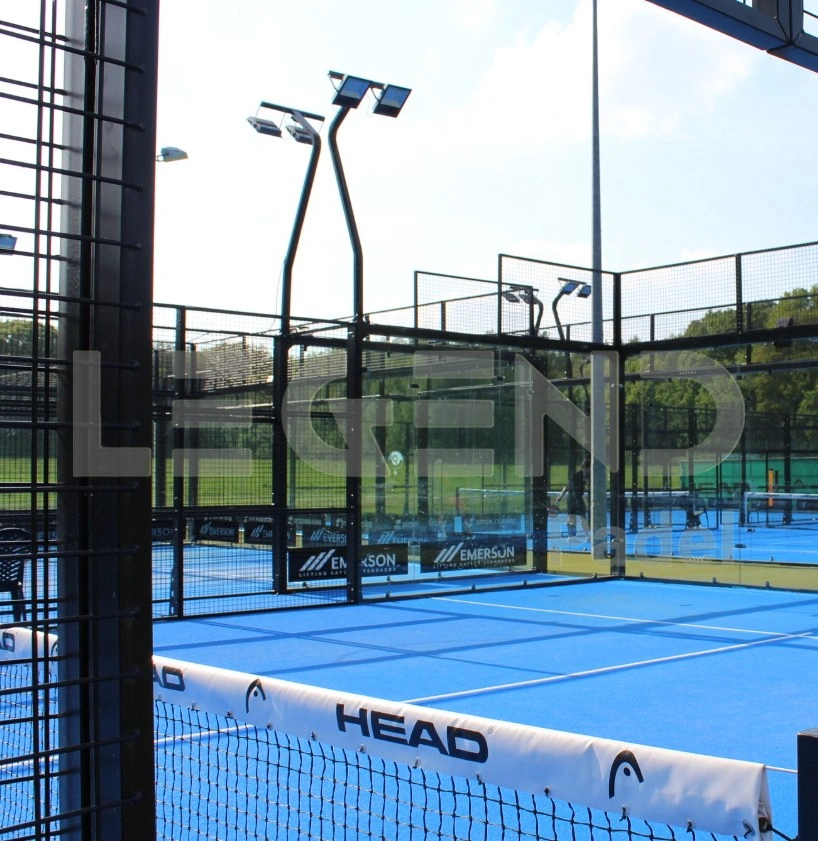
Considera la struttura in acciaio, il manto erboso e le pareti circostanti come un'unica tavolozza. Il contrasto aiuta i giocatori a leggere i confini, mentre una struttura e un manto erboso simili possono appiattire il bordo. Una rete neutra con un colore distintivo per la struttura conferisce spesso a un campo da padel di marca un'identità chiara. schemi di colori per campi da padel Illustra perché contrasto e comfort visivo dovrebbero essere considerati congiuntamente.
Quali colori per i campi da padel sono pratici per un utilizzo a lungo termine?
Informatevi su come appariranno polvere, polline, crema solare e graffi su ciascuna finitura. Discutete con il fornitore di rivestimenti e manto erboso l'esposizione al sole e le temperature locali, quindi conservate un riferimento cromatico scritto per future sostituzioni. Il processo di produzione fornito include la preparazione della superficie, l'applicazione di un primer elettrostatico e la verniciatura a polvere con polimerizzazione a temperatura controllata.
È possibile che campi da gioco diversi utilizzino schemi di colori diversi?
Sì, quando le variazioni supportano la navigazione o la programmazione. Mantieni un colore strutturale comune e una grafica di accento sobria in modo che i numeri dei campi e le zone degli sponsor rimangano facilmente riconoscibili.
Dove dovrebbero comparire i loghi e la grafica del marchio?
La stampa su vetro è adatta per un campo da padel personalizzato?
La stampa su vetro può creare una parete di grande impatto, ma la scelta del posizionamento deve essere dettata innanzitutto dalla visibilità. Utilizzare zone delimitate e lasciare aree libere per consentire il tracciamento e la visualizzazione. Confermare con il fornitore del vetro il metodo di stampa, l'opacità, le distanze dai bordi, la pulizia e la sostituzione. Il riferimento del materiale identifica il vetro temperato da 12 mm come componente da verificare.
In che modo le reti metalliche e gli ingressi al campo possono supportare l'immagine del locale?
La rete può riportare un piccolo logo ripetuto, una striscia di sponsor o il numero del campo. Gli ingressi possono avere un'insegna della struttura e indicazioni direzionali, ma le linee di apertura delle porte, gli accessi di emergenza e la visuale delle telecamere devono rimanere libere.
Quanta pubblicità è troppa su un campo da padel?
Il branding è eccessivo quando interrompe la gerarchia visiva. Grafiche di grandi dimensioni su ogni superficie possono rendere più difficile seguire il pallone, quindi riserva il logo più evidente a una o due zone focali e utilizza ripetizioni più piccole per l'orientamento.
In che modo l'illuminazione LED personalizzata può migliorare l'esperienza di gioco?
L'illuminazione dei campi da padel dovrebbe essere modificata sia per gli allenamenti che per le competizioni?
Allenamento e competizione hanno priorità diverse. Le partite registrate necessitano di una copertura uniforme e di contrasti ridotti al minimo per distrarre. Definire le modalità operative prima di scegliere gli apparecchi, in modo che i comandi, l'orientamento e l'accesso per la manutenzione siano progettati insieme; la luminosità e l'uniformità finali richiedono un piano specifico per la sede.
In che modo la progettazione dell'illuminazione può ridurre l'abbagliamento e le zone d'ombra?
Iniziate dalla posizione e dall'orientamento degli apparecchi, non solo dalla potenza. Assicuratevi che le sorgenti luminose non ostruiscano la visuale principale, coordinate il montaggio con i riflessi del vetro e verificate gli angoli, i percorsi di servizio e la linea di base. Indicate la copertura, gli angoli di orientamento, le zone di controllo e i percorsi di manutenzione sul piano illuminotecnico.
È possibile integrare funzionalità digitali in un campo da padel personalizzato?
La registrazione digitale di punteggi, monitoraggio e riproduzione può essere un supporto per la sala da gioco quando è secondaria rispetto all'attività ludica. Pianificate con anticipo l'alimentazione elettrica, i percorsi dati e il posizionamento degli schermi, e mantenete i display al di fuori del campo visivo del giocatore. Documentate il tutto con gli stessi disegni utilizzati per la struttura, le vetrate e l'illuminazione.
Come dovrebbero variare i campi da padel personalizzati in base alla tipologia di struttura?
Gli scenari progettuali proposti includono club sportivi, hotel e resort, scuole e università, complessi commerciali, campi da gioco sui tetti, progetti comunitari e immobiliari e club sul lungomare.
Quali caratteristiche rendono un campo da padel personalizzato adatto a hotel e location VIP?
Hotel e strutture VIP necessitano di coordinamento architettonico tanto quanto di funzionalità sportiva. È fondamentale abbinare gli elementi architettonici alla palette di colori della proprietà, tutelare la visuale degli ospiti e progettare un'area sociale brandizzata senza ostacolare la circolazione. Prima di approvare il progetto grafico, è necessario verificare i vincoli relativi al sito, alle fondamenta e all'accesso. Modelli di campi da padel di alta qualità può aiutare gli acquirenti a confrontare l'effetto visivo delle vetrate a vista in ambienti di pregio.
Il sistema di assistenza comprende l'analisi delle condizioni del sito, la raccomandazione della tipologia di campo, la pianificazione del layout per campi singoli e multipli, l'illuminazione, il drenaggio, le fondamenta e la progettazione degli spazi commerciali. Prosegue poi con la produzione, il controllo qualità, la spedizione, l'assistenza doganale, la guida all'installazione e l'assistenza post-vendita.
Come dovrebbero approcciarsi le scuole e le strutture comunitarie alla personalizzazione?
Dare priorità a chiarezza, durata e comunicazione inclusiva. Utilizzare numeri leggibili, confini ad alto contrasto e finiture facili da pulire. Disegni di installazione chiari, manuali e assistenza tecnica a distanza aiutano le squadre locali a mantenere il campo.
Quali opzioni di personalizzazione sono adatte a club e sedi di tornei?
I club e le sedi dei tornei necessitano di un'immagine coordinata e ripetibile. Riservate le zone degli sponsor, preservate le linee di visuale delle telecamere e utilizzate una numerazione che corrisponda alla segnaletica per gli spettatori. Un campo principale può avere un aspetto più incisivo, mentre gli altri campi condividono la stessa struttura, lo stesso manto erboso e la stessa rete.
Come fanno gli acquirenti ad approvare un campo da padel personalizzato prima della produzione?
Perché la personalizzazione dovrebbe iniziare con disegni CAD e visualizzazioni 3D?
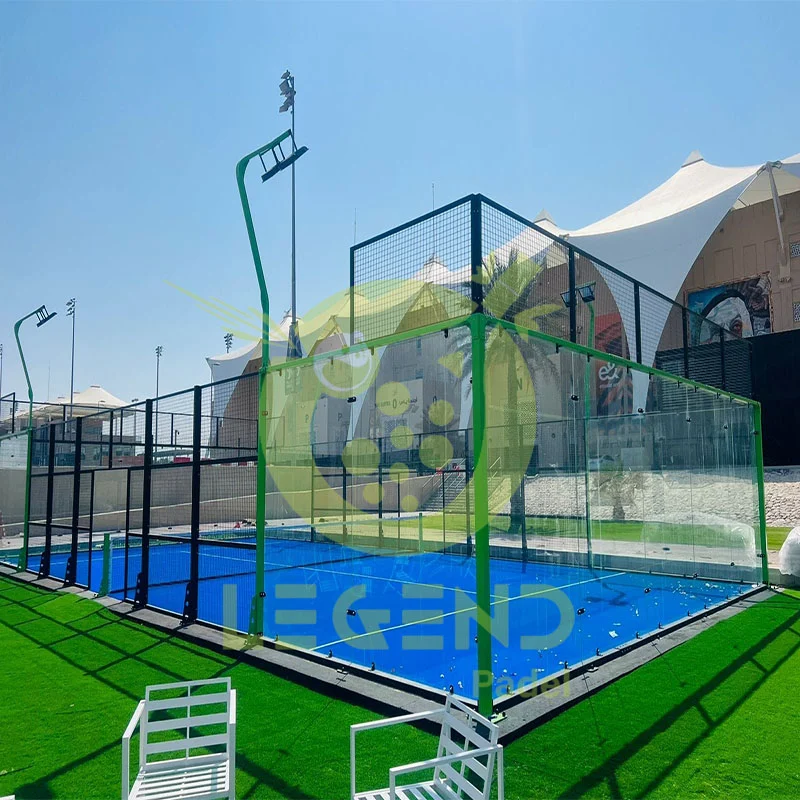
I disegni CAD evidenziano dimensioni, accessi e potenziali conflitti di servizio. Una visualizzazione 3D mostra come la struttura, il manto erboso, il vetro e la grafica si integrano con il campo e i percorsi degli spettatori. Insieme, questi elementi possono rivelare ostacoli alla visuale, riflessi o contrasti cromatici prima della produzione. LEGEND SPORTS descrive un flusso di lavoro integrato che va dalla pianificazione e progettazione del progetto fino alla produzione, al controllo qualità, alla spedizione, all'installazione e all'assistenza post-vendita, pertanto l'approvazione visiva dovrebbe essere collegata allo stesso documento.
Quali campioni e specifiche devono essere confermati?
Confermare il riferimento cromatico, il campione di erba sintetica e la scelta dell'altezza del pelo, la grafica del logo pronta per la produzione, le posizioni di stampa sul vetro, la grafica della rete, il piano di illuminazione e i requisiti di controllo digitale. Registrare le specifiche del vetro, il processo di rivestimento, i marchi di imballaggio e la revisione del disegno.
La descrizione del processo fornita comprende tubi quadrati zincati a caldo e acciaio SPHC, taglio e piegatura laser, saldatura robotizzata e manuale, sabbiatura, primer elettrostatico e verniciatura a polvere con polimerizzazione a temperatura controllata, e imballaggio per ispezione/esportazione per vetro, illuminazione e strutture in acciaio.
Tutti i prodotti vengono fabbricati direttamente nel nostro stabilimento per garantire qualità stabile e controllo dei costi.
Quali elementi devono essere inclusi nell'approvazione finale della personalizzazione?
Utilizzare una scheda tecnica firmata che elenchi dimensioni, finiture, grafica, quantità, modalità di illuminazione, dettagli di stampa su vetro, accessori, identificazione dell'imballaggio e data di revisione. Includere file CAD e 3D approvati, riferimenti cromatici e responsabilità per fondazioni, drenaggio, alimentazione elettrica e installazione. Documentare l'assistenza per la sostituzione e la manutenzione nel documento di consegna.
L'elenco dei materiali identifica l'acciaio zincato a caldo, la verniciatura a polvere, la certificazione CE EN1090 per le strutture in acciaio, il vetro temperato da 12 mm, le tipologie di erba artificiale e la selezione dell'altezza delle fibre, nonché la configurazione dell'illuminazione a LED come elementi da confermare. L'assistenza comprende disegni di installazione dettagliati, manuali, video tutorial, supporto tecnico da remoto, pezzi di ricambio, sostituzione dell'erba/vetro e istruzioni per la manutenzione.
La catena di consegna è: Pianificazione del progetto → Progettazione → Produzione → Controllo qualità → Spedizione → Dogana → Installazione → Assistenza post-vendita.
Domande frequenti
D: Quali parti di un campo da padel personalizzato possono essere personalizzate?
A: Gli acquirenti possono personalizzare i colori strutturali, i colori del manto erboso, i loghi, la stampa sul vetro, il marchio sulla rete, la numerazione dei campi e la configurazione dell'illuminazione a LED, mantenendo al contempo dimensioni di gioco e visibilità controllate.
D: Un campo da padel personalizzato costa di più di un campo standard?
R: Potrebbe dipendere da grafica, campioni, finiture, stampa, controlli e tempi di progettazione. Verificare la differenza rispetto a una specifica dettagliata.
D: È possibile personalizzare un campo da padel con un logo sul vetro?
R: Sì, alcuni pannelli di vetro selezionati possono riportare un logo o una grafica controllati. Approvazione dell'opacità, del posizionamento, della pulizia e dei dettagli di sostituzione, in modo che non interferiscano con il gioco.
D: Quanto tempo ci vuole per l'approvazione del progetto personalizzato di un campo da padel?
R: Le tempistiche dipendono dalle informazioni relative al sito, dai colori, dalla grafica, dai campioni, dall'illuminazione e dalle revisioni dei disegni. Un pacchetto chiaro riduce le revisioni, ma non è possibile garantire una tempistica universale.
D: È possibile progettare un campo da padel personalizzato per un hotel o una scuola?
A: Sì. Progetti per hotel, resort, scuole, università, club, attività commerciali, terrazze e spazi comunitari possono utilizzare grafiche, colori, planimetrie degli accessi e illuminazione diversi, pur mantenendo specifiche di gioco uniformi.