

FIP Padel Court Dimensions and Technical Requirements 2026
Standard Court Size & New Safety Zone Rules
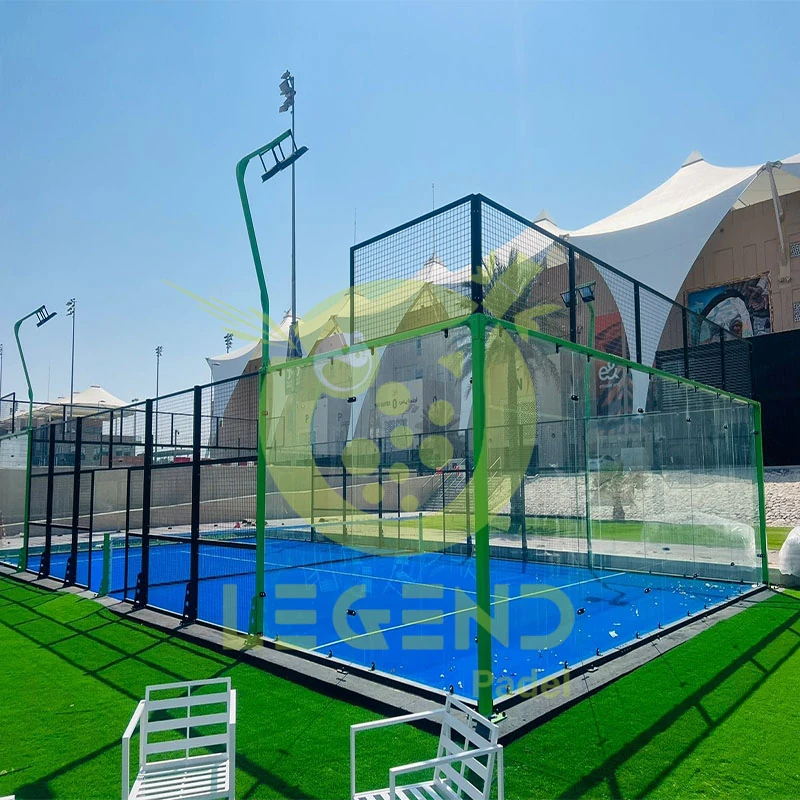
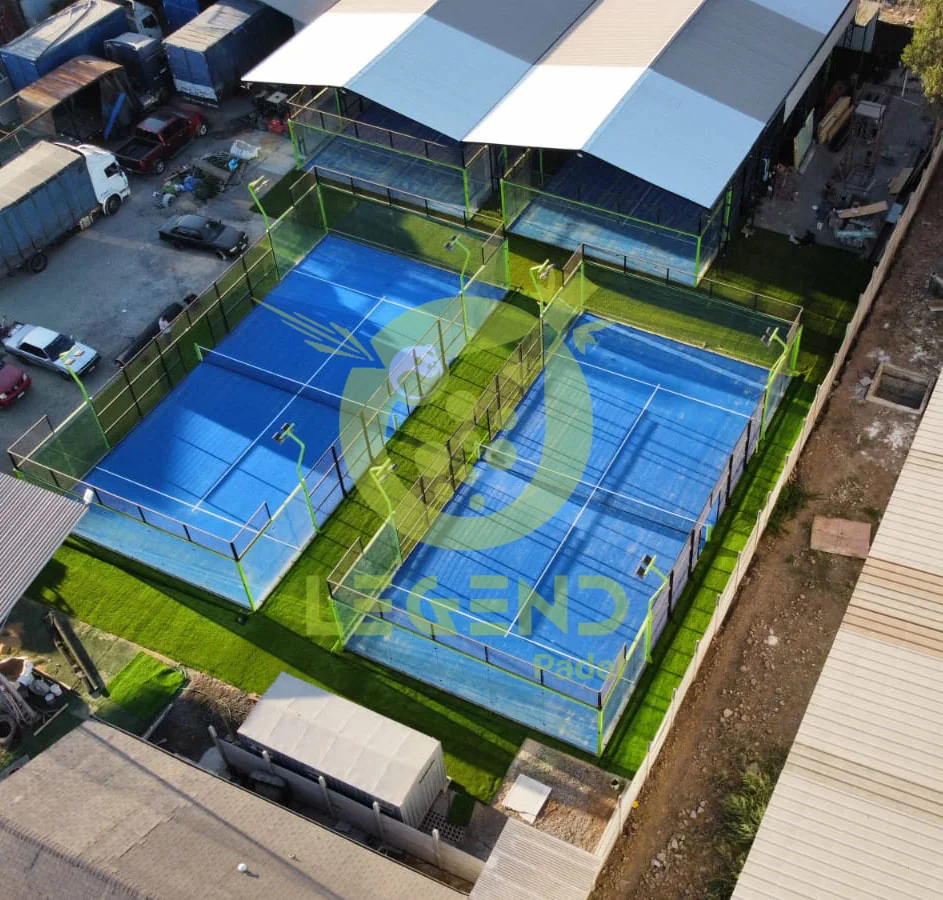
Adhering to the official regulations set by the International Padel Federation (FIP) is the non-negotiable first step for any club aiming to host recognized tournaments. The internal playing area must measure exactly 20 meters in length and 10 meters in width, with a strict tolerance of 0.5%. While the court dimensions remain constant, the 2026 standards place renewed emphasis on the external safety run-out zones, particularly for facilities aspiring to host high-level competition. These zones allow players to exit the court safely to retrieve balls, and the latest guidelines suggest expanding these areas to at least 3 meters wide by 8 meters long for international events, ensuring player safety and broadcast compatibility.
Minimum Ceiling Height for Indoor Clubs
The space above the court affects play quality. It impacts shots like the lob, which is key in padel. FIP rules set the lowest free height at 6 meters. But many find this too low for a good game. Club owners with experience and the LEGEND SPORTS team suggest a customized roof height of 9 to 12 meters for inside clubs. Extra height stops the ball from hitting the roof on strong shots. As a result, it improves the game for players. It also lets the site run official matches without issues.
Critical Construction Materials: Durability vs. Cost
Why 12mm Tempered Glass is the New Standard
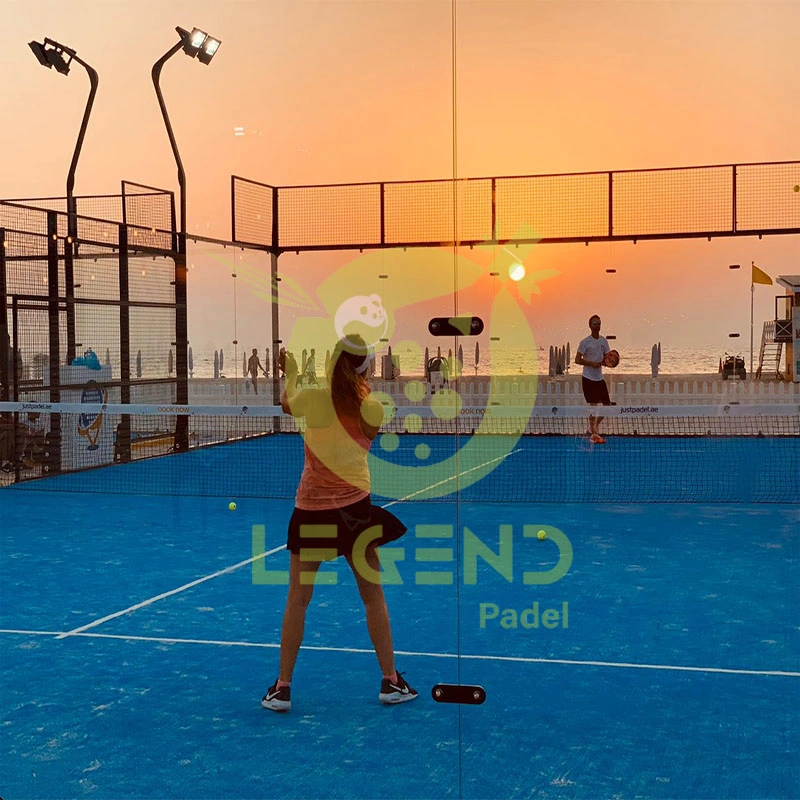
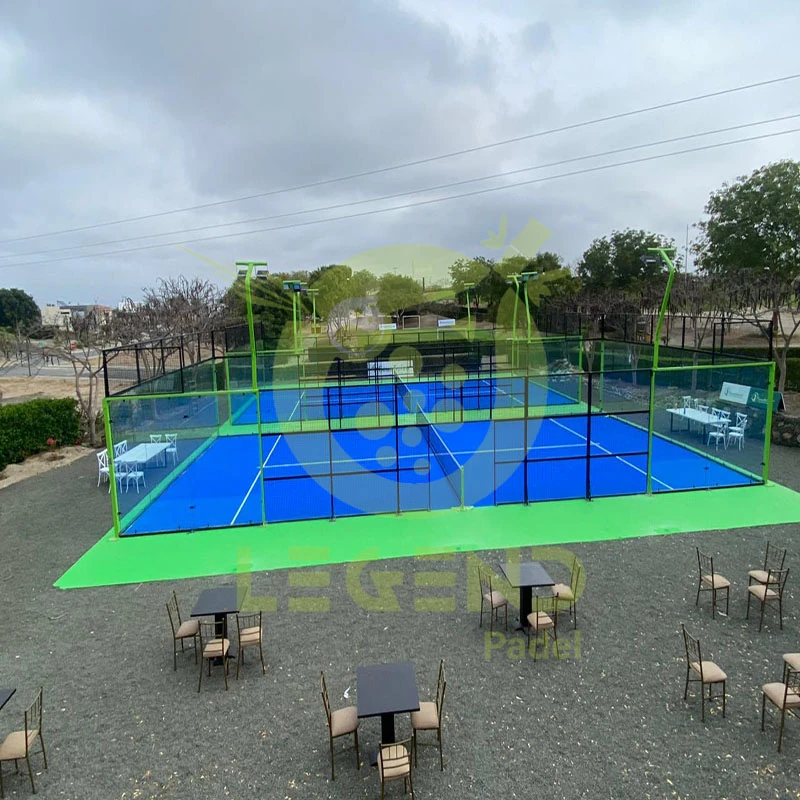
Clear walls and steady ball bounce are key for watchers and fair play. In the past, 10mm glass was usual. Now, the field moves to 12mm tempered glass for better safety and work. LEGEND SPORTS uses top 12mm tempered glass at 1955mm × 2955mm. It handles hits well and gives an even ball return. This fits ISO9001 quality checks. New courts skip old brick walls. They use these glass sheets with welded mesh for the surround. This setup offers the wide view players want.
Steel Structure & Anti-Corrosion Specifications
A padel court’s life span relies on its metal frame. This is true for outside spots open to wet air and gusts. Strong steel needs good rust-proof steps, like hot-dip galvanizing. This stops rust and weak spots over the years. LEGEND SPORTS is built with 3mm thick galvanized steel tubes. It uses 80mm × 80mm shapes for posts. This beats the basic 2mm pipes from cheap sellers. Such a solid build takes high winds and daily hard use without bending.
Artificial Turf: Monofilament vs. Fibrillated
Picking the play surface means weighing ball speed, ease for players, and lasting strength. For busy business clubs, PE+PP composite artificial turf works best. It mixes polyethylene’s bounce with polypropylene’s hold. LEGEND SPORTS gives a top monofilament turf with 12mm height and dense stitching (up to 46,200 stitches/m²). It grips better and needs less care than old fibrillated types. The turf keeps silica sand fill in place. This gives a sure footing and even ball jump for a long time.
Site Preparation: The Foundation of a Profitable Club
Rigid Slab vs. Asphalt Base
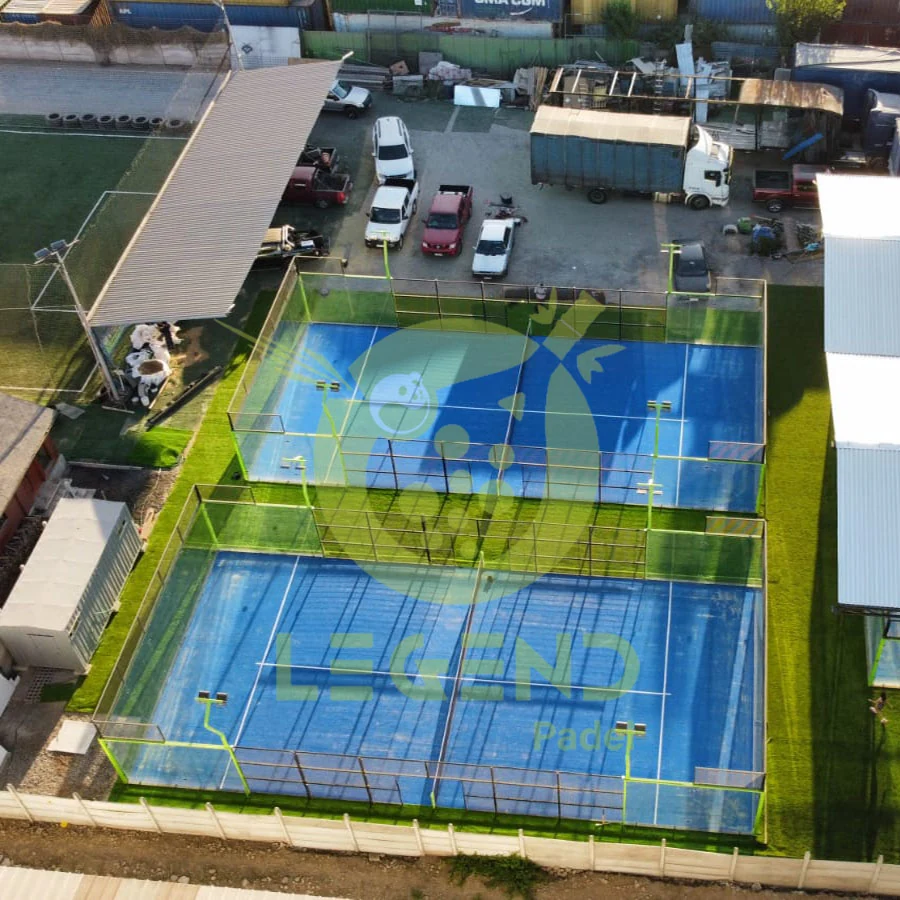
A flat base is a must for a court that fits FIP limits. The surface must stay within 3mm change over 3 meters. Asphalt drains water more quickly. But a reinforced cement slab is the top pick for steady hold and long life. This firm base stops sinking, which could knock glass out of line or break it under load. The base must be set and leveled with laser tools before the steel goes up. Even small ground flaws can harm the whole court’s strength.
Drainage Systems for Outdoor Courts
Outside sites need good water handling to keep courts open and earn money. Builders add a small tilt of 0.5% to 1% in the under layer. This moves rain from the play middle without changing ball paths. In rainy areas, pairing this tilt with a customized roofing system works best. It allows play in any weather.
Investment Analysis: Building for ROI in 2026
Breakdown of Installation Costs
Buyers should look at the full project costs. This includes not just the court parts, but shipping, setup, and groundwork. Buying straight from a Source Factory like LEGEND SPORTS means One-Stop Shopping. It covers courts, turf, lights, and even customized roofs in one load. This cuts shipping fees by 20-30% over getting items apart. In turn, it boosts overall Return on Investment (ROI).
Market Growth & Club Profitability Trends
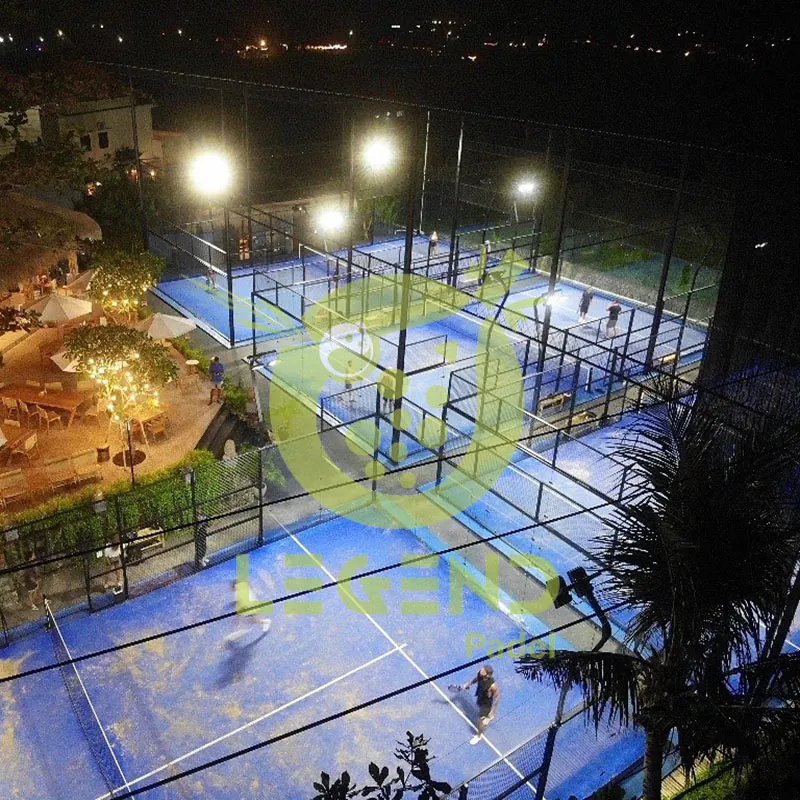
Recent reports show clubs with top setups keep players longer. As the field grows, users pick more carefully. They like sites with pro surfaces and enough roof space. Spending on high-grade gear, like Max Pro Panoramic Padel Court-PD03 with clear sights, lets clubs charge more per hour. It also boosts group bookings. This sets the club up for steady gains in a busy market.
Why Top Clubs Partner with LEGEND SPORTS
Certified Manufacturing (ISO9001 & ISO14001)
Quality checks matter for gear that lasts decades when brought in from abroad. LEGEND SPORTS stands out as a leading maker with full ISO9001 (Quality Management) and ISO14001 (Environmental Management) approvals. Unlike sellers, this direct factory runs checks on every part. From 12mm tempered glass to 3mm steel columns, items get tested before shipping. This matches FIP 2026 rules.
Global Logistics & Customization Capabilities
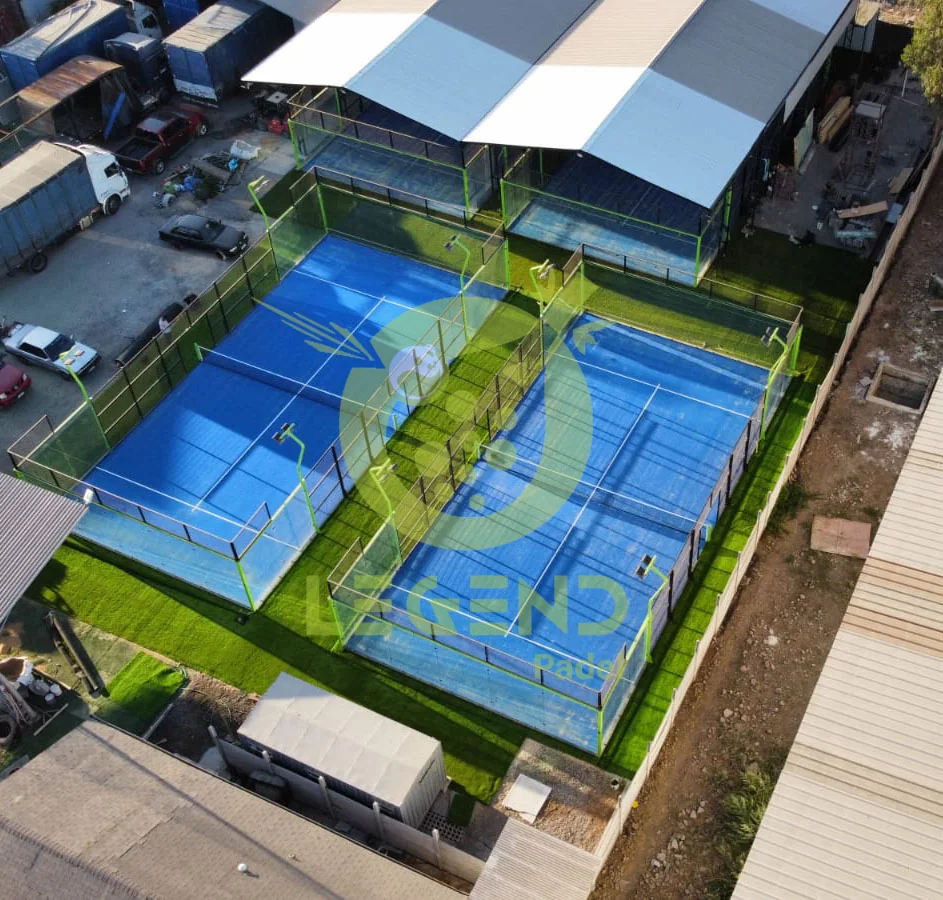
LEGEND SPORTS has sent goods to over 80 countries. It handles tough shipping needs for world court builds. The firm gives wide, customized services. These include Roof Height customization (8-12m) and color picks to fit club looks. For one home court or a full club with Panoramic Courts, the group offers easy delivery to your door. This keeps projects on time and in budget.
FAQ
Q: What are the official dimensions of a standard padel court?
A: The official playing area is 20 meters long by 10 meters wide. However, for construction purposes, you generally need a total footprint of at least 21 meters by 11 meters to accommodate the structure and necessary clearance.
Q: Do I need planning permission to build a padel court?
A: In most countries, padel courts are considered permanent structures and require local planning permission, especially regarding height and noise. You should consult your local zoning authority, particularly if you plan to install a customized roof structure over 6 meters high.
Q: How do I choose the best padel court manufacturer?
A: Look for a Source Factory rather than a reseller to ensure better pricing and communication. Verify that the manufacturer holds ISO certifications (like LEGEND SPORTS) and uses high-spec materials like 12mm tempered glass and 3mm thick steel to ensure the court lasts.
Q: What is the difference between standard and panoramic courts?
A: Standard courts have steel columns at the back glass corners, which can slightly obstruct the view. Panoramic Courts replace these corner columns with specialized glass fittings and thicker glass (usually 12mm) to provide an unobstructed view for spectators, making them ideal for center courts.
Q: Does the court require a specific type of foundation?
A: Yes, a rigid and perfectly level foundation is essential. A reinforced cement slab is recommended over softer surfaces to support the heavy weight of the glass and steel structure and to ensure the ball bounces consistently across the entire surface.