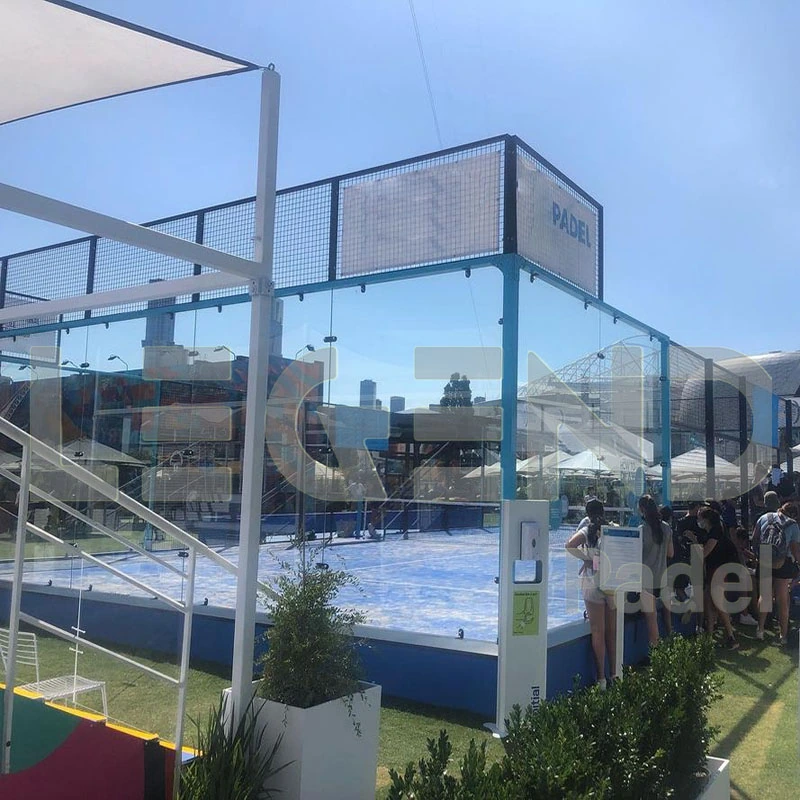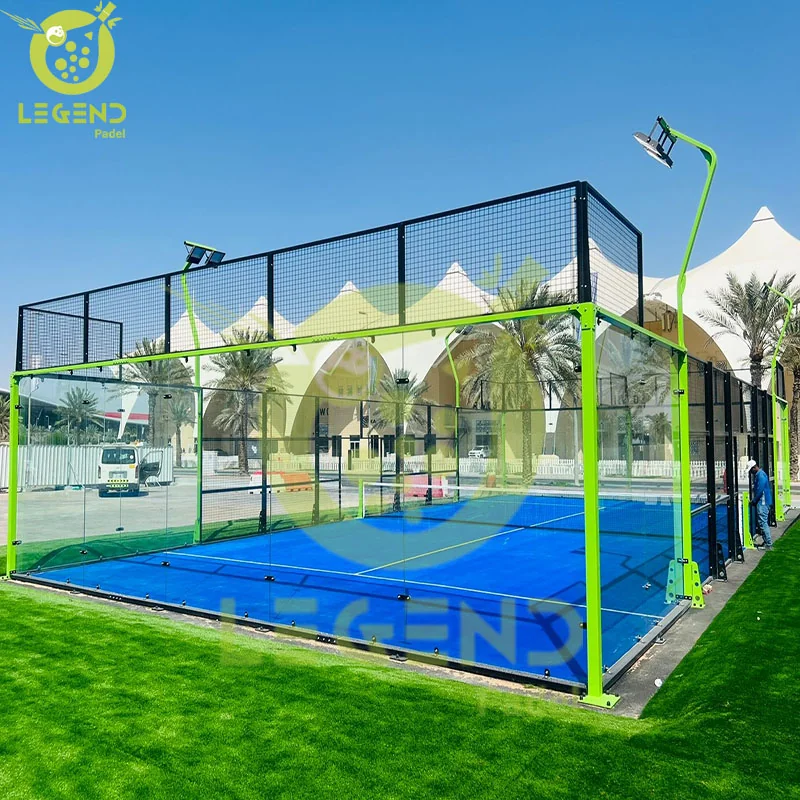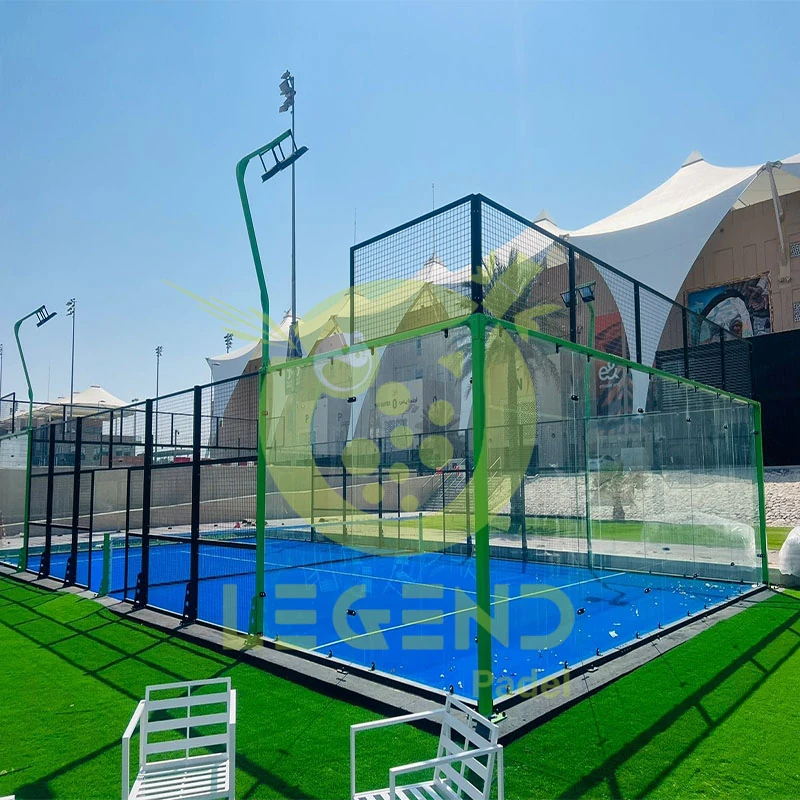



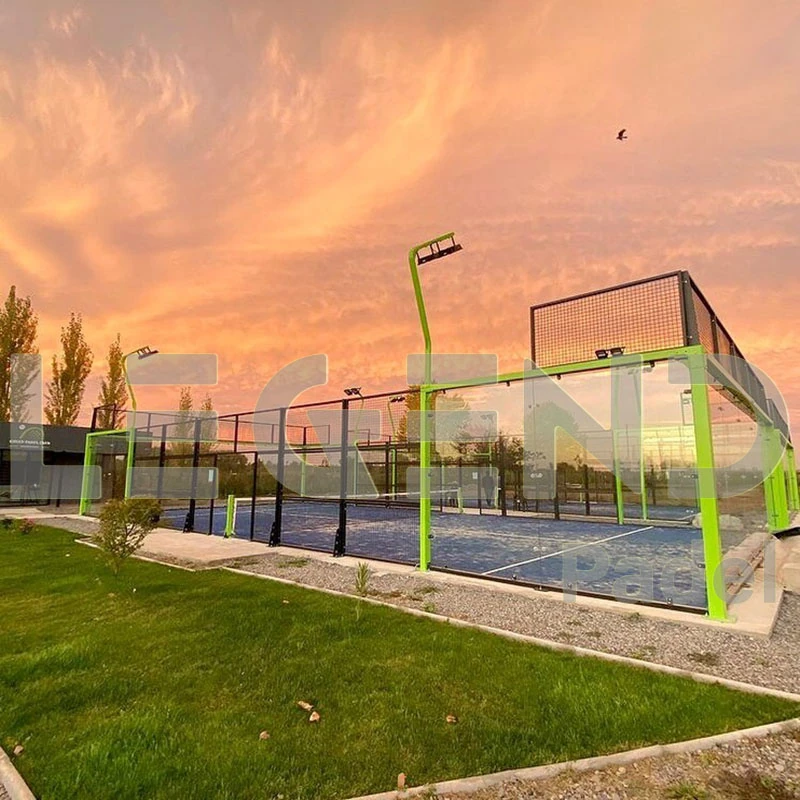
The worldwide sports scene moves toward active, group-focused racket games. Padel stands out as the main choice for 2026. Recent worldwide reports note that the field added 7,000 new courts around the globe in the last year. Club starts rose by 26%. For backers and builders, the main point now is not just setup. It is about smart space use, especially in fast-growing areas of APAC and MENA. This guide gives the key 2026 rules for padel court sizes and space needs. It helps meet pro rules and gain good ROI.
Why Accurate Space Planning is Critical for Padel Success in 2026
In the current market, the success of a padel facility depends on more than just fitting courts into a building; it requires smart layout strategies that maximize “monetizable minutes” per square meter. We emphasize that every centimeter of your floor plan contributes to the facility’s overall performance.
Beyond the Baseline: How Court Layout Impacts Player Retention
Player retention currently soars at 92% globally, but this is highly dependent on the quality of the playing environment. A layout that feels cramped or lacks proper social integration will lead to lower engagement. We design our customized layouts to ensure that player flow and social zones are prioritized, keeping members coming back day after day.
Balancing Maximized Court Density with Premium Player Experience
While it is tempting to pack as many courts as possible into a sports center, we advise finding a balance. Overcrowding can lead to poor acoustics and safety issues. By utilizing our customized site measurement services, we help operators calculate the perfect density that allows for premium amenities while maintaining high court availability.
Standard Padel Court Dimensions: The Blueprint for Professional Play
Following the International Padel Federation (FIP) rules is a must for sites that hold approved events or pro training times.
Double Padel Court Dimensions: The 20m x 10m Gold Standard
The standard double court measures exactly 20 meters in length and 10 meters in width. This 200-square-meter internal playing area is the global benchmark. For professional setups, LEGEND SPORTS recommends the Pro Panoramic Padel Corte PD04, which is specifically engineered for regulation size and durability. While the playing area is fixed, the total floor footprint required is at least 11m x 21m to accommodate the structural columns and perimeter glass.
Single Padel Court Dimensions: Strategic Space-Saving Solutions (20m x 6m)
In city hubs where property costs a lot, the single padel court at 20m x 6m is a key add-on. These courts let runners use unused spots on a site. They also meet the rising need for one-on-one practice sessions.
Tolerance and Precision: Understanding International Competition Margins
In high-stakes construction, precision is measured in millimeters. All measurements are taken from the internal face of the enclosures. Walls are usually made of tempered glass and metallic mesh. To ensure a professional-grade bounce, the vertical alignment of the glass panels must be absolute, as even minor deviations can disqualify a court from professional tour use.
Vertical and Peripheral Space: Planning for Indoor Padel Evolution
The move to “all-weather” inside centers, mainly in the Middle East, has made height room the top factor in picking a site.
The “Sky-High” Requirement: Ideal Ceiling Heights for Professional Lobs
Nothing ruins a match like a lob hitting the ceiling. While amateur facilities may operate with a 6-meter clearance, we advise a minimum clear height of ≥8 meters for new commercial projects. For venues hosting APPT or Premier Padel events, a height of 9 to 12 meters across the entire playing surface is required to meet the 2026 elite standards.
Safety Buffers and Out-of-Court Play Zones: Essential Run-out Clearances
Top-tier competitive play often requires players to sprint out of the court to return a ball. A professional facility should include a 2-meter-wide run-out zone on both sides. This peripheral space is integrated into the customized layout of high-end clubs to enhance both player safety and the spectator experience.
Converting Warehouses and Commercial Spaces: Minimum Footprint Realities
Converting industrial warehouses is the dominant trend for 2026. We specialize in transforming these spaces by assessing minimum footprint realities. A successful conversion requires analyzing pillar placement and ensuring that the structural steel does not interfere with the 20m x 10m playing zone.
Innovative Trends in Padel Infrastructure: Insights from 2026 Global Reports
The 2026 infrastructure trend is defined by the rise of “Smart Courts” and the professionalization of every surface.
The Rise of All-Weather Indoor Hubs: Lessons from the APAC and MENA Markets
The rapid growth in the APAC and MENA regions has proven that climate-controlled, indoor environments provide the most consistent revenue. We help developers in these regions create customized indoor hubs that remain playable regardless of extreme outdoor temperatures.
Sustainable Surface Technologies: FIFA-Certified Turf and Eco-Friendly Foundations
Sustainability is now a core requirement for our team. We use environmentally friendly materials, such as our FIFA-certified Eco-Turf LG-FT-12, which ensures a consistent ball response while meeting ISO9001 quality standards. Our foundations are designed for long-term durability without the use of toxic components.
Intelligent Infrastructure: Integrating Smart Lighting and Digitalized Match Systems
We lead this evolution with our Corte inteligente Padel-PD04E, a model that features an integrated intelligent lighting system. This system adjusts brightness based on usage needs, reducing operational costs while enhancing the player experience through digitalized match-tracking and scoring.
Expert Specifications for High-Performance Enclosures and Materials
A padel court’s lasting power comes from the strength of its parts. Unlike tennis, padel walls play a part in every point.
Structural Integrity: Professional Glass Sizing and Wind-Resistance Standards
The wall quality matters most. Walls are often tempered glass for full-circle sight for watchers. LEGEND SPORTS uses 12mm thick tempered glass, often in 1955*2955mm sheets, for top hit strength. In outside settings, these sheets and the SPHC steel posts (100x100x3mm) must be tailored to handle local wind forces.
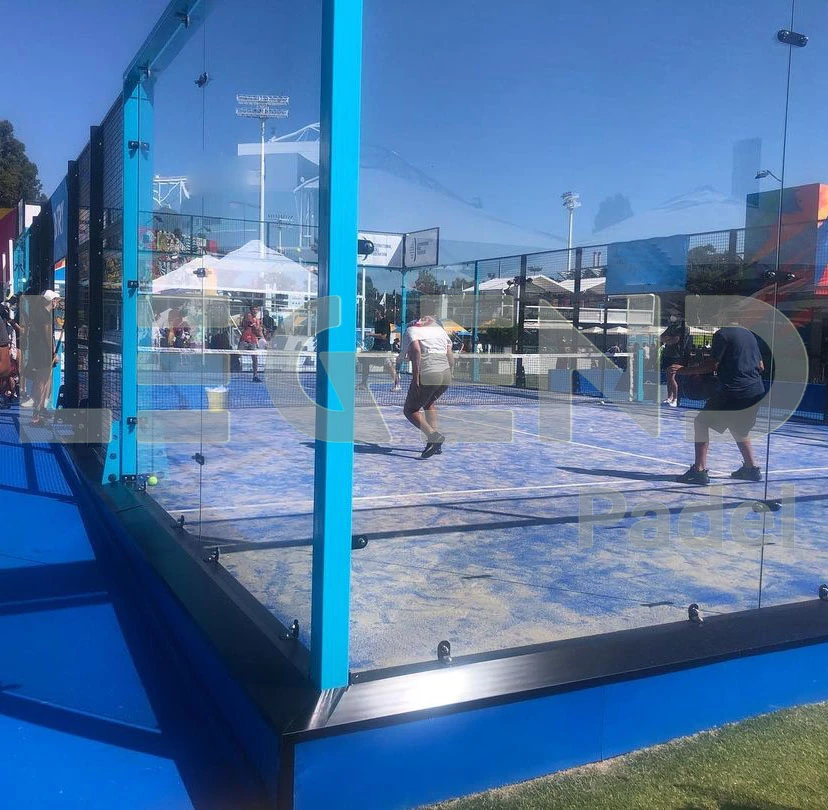
Anti-Climbing Fence Engineering: Prioritizing Safety in Public and Private Clubs
Safety forms a core part of 2026 plans. The Extreme super panorama Autumn Stadium - pd06, for pro events, has a special no-climb fence built. This cuts the risk of hurt or unauthorized entry. It works even in empty public parks or busy sports sites.
Modular Construction: Reducing Installation Lead Times for 2026 Projects
Fast setup gives an edge in the 2026 field. With a block build method, LEGEND SPORTS offers full help. It covers the first site check to the last put-together. This way, even hard warehouse changes finish with little stop time.
Strategic Site Selection: How to Choose the Perfect Location for Your Court
Selecting a location for a padel hub in 2026 requires a technical audit of the local demographics and infrastructure.
Analyzing Local Demographics and Market Saturation for Padel Hubs
We advise looking for areas with a growing interest in social sports. Our market analysis suggests that regions with high digitalization and a passion for racket sports, like the UK or India, are ripe for new high-end hubs.
Infrastructure Readiness: Power, Access, and Utility Requirements
A perfect site must have easy access for logistics and a floor load-bearing capacity capable of supporting our heavy tempered glass walls and SPHC steel columns. Ensuring infrastructure readiness for intelligent lighting and digital systems is the key differentiator for top-performing clubs in 2026.
Preguntas frecuentes
Pregunta: How much total floor space is required to install a standard double padel court?
A: The real play zone is 20m x 10m. But you need at least 11m x 21m full area for frame supports and glass walls. For pro builds like the Pro Panoramic Padel Court-PD04, we suggest more space if you add watcher seats or outside-court play areas.
Pregunta: What is the recommended ceiling height for indoor padel court installations?
A: For a regular club, at least 8 meters in height is suggested to avoid game blocks. For top match sites, the space should be 9 to 12 meters to allow pro-style high shots.
Pregunta: Can a padel court be built in a narrow space for 1v1 play?
A: Yes, if your site is too slim for a pair of courts, add a single padel court at 20m x 6m. These tailored fixes suit training centers where using all space matters most.
Pregunta: Are there specific safety standards for the glass walls used in professional courts?
A: Yes, the field rule for business and pro courts is 12mm thick tempered glass. At LEGEND SPORTS, we use 1955*2955mm tempered glass sheets built for top hit strength. This keeps players safe in strong games.
Pregunta: How can a padel court be customized for high-humidity outdoor environments?
A: Outside courts need a tailored plan with rust-proof care for the steel frame and sun-safe grass. Items like the no-climb fence and special coats on our SPHC steel posts (100x100x3mm) make the court last and stay safe in tough weather.