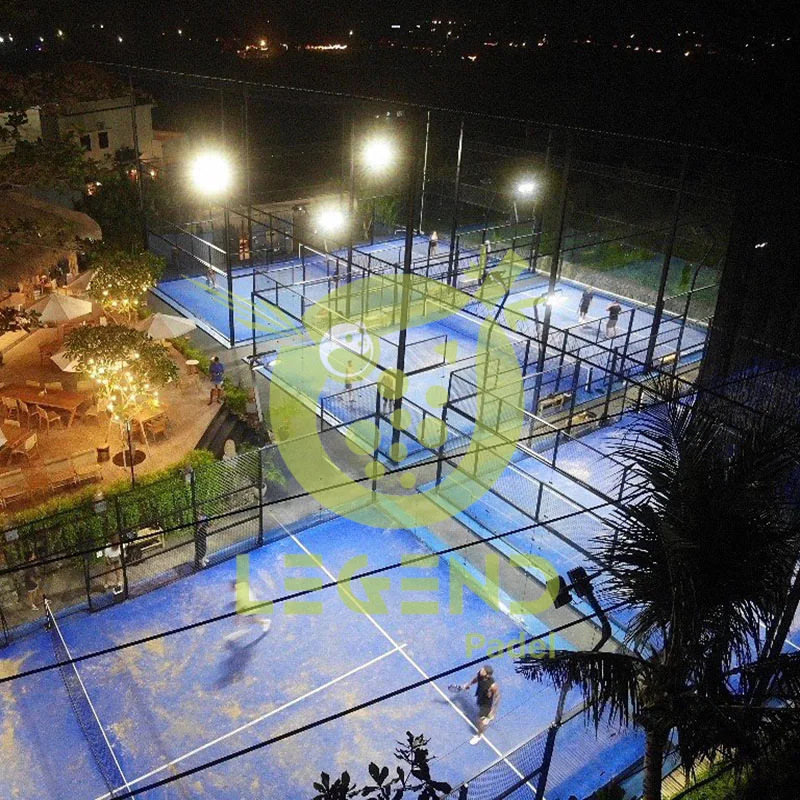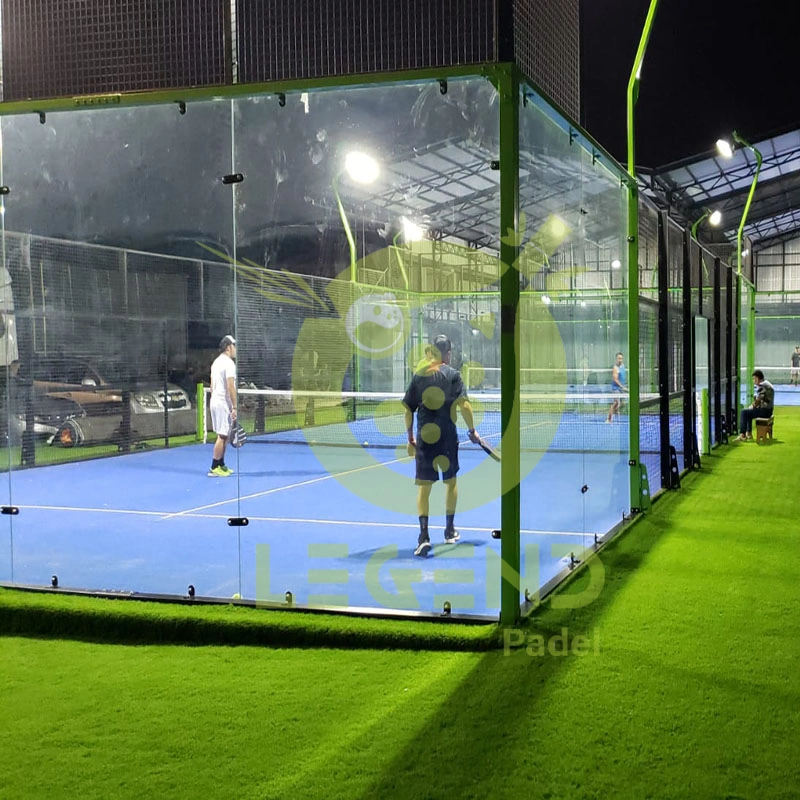



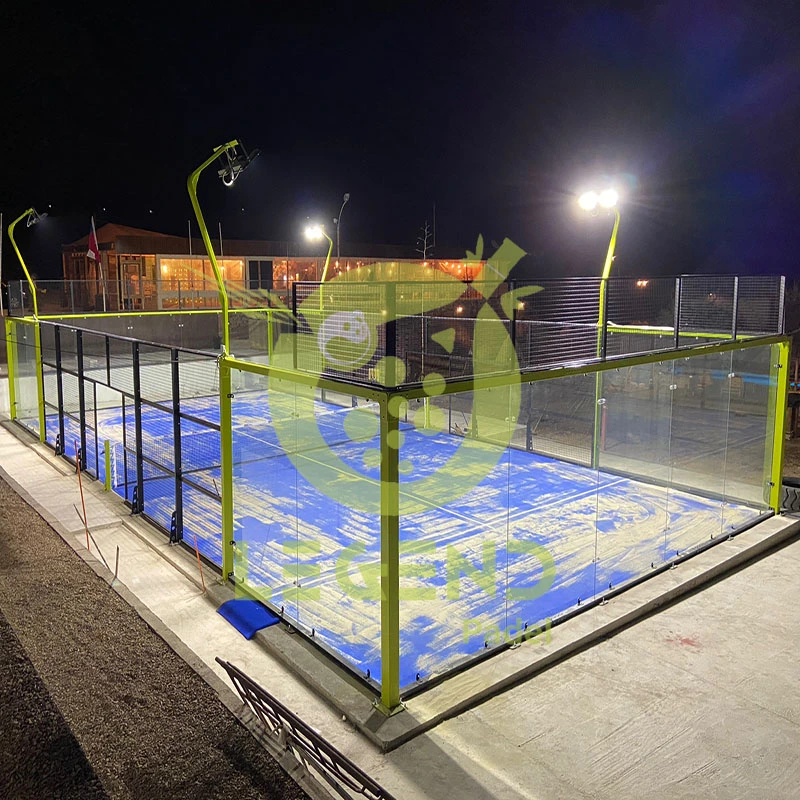
A Padel Court can fit the site plan and still face questions about noise at nearby homes. German authorities may examine where sound travels, who receives it, when the venue operates, how often impacts occur, and whether submitted assumptions match the proposed business. A useful acoustic assessment connects design, site geometry, operating hours, parking, and mitigation in one traceable case.
How German Authorities Frame a Padel Court Acoustic Assessment
The Legal Context for Sports Facility Noise
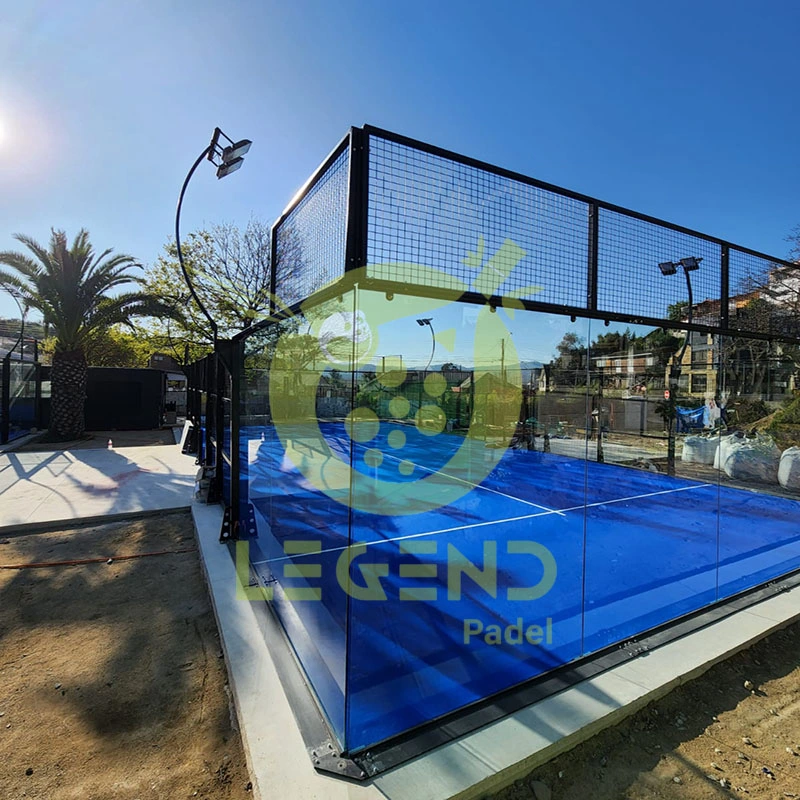
Germany has no separate federal noise ordinance written only for padel. A fixed Padel Court may instead be assessed as a sports facility under the Federal Immission Control Act and the Sports Facilities Noise Protection Ordinance, commonly cited as the 18. BImSchV. The ordinance provides the method for assessing attributable sports facility noise.
The approval route still depends on the site, federal state law, land use, and municipal procedure. An authority may request a professional forecast where sensitive uses could be affected. Buyers should confirm the scope locally rather than treating a general Padel Court specification as proof of compliance.
The Proposed Operating Case Authorities May Test
An assessment is built around the intended operation. Authorities may examine court numbers, simultaneous matches, coaching, tournaments, spectators, opening hours, technical equipment, parking, and access. Existing noise from other sports facilities also matters where cumulative assessment is required.
The selected configuration should be clear before the model is prepared. Comparing the Padel Court product range can help a buyer freeze court numbers, dimensions, enclosure types, and layout inputs, but the acoustician must translate the actual project into defensible source assumptions.
Padel Court Sound Sources Authorities May Include
Gameplay and Structural Impact Noise
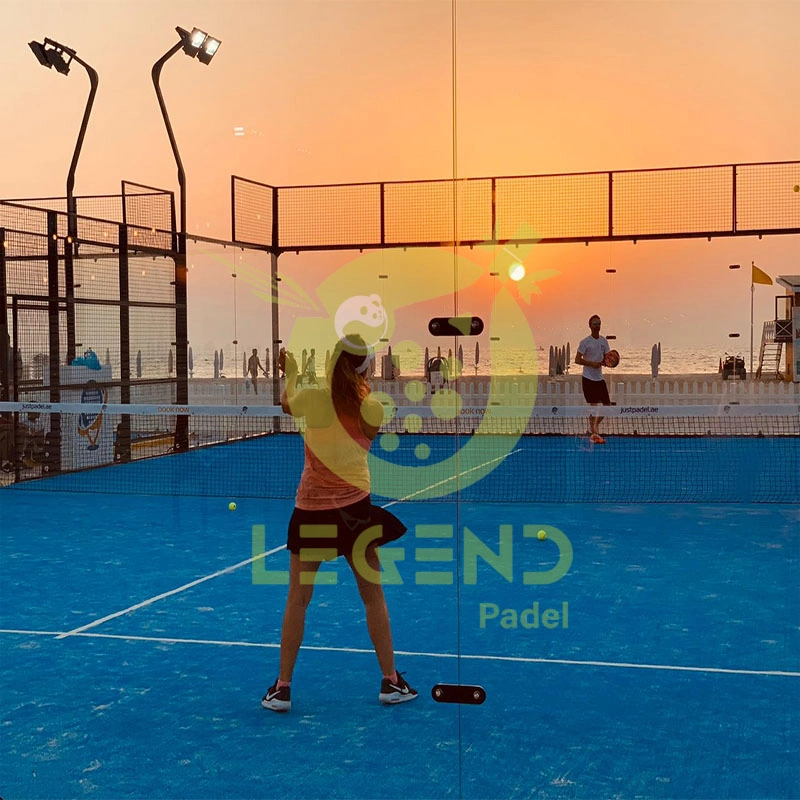
Repeated racket strikes and balls hitting glass or mesh create short, noticeable events. The assessment may distinguish ball to racket, ball to glass, and ball to fence impacts because their frequency and acoustic character can differ. It may also consider vibration or rattling from the frame, doors, loose components, and technical equipment.
Buildings, terrain, screens, hard surfaces, and court orientation change propagation. Source heights, reflections, openings, and sight lines to receptors must match the proposed site.
Players Spectators Parking and Site Traffic
The 18. BImSchV attributes noise from sports participants, spectators and other users, technical equipment, and on-site parking. This can include player voices, coaching, applause, car doors, and vehicle movements.
Public-road traffic is considered separately. It becomes relevant under specified conditions, including when attributable facility traffic is calculated to raise existing traffic noise by at least 3 dB(A). The consultant should document parking capacity, peak turnover, routes, and expected traffic.
Padel Court Receptors Times and Acoustic Metrics
Noise Sensitive Receptors and Land Use Categories
Authorities may first identify the applicable area category and the most exposed noise sensitive receptor. For developed land, the ordinance generally locates the relevant assessment point 0.5 m outside the middle of the open window of the most affected habitable room. Hospitals, care facilities, and future developable land can require separate receptor treatment.
Outdoor guideline values depend on the protected land use. The following statutory values illustrate why a Padel Court near housing can face a different test from one in a commercial area.
| Area category | Day outside morning rest | Morning rest | Night |
| Commercial area | 65 dB(A) | 60 dB(A) | 50 dB(A) |
| Urban area | 63 dB(A) | 58 dB(A) | 45 dB(A) |
| Mixed village or core area | 60 dB(A) | 55 dB(A) | 45 dB(A) |
| General residential area | 55 dB(A) | 50 dB(A) | 40 dB(A) |
| Pure residential area | 50 dB(A) | 45 dB(A) | 35 dB(A) |
These are receptor values, not permissible sound levels beside the court. Planning designation, materially different actual use, and foreseeable development also matter.
Day Rest and Night Assessment Periods
The ordinance separates daytime, rest periods, and night. On working days, it evaluates 8:00 to 20:00 outside rest periods, 6:00 to 8:00 and 20:00 to 22:00 as rest periods, and the most unfavorable full hour at night. Sundays and public holidays use different divisions.
A daily average can hide the critical window. A venue that complies in daytime may still need restricted morning, evening, Sunday, or night operation. The report should test the hours the business actually needs.
Rating Levels Impulse Adjustments and Short Peaks
The rating level combines an average with applicable adjustments for impulsiveness, conspicuous level changes, tones, or intelligible information. Ball impacts can require impulse treatment. Individual short peaks are assessed separately through their maximum level.
For a new sports facility, the annex generally calls for a forecast; an existing facility is normally assessed by measurement. The report should state source data, calculation method, adjustments, propagation assumptions, and treatment of maximum events.
Evidence in a German Padel Court Noise Report
Site Plans Source Data and Operating Assumptions
A reviewable submission needs a scaled site plan, heights for courts, buildings, barriers and receptors, terrain assumptions, and the operating schedule. It should identify each source group and its emission evidence.
Manufacturer information can support geometry and component descriptions. The LEGEND SPORTSMax Pro Panoramic Padel Corte-PD03 page identifies a 20 m by 10 m court, steel structure, 12 mm tempered glass, artificial turf, and eight 200 W LED lights. Those facts are not an acoustic compliance certificate.
Prediction Scenarios and Uncertainty
Authorities may expect a credible busy case. The model can test simultaneous play, peak parking, evening operation, multiple receptor floors, and existing sports noise. It should separate normal operation from occasional events.
For each receptor, the report should present the period, guideline value, predicted rating and peak levels, and remaining margin. Any dependency on uncertain source data or screen performance should be explicit.
Mitigation Commitments and Verification
Mitigation may include relocating courts, increasing separation, adding an acoustic barrier, limiting spectators, or restricting hours. Authorities may evaluate barrier height, length, continuity, mass, absorption, and reflected paths.
Every modelled measure should appear in drawings and the operating plan. The authority may require post-installation verification. A measurable design or operating condition is stronger than an untestable promise.
How Buyers Can Prepare a Padel Court Acoustic Submission
Freeze the Layout Before the Acoustic Model
Changing position, quantity, orientation, hours, parking, or barrier geometry can invalidate a forecast. Buyers should coordinate the acoustician, planner, contractor, and supplier before ordering. A responsibility matrix should assign source data, modelling, authority responses, and conditions.
Request Model Ready Manufacturer Information
We can provide our approved layout, dimensions, component descriptions, lighting information, and installation interfaces. The acoustic consultant remains responsible for emission inputs and German assessment rules.
Ask for scaled drawings and identify options that alter geometry or reflections. Marketing statements about quiet operation cannot replace source data, documented assumptions, or a site-specific prediction.
Keep Product Supply and Approval Duties Separate
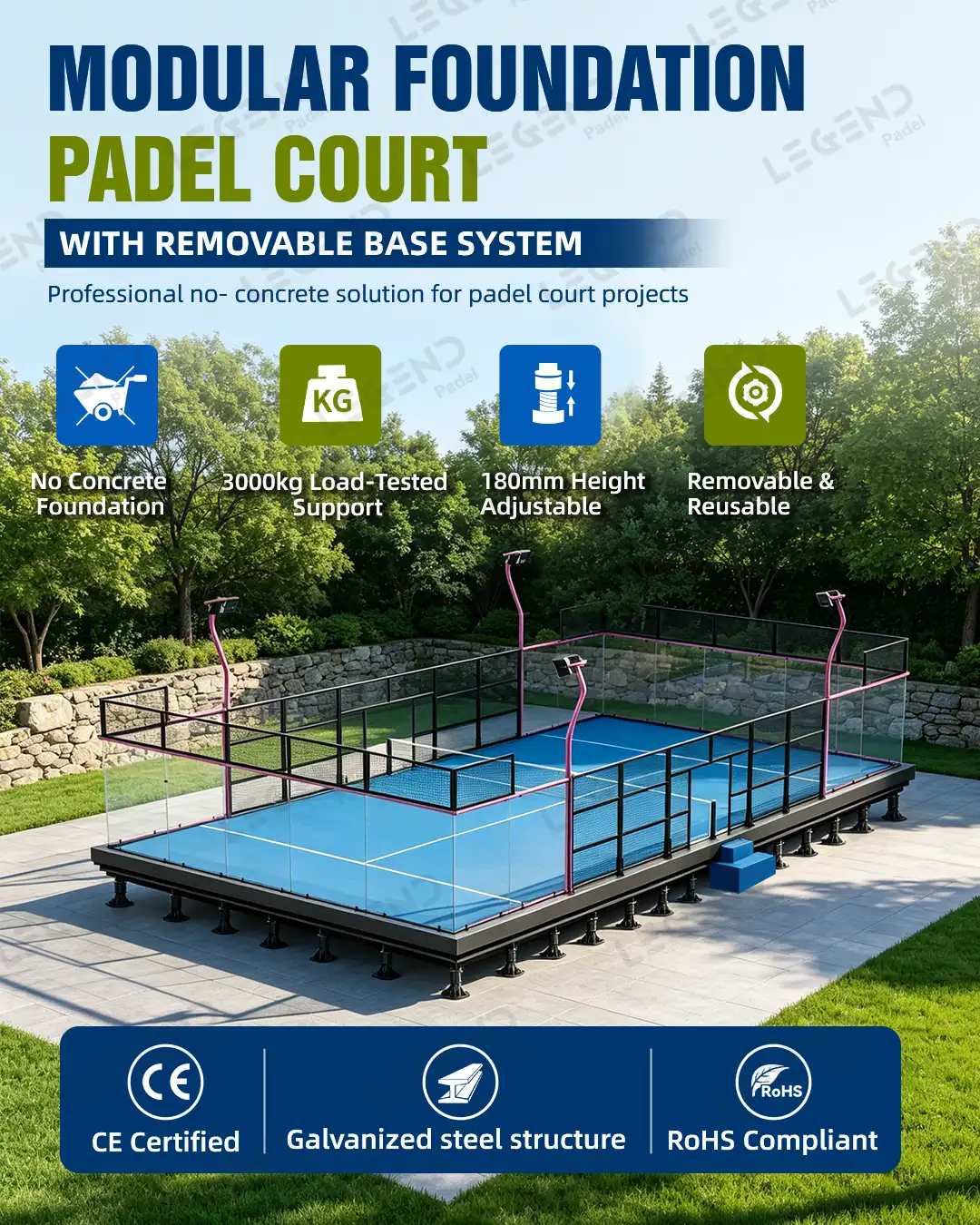
A relocatable design may reduce permanent groundwork, but it does not automatically remove noise or planning review. The LEGEND SPORTS Móvil Pro Padel Corte-PD05 is described as self-fixing and easy to assemble and disassemble; the authority can still evaluate its actual location, hours, users, parking, and effect at neighboring receptors.
The contract should separate equipment conformity from site approval and allocate costs for changed layouts, barriers, revised hours, supplementary modelling, or verification measurements.
Preguntas frecuentes
Q: Is an acoustic assessment mandatory for every German Padel Court?
A: Not in one identical form nationwide. The competent authority decides what evidence is needed. A professional assessment is more likely where homes, hospitals, care facilities, or other sensitive uses may be affected.
Q: Which Padel Court noises may be included in a German assessment?
A: It may include racket and ball impacts, glass and mesh strikes, voices, technical equipment, parking, and access activity. Public-road traffic is considered separately under the conditions in the 18. BImSchV.
Q: Where is Padel Court noise assessed at a nearby home?
A: For developed land, the point is generally 0.5 m outside the middle of the open window of the most affected habitable room. The consultant should identify the worst facade and floor.
Q: Can a Padel Court pass on an average decibel level alone?
A: No. The rating level can include impulse, level-change, tonal, or information adjustments, while short peaks are checked separately. The time period and land-use category also affect the result.
Q: Can acoustic barriers guarantee approval for a Padel Court?
A: No. Performance depends on position, height, continuity, material, geometry, and reflections. Approval may also depend on hours, parking, cumulative sports noise, and whether construction matches the model.