


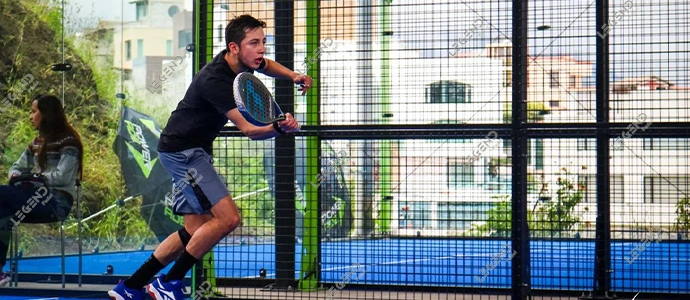
Paddle Court Wall Systems: How Glass and Metallic Mesh Influence Modern Court Design
Paddle court wall systems shape gameplay quality. The walls act as active rebound surfaces, not just passive boundaries. These setups affect ball behavior. They also impact player control. Plus, they set the overall pace of the match. As paddle grows worldwide, facility owners focus on wall materials. These materials deliver steady rebounds. They provide solid safety features. And they offer lasting strength. Dependable wall systems boost user experience, too. They support regular training. They also enable tournament-level play.
Why Paddle Court Wall Materials Matter for Gameplay, Safety, and User Experience
Paddle court wall materials count a lot. They directly affect ball speed. They influence bounce accuracy. And they build player confidence. Glass walls give clear sightlines. They also ensure firm rebounds. Meanwhile, metallic mesh boosts airflow. It also lightens the overall structure. Good materials improve safety as well. They handle hits without breaking. They avoid warping after years of use. When built right, wall systems help rallies flow better. They improve viewing for fans. And they raise the facility’s value over time.
Industry Standards Defining Glass and Metallic Mesh Requirements in Paddle Court Construction
Industry standards call for 12mm tempered glass panels. They also demand electro-welded metallic mesh. This setup ensures even rebounds. It also maintains strong build quality. Rules cover sizes. They outline fitting methods. And they detail safety under hits. Following these keeps the courts reliable. Clubs, schools, and events use them. They deliver steady results. Plus, they match worldwide needs for toughness.
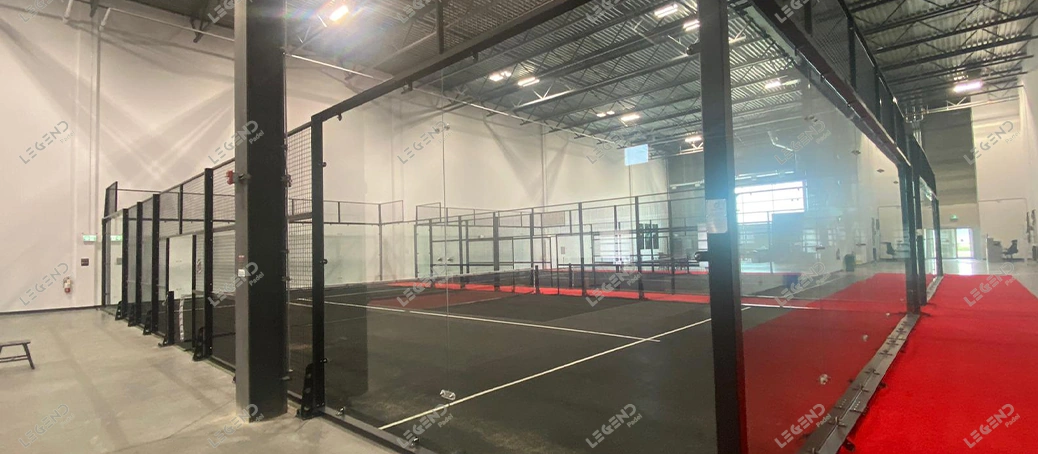
Glass Walls in Padel Court Design: Strength, Thickness, Visibility, and Safety
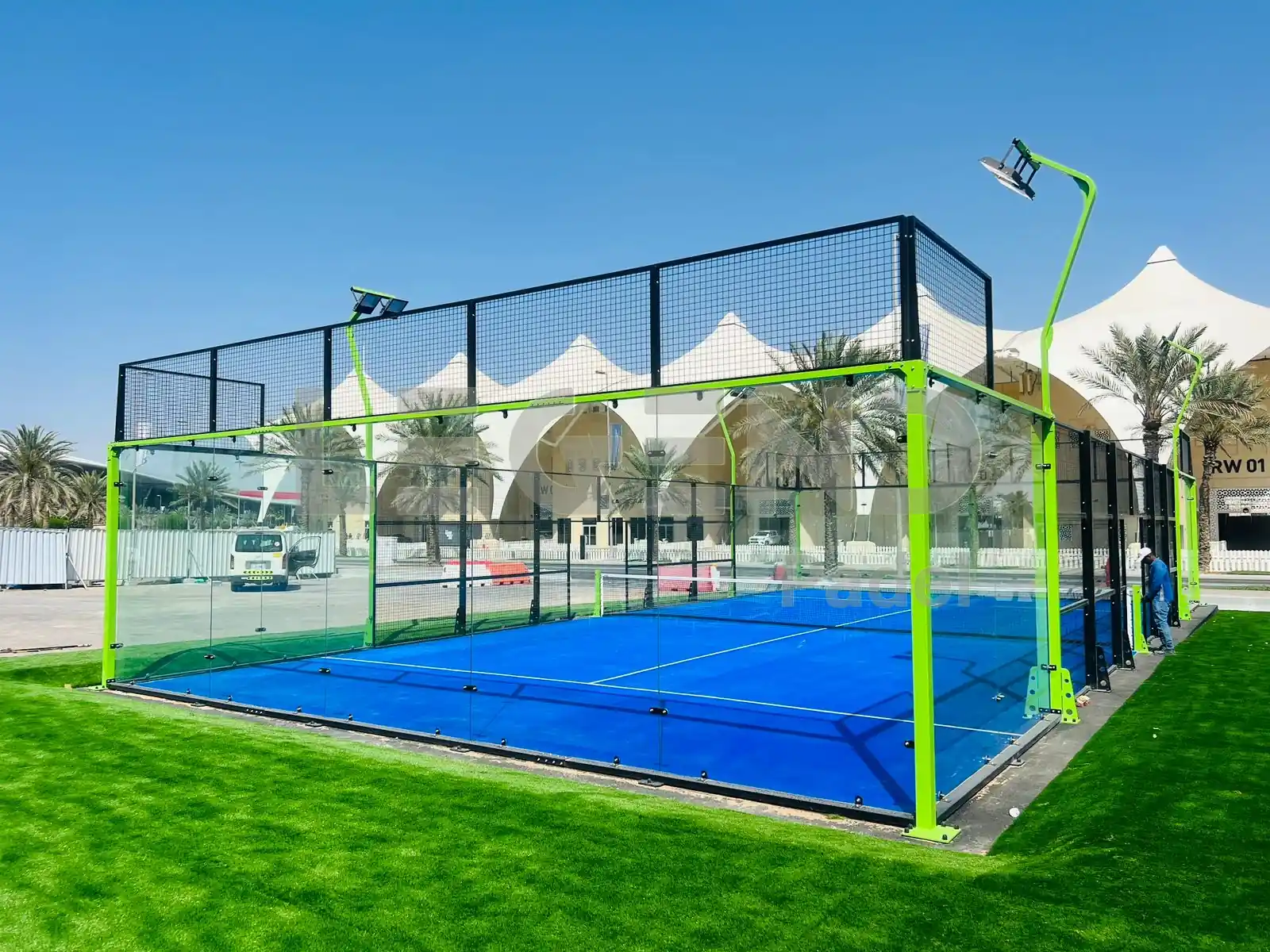
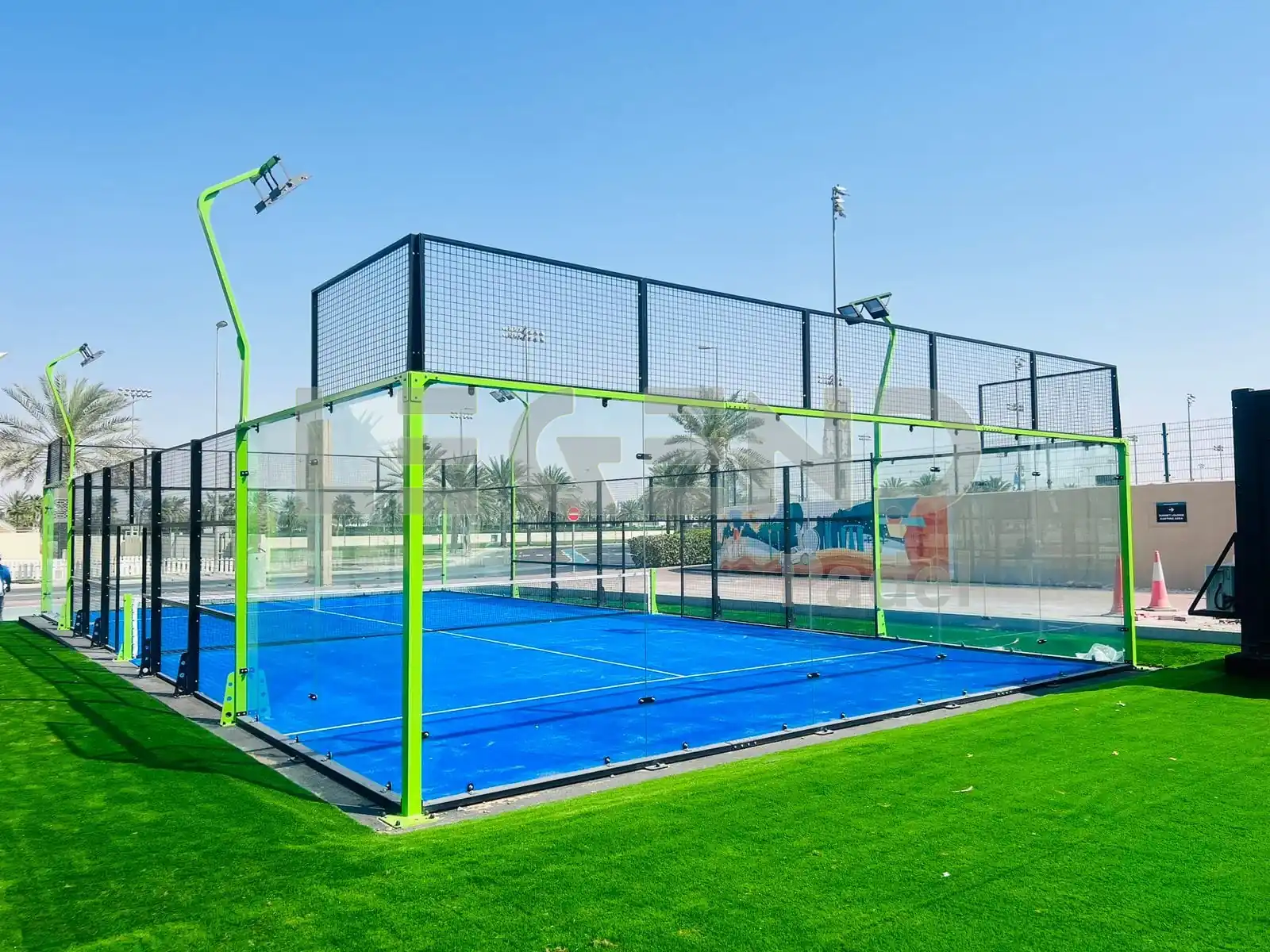
The advantages of 12mm tempered glass make it the leading material for professional paddle courts because it provides high impact resistance and excellent clarity. In our Corte Panorámica Pro PD04, 12mm tempered glass panels create smooth rebound zones and allow spectators to view matches from all angles. Courts using high-quality tempered glass offer reliable responsiveness for competitive players and a more premium appearance for facilities.
Advantages of 12mm Tempered Glass for Professional and Commercial Paddle Courts
Advantages of 12mm tempered glass include superior strength, stable transparency, and shatter-safe behavior. The thickness ensures reliable performance even under frequent, high-speed impacts, making it ideal for busy sports venues. The material also enhances video recording and coaching because of its distortion-free visibility.
Impact Resistance and Breakage Behavior of Tempered vs. Laminated Glass
Impact resistance and breakage behavior differ between tempered and laminated glass. Tempered glass fractures into small, blunt pieces to reduce harm, while laminated glass holds fragments in place through its interlayer. Tempered glass is therefore more common in commercial paddle courts where safety and cost efficiency are priorities.
Surface Treatments and Edge Finishing Processes for Long-Term Performance
Surface treatments and edge finishing processes further strengthen the glass panels. Polished edges reduce stress points, and specialized coatings protect against humidity, scratches, and UV exposure. These enhancements help courts maintain clarity and durability in both indoor and outdoor environments.
How Glass Enhances Court Visibility, Aesthetics, and Spectator Engagement
How glass enhances paddle court visibility becomes clear through panoramic designs such as the Extremo Super Panoramic paddle Corte-PD06. By removing rear vertical beams, panoramic courts create open viewing zones and a more modern visual experience. This design is especially valuable in clubs and hotels that prioritize premium aesthetics.
Panoramic and Super Panoramic Designs for High-End Paddle Clubs
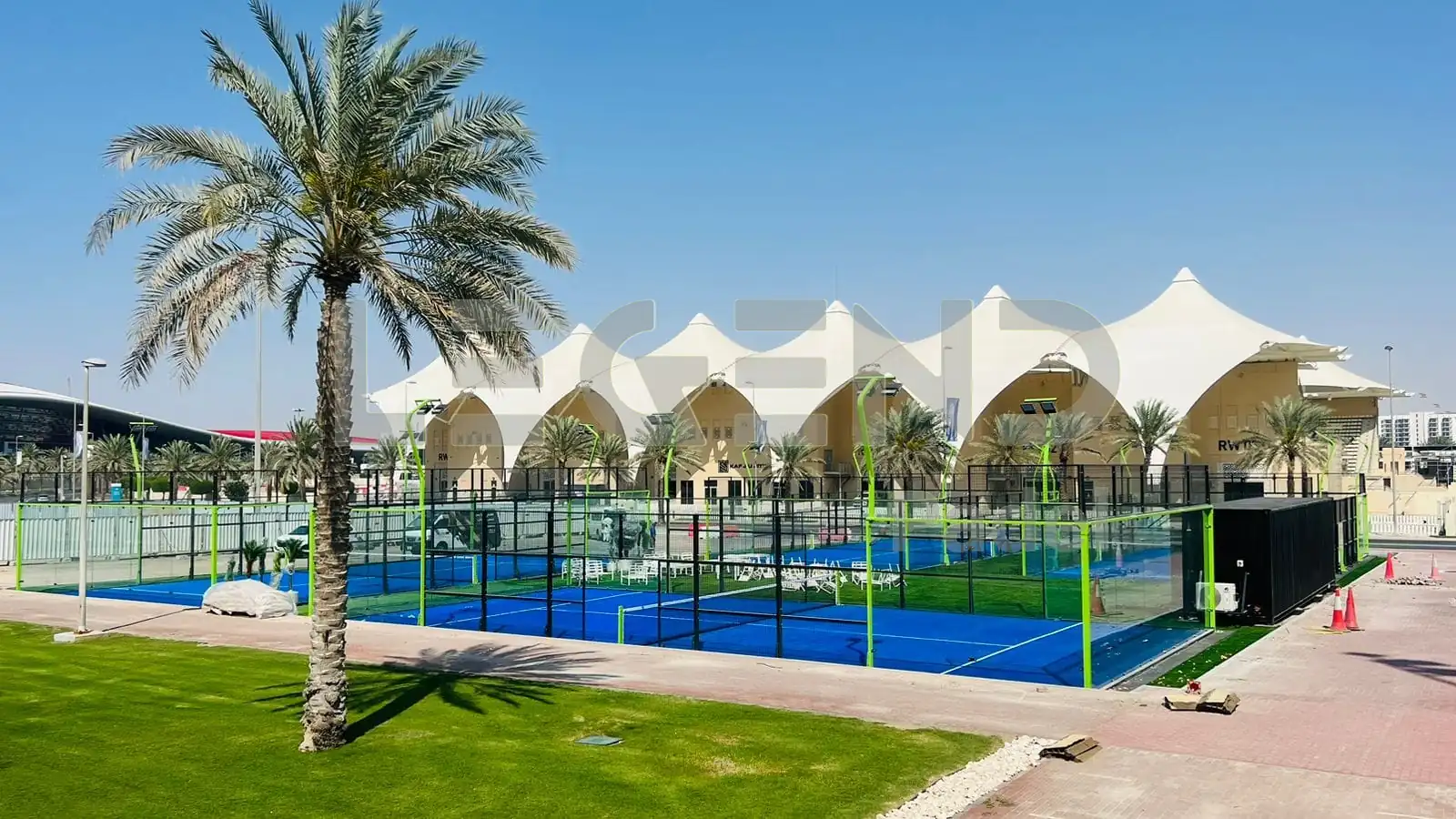
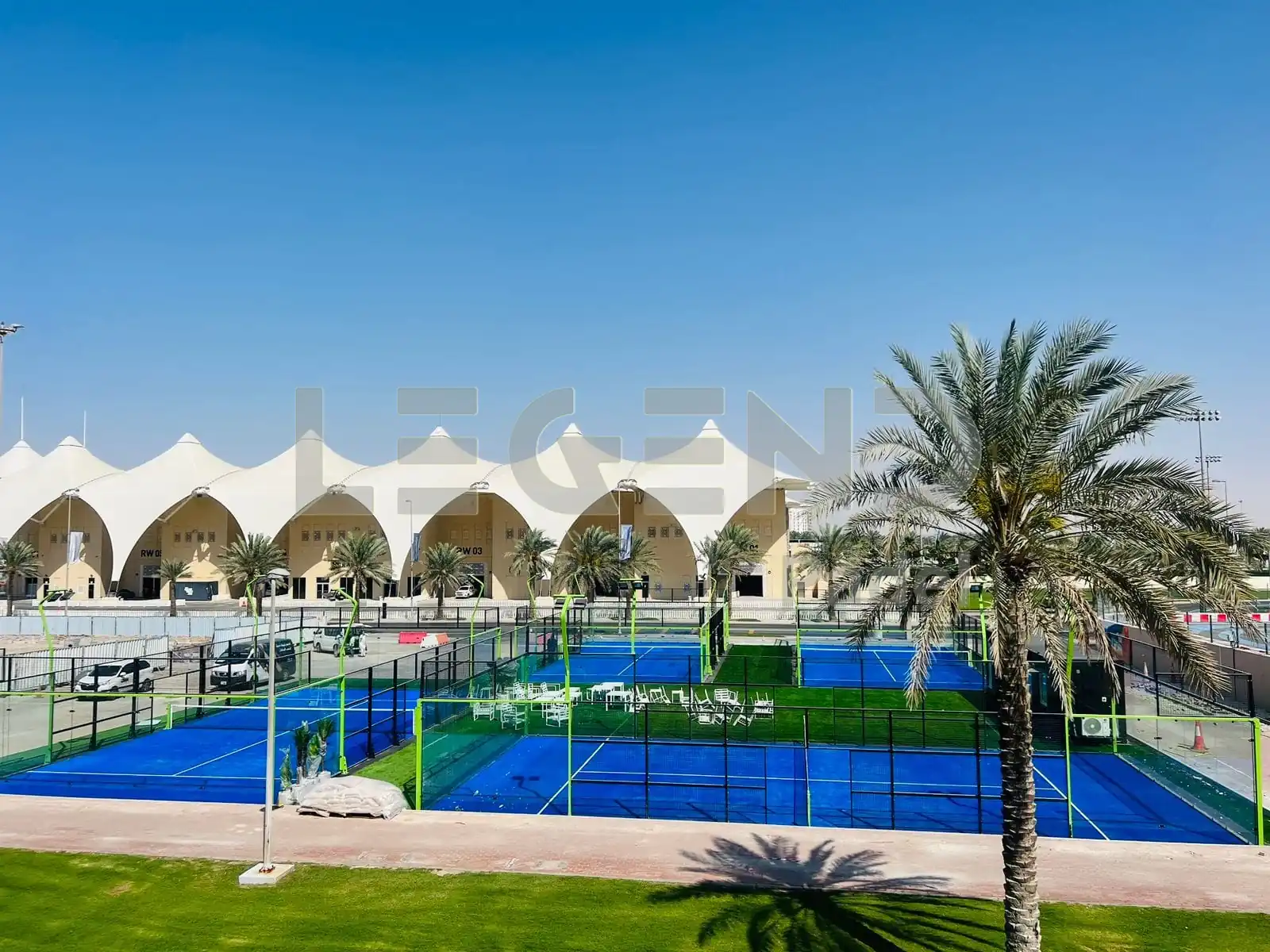
Panoramic and super panoramic designs allow spectators to view action from nearly any direction, making the facility appear larger and more engaging. These courts are often selected for high-end venues, televised events, and commercial sports centers seeking standout appeal.
Light Reflection, Transparency, and Acoustic Behavior in Indoor and Outdoor Courts
Light reflection, transparency, and acoustic behavior influence player perception and comfort. Tempered glass maintains clarity under artificial lighting and reduces excessive echo in indoor settings, helping players follow ball movement more accurately.
Metallic Mesh Systems: Structure, Safety, and Performance Benefits in Paddle Court Walls
Why electro-welded metallic mesh is essential relates to airflow, structural efficiency, and containment. Metallic mesh provides ventilation and reduces wind resistance, improving outdoor play consistency. In our Classic Paddle Court PD01B, reinforced mesh construction offers stable containment and reliable performance for community courts and schools.
Why Electro-Welded Metallic Mesh Is Critical for Upper Wall Zones and Side Enclosures
Electro-welded metallic mesh is critical because it stabilizes airflow and prevents balls from leaving the court. Its lighter weight reduces stress on upper frame sections, allowing the court to remain structurally efficient without compromising safety.
Mesh Aperture Sizes, Wire Thickness, and Steel Grades for Paddle Court Use
Mesh aperture sizes, Mesh frame: 30x50x2mm; Mesh diameter: 50x50x4mm., ensure visibility while maintaining structural strength. Wire thickness and high-grade steel provide resilience against impacts, making the mesh suitable for long-term commercial use.
Anti-Rust Coatings, Surface Treatments, and Environmental Durability Requirements
Anti-rust coatings and protective treatments increase mesh lifespan, especially in humid or coastal regions. Our mesh components use advanced anti-corrosion technology to ensure consistent durability in changing climates.
Comparing Mesh and Glass: Ball Rebound, Airflow, Noise Control, and Cost Efficiency
Comparing mesh and glass shows their complementary functions. Glass offers precise rebound and transparent aesthetics, while mesh supports ventilation and reduces noise. Combining both materials creates balanced performance across varying facility needs.
Choosing Mesh for High-Wind Regions, Multi-Court Facilities, and School Installations
Choosing mesh for high-wind regions reduces vibration and increases stability. Mesh systems are also well-suited for multi-court layouts and school campuses that value reduced maintenance demands.
Hybrid Wall Configurations for Budget Optimization Without Sacrificing Performance
Hybrid wall configurations enable clubs to combine panoramic glass in primary rebound zones with mesh in upper or peripheral areas. This approach optimizes cost while preserving performance quality.
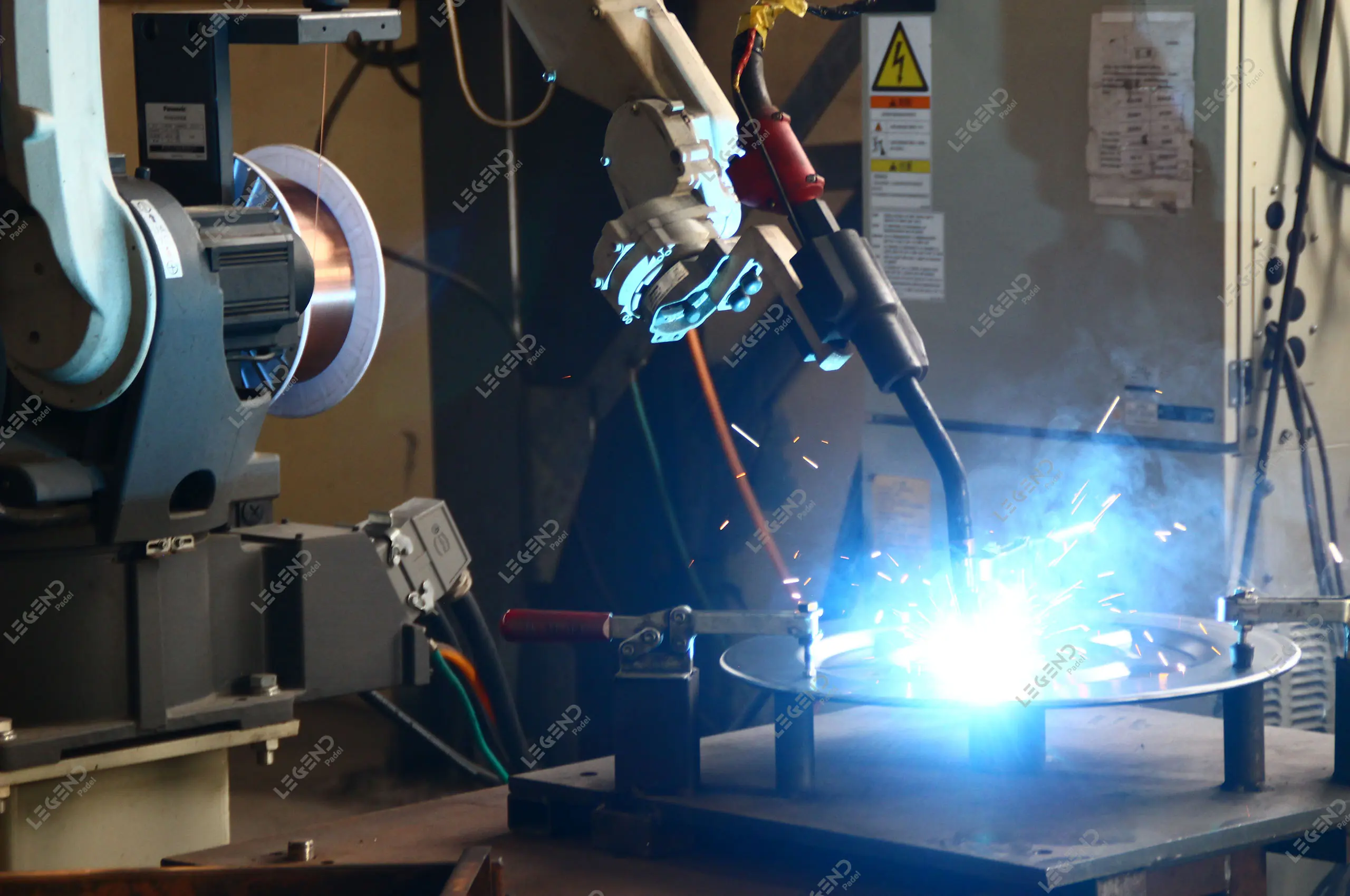
Paddle Court Structural Integration: Steel Frames, Glass Attachment, Mesh Fixation, and Surface Systems
How structural integration supports paddle court performance depends on steel frame engineering and precision installation. Our courts use SPHC steel columns with double coating processes to resist corrosion and maintain long-term stability. These steel structures prevent vibration and ensure accurate alignment of glass and mesh panels.
SPHC Steel Strength, Double Coating Processes, and International Compliance Standards
SPHC steel brings solid power. Double coatings fight weather wear. They meet world safety rules. This leads to longer use. It cuts upkeep needs.
Anchoring, Fasteners, and Panel Connection Methods for Long-Term Structural Integrity
Anchoring holds things firm. Tough fasteners do too. They keep glass and mesh in place during hits. Good links stop loose parts. They preserve and build accuracy.
Dimensions, Wall Heights, Lighting, and Roof Options That Affect Material Selection
Dimensions and wall heights determine how materials interact with gameplay, lighting, and roof options. Proper alignment ensures consistent rebound, safe player movement, and stable indoor/outdoor operation.
Standard 20×10m Court Layout vs. Single 20×6m Court Configurations
Standard 20×10m courts support competitive play, while 20×6m single courts require adjusted configurations to maintain balance and reinforcement.
Maintenance Requirements: Sand Refilling, Glass Cleaning, Mesh Inspection, and Bolt Tightening
Maintenance requirements include refilling sand, cleaning glass, inspecting mesh welds, and tightening bolts. Regular upkeep extends court life and preserves performance.
LEGEND SPORTS Paddle Court Solutions: Advanced Glass–Mesh Engineering and Customizable Court Models
LEGEND SPORTS blends smart glass–mesh design. This shows our focus on pro paddle courts. Models like PD04, PD06, and PD01B use SPHC steel frames. They include a strong mesh. And 12mm tempered glass fits global standards. As makers, we provide full custom options. They suit various weathers. They match project scales. They fit branding too.
How LEGEND SPORTS Designs Paddle Courts with Optimized Glass–Mesh Integration
We craft courts with smart blending. It uses exact build work. It adds tough materials. And it offers flexibility for changes. Clubs, hotels, and sports spots gain from this.
Structural Advantages: SPHC Steel Frames, Anti-Corrosion Coating, and Stability in All Climates
SPHC steel frames hold firm. Anti-corrosion layers protect. They work in wet spots. They handle seaside air. They manage hot temps, too.
Enhanced Safety Systems: Tempered Glass Panels, Reinforced Mesh, and Certified Lighting
Tempered glass brings trust. Reinforced mesh adds to it. Certified LED lights complete the setup. They ensure safe play. This fits all site types.
Court Models Featuring Premium Glass and Mesh Applications for Clubs and Facilities
Models like PD04, PD06, and PD01B serve upscale clubs. They fit big sports areas. Parks for fun use them too.
Panoramic, Super Panoramic, and Classic Courts with 12mm Tempered Glass Panels
These configurations provide professional-level aesthetics and performance, enhancing user satisfaction.
Custom Options: Frame Colors, Mesh Coatings, Glass Type, Branding, and Country-Specific Adaptations
Our fully customized options allow operators to tailor frame colors, mesh coatings, branding elements, and structural adaptations for regional requirements.
Preguntas frecuentes
Q: What matters most when choosing glass and metallic mesh for a paddle court?
A: Main points cover 12mm tempered glass. Include reinforced mesh. Use SPHC steel frames. Aim for lasting build strength. Models like PD04 and PD06 offer these.
Q: How do glass and mesh affect paddle court gameplay?
A: Glass aids steady bounces. Mesh betters air flow. It controls sound too. PD01B blends both nicely.
Q: What wall materials are best for outdoor paddle courts in windy climates?
A: Mixed setups work well. Pair tempered glass with strong mesh. They hold up in strong winds.
Q: Are panoramic paddle courts better for premium club environments?
A: Yes. Open systems like PD04 and PD06 boost sight. They add style. Users enjoy more.
Q: Which materials provide the strongest long-term durability in commercial paddle courts?
A: SPHC steel tube. 12mm tempered glass follows. Anti-corrosion mesh layers seal it. They excel in heavy-use spots.