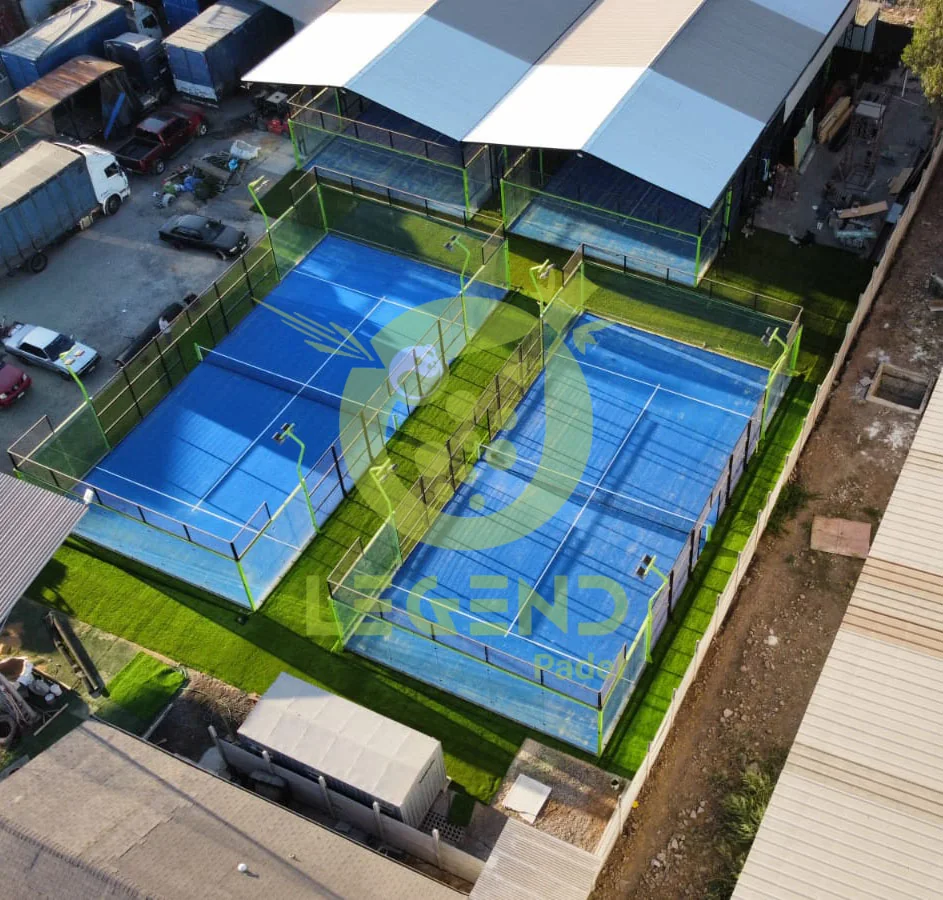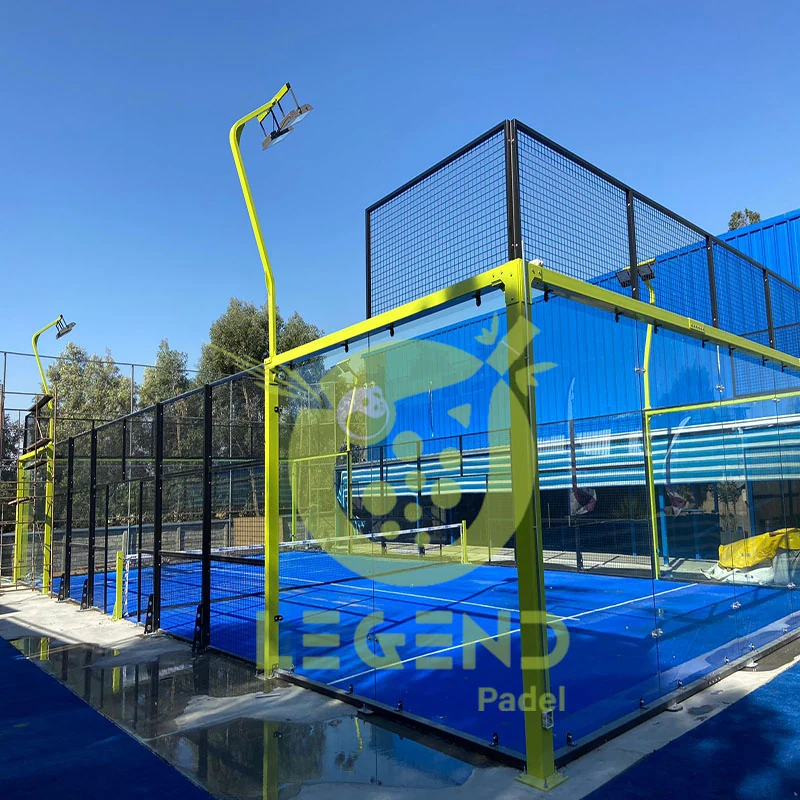



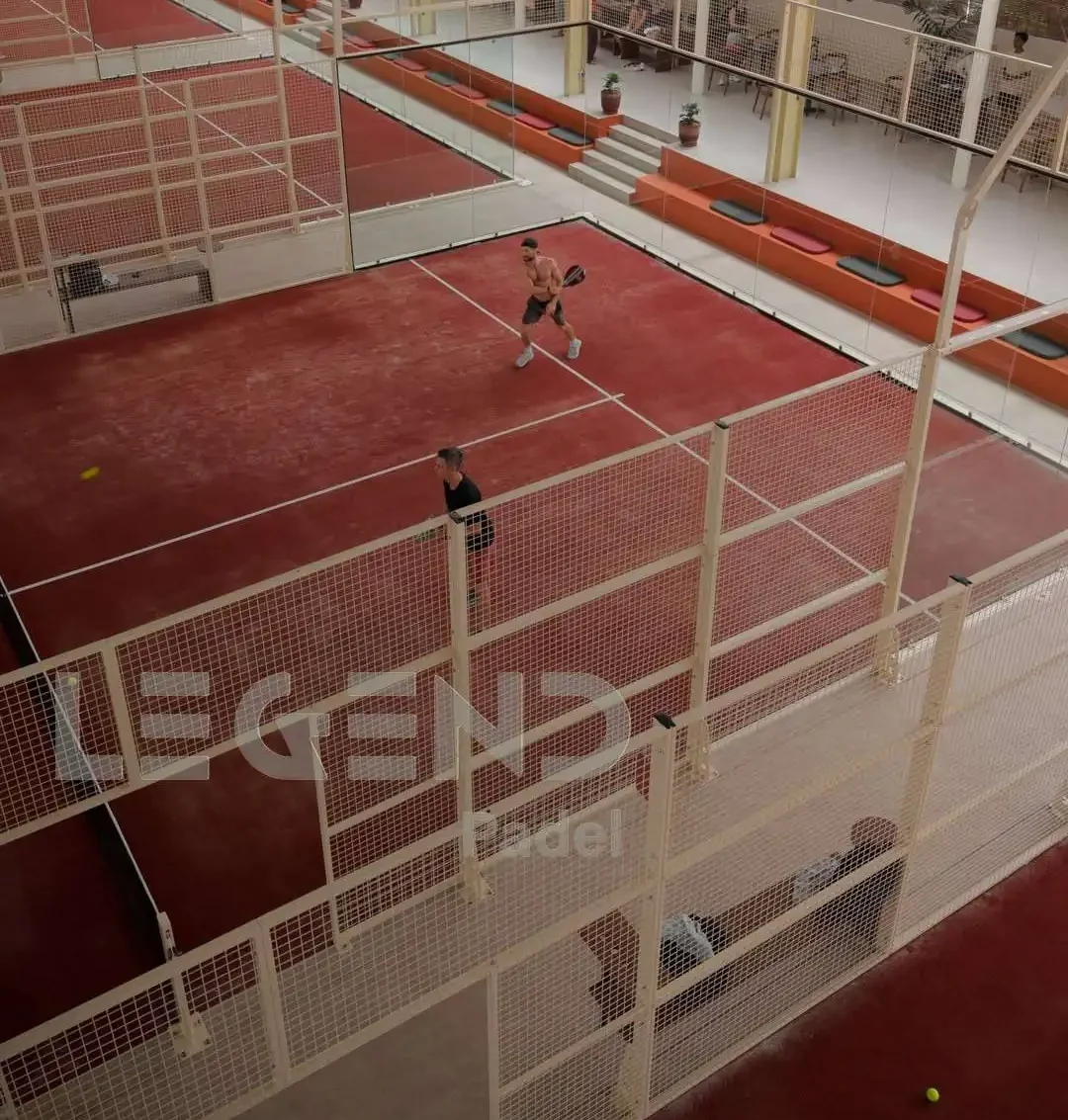
Turning an empty warehouse into an indoor padel court in the UK can shorten the route from site selection to operation, but the business case depends on more than fitting courts inside a large building. Investors must assess planning, usable clear height, player flow, court mix, operating costs, and realistic occupancy. An 18-month return should therefore be treated as a target scenario supported by measurable assumptions rather than an automatic outcome.
Why Are UK Warehouses Becoming Padel Court Opportunities?
Year-Round Indoor Demand in the UK
A year-round padel court reduces disruption caused by rain, colder months, and short winter days. More reliable playing conditions allow clubs to sell evening lessons, weekend leagues, junior programmes, and corporate events throughout the year.
Industry reports also show that the UK is one of Europe’s fastest-growing padel markets. This growth creates opportunities for indoor venues, especially in cities where player demand is increasing faster than available court capacity.
Why Warehouses Can Support Faster Market Entry
A suitable warehouse-to-padel-court conversion may already offer an enclosed structure, road access, parking, utilities, and a large open floor plan. These features can simplify the route to opening compared with developing an entirely new sports site.
However, a low rental rate does not automatically make a warehouse attractive. Columns, low roof sections, restricted loading access, weak public transport connections, or strict lease conditions can reduce the number of usable courts and weaken the overall business model.
Is the Warehouse Suitable for an Indoor Padel Court?
Check Space and Clear Height
A standard court has a 20m × 10m playing area, but a complete venue needs additional room for circulation, court separation, reception, changing facilities, waiting areas, and emergency access. A realistic assessment of padel court dimensions should therefore calculate the full operating footprint rather than only the playing area.
Clear height must be measured below beams, lighting, ventilation equipment, and other overhead installations. An indoor padel court requirement of at least 8m is generally recommended, while competition-oriented venues may require 9–12m. Walls are usually made of tempered glass, while the remaining enclosure uses mesh to preserve visibility and ball rebound.
Test Peak-Time Player Flow
A profitable warehouse padel conversion must handle several matches ending at the same time. Parking, reception, changing rooms, entrances, and internal walkways should be tested against peak evening traffic rather than quiet daytime conditions.
The layout should also prevent players, spectators, staff, and delivery personnel from competing for the same routes. Poor circulation may not stop a club from opening, but it can reduce customer satisfaction, repeat bookings, and event capacity.
How Should a Multi-Court Padel Club Be Planned?
Choose the Right Court Mix
The most effective multi-court padel club layout balances regular bookings with coaching, leagues, and special events. Standard doubles courts should form the main commercial core because they serve the widest group of players.
For high-volume daily use, a regulation 20m × 10m format can include 12mm artificial turf, 12mm tempered glass, and eight 200W LED floodlights. These features are available in LEGEND SPORTS Pro Panoramic Padel Corte PD04, which can also be supplied with customized turf colours, frame finishes, glass options, and club branding.
Narrower areas of a warehouse can still produce value when they are assigned a specific purpose. A 20m × 6m court can support one-to-one coaching, beginner training, junior programmes, or lower-demand periods. We developed our LEGEND SPORTS Single Padel Court-PD07 for this type of two-player use.
Add Smart and Flexible Technology
Digital systems can improve access control, lesson management, tournament organisation, and content creation. A padel court booking system should connect with membership accounts, pricing rules, and court access so that staff do not need to manage every reservation manually.
Replay and scoring tools can also make coaching and leagues more engaging. Electric access, LED scoring, and monitoring playback are integrated into our Smart Padel Court-PD04E, helping operators create a more connected smart padel court experience.
Flexibility is particularly important in leased buildings. A system that can be assembled, disassembled, or moved may reduce long-term property risk. Our LEGEND SPORTS Mobile Pro padel Court-PD05 is designed to protect the original floor while supporting easier relocation or phased expansion.
What UK Permissions Can Delay a Padel Court Conversion?
Confirm Change of Use and Planning Permission
Investors should clarify padel court planning permission in the UK before making major financial commitments. A change of use for a padel court may be necessary when a warehouse becomes a public leisure facility.
Planning reviews may consider traffic, operating hours, noise, external lighting, fire safety, accessibility, and the effect on nearby properties. Early consultation can reveal whether additional reports are required before a formal application is submitted.
Align the Lease with the Approval Process
The lease should clearly address landlord approval, installation rights, equipment removal, reinstatement duties, approval conditions, and exit options. A technically suitable warehouse may still become a poor investment when the tenant has limited freedom to install or relocate the courts.
What Does the 18-Month Padel Court Conversion Timeline Look Like?
Months 1–6: Validate and Approve
The first stage should cover local demand, competitor capacity, property inspection, concept layout, planning advice, and lease negotiation. Investors should remove major risks before placing court orders.
Months 7–12: Finalise and Produce
The next phase should coordinate customized court design, lighting, ventilation, acoustics, access control, shipping, and installation sequencing. Early coordination reduces the risk of building services conflicting with the court layout.
Months 13–18: Install and Build Occupancy
The final stage includes installation, safety testing, booking-system trials, coach sessions, membership pre-sales, and a phased opening. An effective padel court installation timeline should build demand before the full launch rather than assume immediate maximum occupancy.
How Can Investors Test an 18-Month Padel Court ROI?
Calculate the Full Investment
A reliable padel court cost in the UK model should include property costs, professional advice, planning, court supply, shipping, installation, lighting, ventilation, digital systems, insurance, staffing, launch marketing, and working capital.
Model Revenue by Available Court Hour
An indoor padel court investment should be measured through available court hours. Forecasts should separate peak and off-peak pricing, membership discounts, coaching, junior sessions, leagues, corporate events, retail, refreshments, and sponsorship.
The strongest model is not always the one with the highest hourly price. A club with balanced pricing, active coaching, strong community programmes, and consistent off-peak demand may produce more stable cash flow.
Stress-Test the 18-Month Target
The forecast should test approval delays, slower membership growth, lower occupancy, higher energy use, and price pressure. An 18-month return becomes plausible only when the site supports enough courts, rent remains controlled, peak demand is strong, and secondary revenue does not depend on unrealistic assumptions.
Preguntas frecuentes
Q: Can a warehouse be converted into an indoor padel court?
A: Yes. The building must provide sufficient clear height, usable space, access, utilities, planning approval, and room for player facilities.
Q: How much space is needed for a five-court padel club?
A: Five playing areas require at least 1,000 m² before circulation and support areas are added. A practical five-court club may need approximately 1,500–1,800 m².
Q: What is the recommended padel court ceiling height?
A: A clear height of at least 8m is generally recommended. Competition-focused venues may require 9–12m.
Q: How long does a warehouse padel court conversion take?
A: A well-managed project may take 12–18 months, depending on planning, production, shipping, installation, and operational testing.
Q: Can a padel court project recover its investment in 18 months?
A: It may be possible under a strong operating scenario with suitable rent, pricing, occupancy, court numbers, staffing, and additional revenue streams