

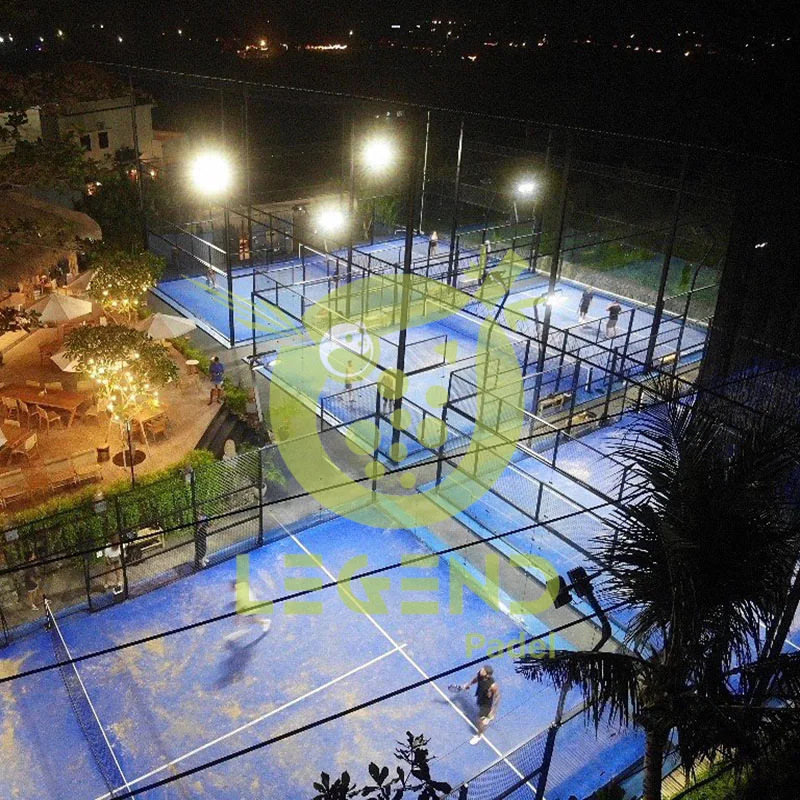
A successful padel court project starts before a buyer requests a quotation. Court quantity, site conditions, business model, indoor or outdoor use, climate, and the role each court will play inside the venue all influence the right specification.
This matters as padel expands into North America, Asia, the Middle East, and newer European markets. A commercial 堕落した法廷 is increasingly treated as a long-term operating asset whose configuration should support occupancy, maintenance, events, customer experience, and future expansion.
What Should Buyers Define Before Requesting a Padel Court Quote?
A useful quotation depends on useful project information. Sending only a request for “four courts” is less effective than defining how and where those courts will operate.
Court Quantity, Venue Positioning, and Target Players
Start by defining whether the project is a private club, public sports center, hotel, resort, school, mixed-use development, or tournament-oriented facility.
A recreational club may prioritize efficient capacity. A premium hotel may care more about visual integration. A sports center may need several consistent courts, while a competition venue may require one centerpiece court.
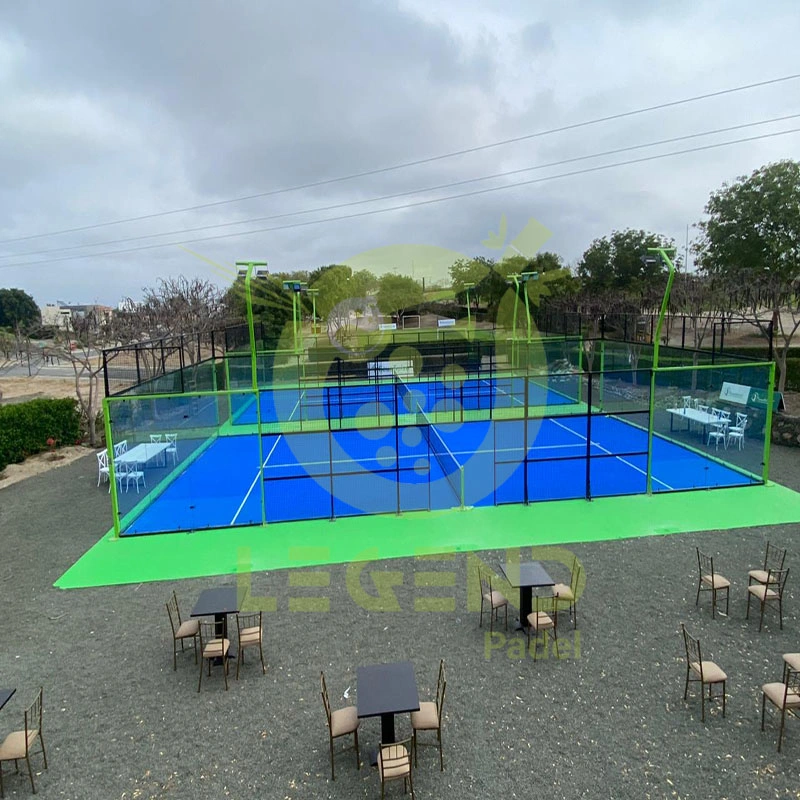
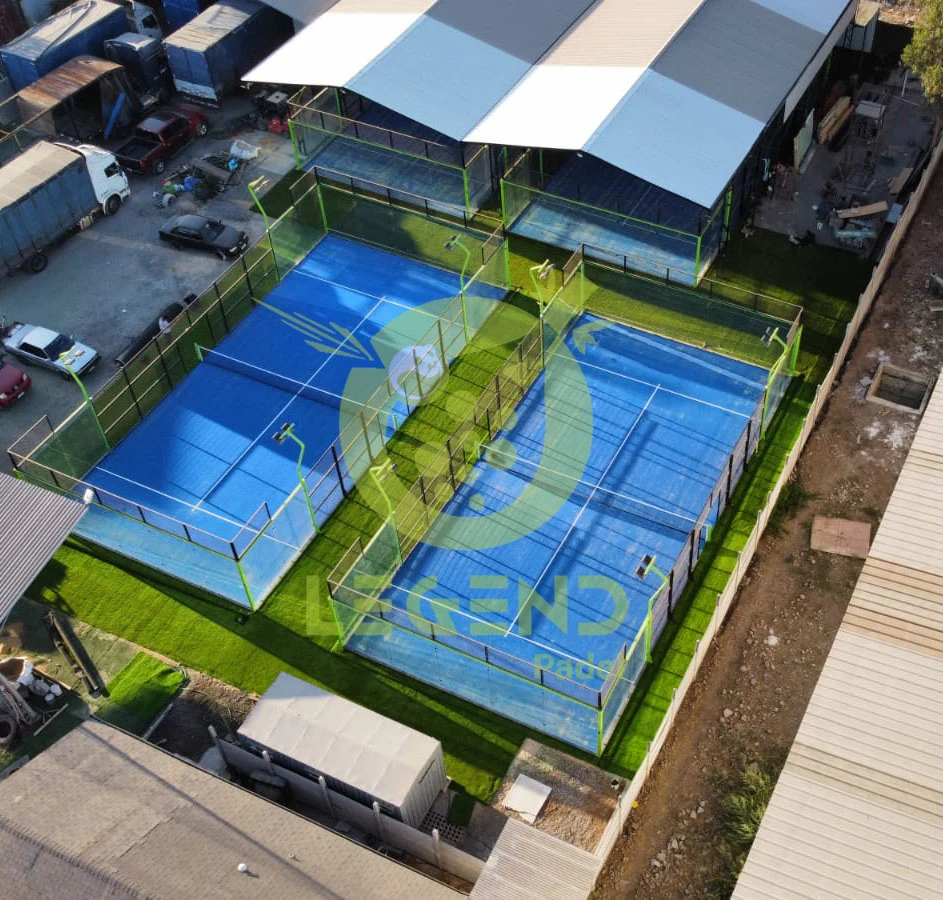
A four-court installation in Chile combined two indoor and two outdoor panoramic courts, while an eight-court sports center project was developed for larger-scale public and competition use. Both are multi-court padel projects, but their planning priorities are different.
Indoor and Outdoor Site Requirements
A standard doubles court has a 20 m × 10 m playing area, with additional peripheral space required.
Indoor projects should consider ceiling clearance, ventilation, lighting, access, and building layout. At least 8 m of height is recommended, while 9–12 m is more appropriate for competition environments.
Outdoor projects place more emphasis on drainage, weather exposure, corrosion resistance, lighting, and long-term maintenance.
Walls are usually made of tempered glass, with mesh fencing forming the remaining enclosure.
Which Padel Court Type Fits a Commercial Project?
Choosing the right padel court type means matching the court to the venue’s revenue model and available space.
Standard Padel Courts for Capacity-Focused Venues
The Classic Padel Court-PD01B provides a 20 m × 10 m regulation layout with 12 mm artificial turf, 12 mm tempered glass, and eight 200W LED floodlights.
It can suit clubs where regular bookings and consistent court capacity matter more than premium showcase features. This makes a standard padel court for commercial clubs practical for multi-court venues with a strong focus on utilization.
Panoramic Courts for Premium and Spectator-Oriented Venues
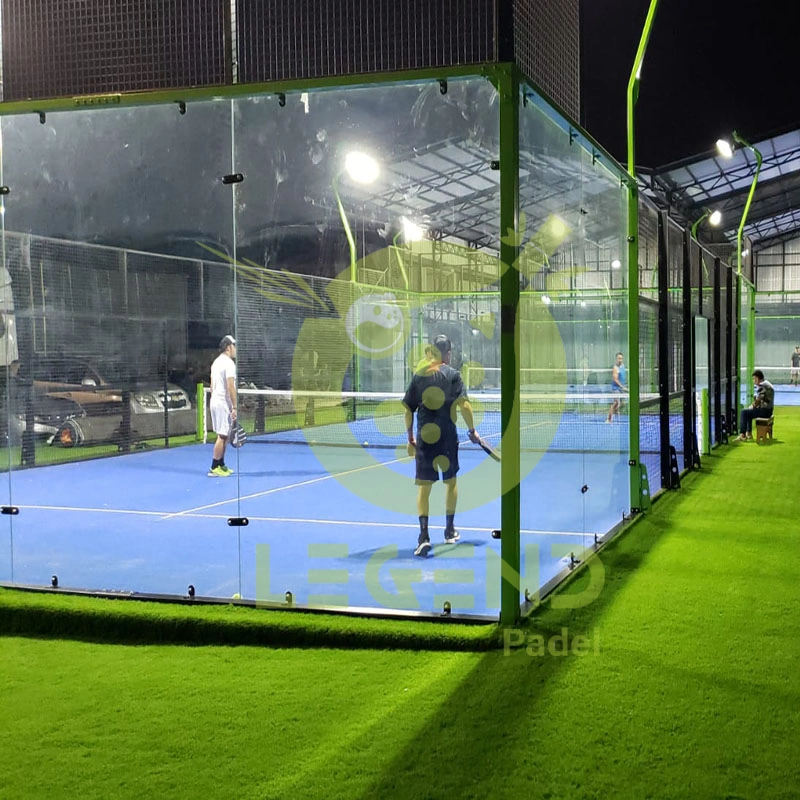
The Pro Panoramic Padel Court-PD04 uses 100 × 100 × 3 mm structural columns, 100 × 50 × 3 mm cross bars, 12 mm tempered glass, and eight 200W LED floodlights.
Its open visual design suits panoramic padel court projects where spectator visibility, photography, hospitality, and premium presentation matter.
At a higher event-oriented level, the 究極の超パノラマ秋季球場-pd 06 is positioned for professional tournament and central-court environments. A venue does not necessarily need every court to use the same specification. One premium centerpiece combined with several standard courts can provide a better balance between capital spending and differentiation.
Mobile and Single Courts for Constrained Sites
The Mobile Pro Padel Court-PD05 uses a self-fixing design intended to protect the original floor and support easier assembly and disassembly. It can suit temporary installations or properties where permanent changes are undesirable.
「 The シングル転倒場-pod 07 uses a 20 m × 6 m layout for two-player use. A single padel court for limited space can make padel viable at sites where a standard doubles footprint is unavailable.
What Specifications Matter When Comparing Padel Courts?
A professional padel court supplier comparison should go deeper than appearance. Similar-looking quotations can contain different structural and operating specifications.
Steel Structure, Tempered Glass, and Corrosion Protection
Structural dimensions and surface treatment affect durability, especially outdoors.
The Pro Panoramic Padel Court-PD04 uses SPHC steel with substantial columns and cross bars, together with 12 mm tempered glass. LEGEND SPORTS also uses double spraying processes to improve anti-rust and anti-corrosion performance.
For outdoor projects, buyers should provide information about humidity, coastal exposure, wind, and temperature before production. A customized outdoor padel court should be specified for its actual environment.
Tempered glass is also part of the playing system because wall rebounds are integral to padel, so thickness and installation quality matter.
Turf, Lighting, and Customized Visual Identity
The Pro Panoramic Padel Court-PD04 uses 12 mm textured filament artificial turf with 46,200 stitches/m² and 13,600 Dtex yarn. Eight 200W LED floodlights at 6 m are designed to deliver approximately 300 lux.
For clubs where visual identity matters, customized padel court design can include turf colors, structural finishes, and logos. A Canadian indoor project used black steel and black turf to create a distinctive professional appearance.
At LEGEND SPORTS, we provide customized padel court solutions so the court can better match the venue’s environment and commercial positioning.
How Should Buyers Plan Shipping and Installation for Multiple Padel Courts?
Logistics become more important as quantity increases. A multi-court padel project should treat manufacturing, shipping, site readiness, and installation as one connected schedule.
Plan Shipping Before Production Is Completed
The destination port should be identified during the quotation stage. Freight can change according to route, quantity, packaging, exchange rates, import policies, and local delivery requirements.
LEGEND SPORTS can assist with shipment to the buyer’s local seaport and calculate freight according to destination information. Early planning also helps buyers estimate the landed padel court cost more accurately, but the final project budget should still account for site preparation, installation, local labor, taxes, permits, and other project-specific expenses.
For multi-court orders, shipment timing should correspond to the installation sequence so equipment does not arrive long before or after the site is ready.
Complete Site Preparation Before Court Arrival
Indoor projects should confirm clear height, access routes, electrical connections, ventilation, and usable installation area. Outdoor projects should confirm ground conditions, drainage, power supply, weather exposure, and access.
A practical padel court installation plan should define what is prepared locally, what technical information comes from the manufacturer, and what installers need before delivery.
Coordinate Manufacturer Support With Local Teams
International projects often involve several parties. The manufacturer supplies the court and technical information, while local teams may handle site works, electrical preparation, lifting, labor, and permits.
At LEGEND SPORTS, we use our export and installation experience to help buyers evaluate configuration, shipment, and installation requirements before delivery. Our courts have been exported to more than 60 countries and regions, supporting varied customized commercial padel court requirements.
China Padel Court Manufacturer vs Local Supplier: Which Should You Choose?
For a multi-court project, buyers may need to decide between sourcing directly from a China padel court manufacturer and purchasing through a local supplier. The right choice should not be based on the quoted court price alone. Buyers should compare customization flexibility, communication, shipping, installation responsibilities, local support, and the total project cost.
Benefits of Buying Directly From a China Padel Court Manufacturer
Factory-direct sourcing can reduce intermediary costs and provide more competitive pricing, especially for multi-court projects. It can also offer greater flexibility when buyers need different court models, structural finishes, turf colors, logos, lighting configurations, or other project-specific options.
Direct communication with the manufacturer also makes it easier to confirm technical details before production. For larger projects, buyers can coordinate court combinations, branding, production schedules, and shipping requirements directly with the factory.
When a Local Supplier May Be More Convenient
A local supplier may be more convenient when a buyer prioritizes local installation coordination, on-site communication, local warranty handling, or simplified procurement. Local sourcing can also reduce some of the work involved in coordinating customs, inland transportation, and installation teams. However, this convenience may come with additional intermediary costs or fewer customization options, depending on the supplier.
Compare Total Project Cost, Not Just the Court Price
Buyers should compare the complete project scope before making a decision. A lower factory price does not automatically mean a lower completed-project cost, just as a higher local quotation does not necessarily mean poor value.
The comparison should include court equipment, customization, packaging, freight, import-related costs, local transportation, site preparation, installation, labor, taxes, permits, and technical support. For multi-court projects, buyers should also consider whether bulk purchasing and mixed court configurations can improve the overall investment structure.
How to Compare Padel Court Quotes Beyond the Lowest Price
The strongest padel court buying decision usually comes from comparing quotation scope rather than headline price.
Buyers should compare:
- Court dimensions and model type
- Steel structure specifications
- Tempered glass thickness
- Mesh and enclosure configuration
- Artificial turf specification
- Lighting quantity and power
- Anti-corrosion treatment
- Doors and hardware
- Packaging
- Available customized padel court options
- Freight scope
- Technical and installation support
- Items excluded from the quotation
This is becoming more important as the market professionalizes. Around 7,000 new courts were built globally in 2024, while the United States, Asia, and other emerging markets continued to develop.
Padel has also been confirmed as a medal sport at major 2026 multi-sport events in Asia and South America, while international tournament activity continues to expand.
A buyer should therefore think beyond opening day. Can the venue add courts later? Could one court support events? Does the specification suit higher future occupancy? Is the visual design consistent with the membership strategy?
These questions provide a stronger definition of value than simply asking which padel court price is lowest.
FAQについて
Q: What should buyers check before ordering a padel court?
A: Buyers should confirm site dimensions, court quantity, indoor or outdoor environment, ceiling height where applicable, climate, target users, preferred design, lighting requirements, destination port, installation responsibilities, and customized padel court requirements.
Q: Which padel court type is best for a commercial club?
A: The best commercial padel court depends on the club’s positioning and operating model. The Classic Padel Court-PD01B can suit capacity-focused facilities, while the Pro Panoramic Padel Court-PD04 is more suitable for premium and spectator-oriented areas.
Q: How much space is needed for a padel court?
A: A standard doubles padel court has a 20 m × 10 m playing area, with additional peripheral space required. Indoor projects should also provide at least 8 m of height, while 9–12 m is more suitable for competition use.
Q: What specifications should be compared when choosing a padel court supplier?
A: A padel court supplier comparison should cover structural dimensions, tempered glass, mesh configuration, artificial turf, lighting, surface treatment, anti-corrosion performance, hardware, packaging, customized options, logistics support, and installation assistance.
Q: Can a padel court be customized for different commercial projects?
A: Yes. A customized padel court can be configured around the venue’s environment and commercial positioning. At LEGEND SPORTS, options can include court type, structural finish, turf color, branding, logos, and other project-specific requirements.
Planning a multi-court padel project? Send us your destination country, number of courts, indoor or outdoor requirements, preferred court type, and expected project timeline. LEGEND SPORTS can help you review the configuration, shipping requirements, and key cost factors to prepare a practical preliminary budget for your project.