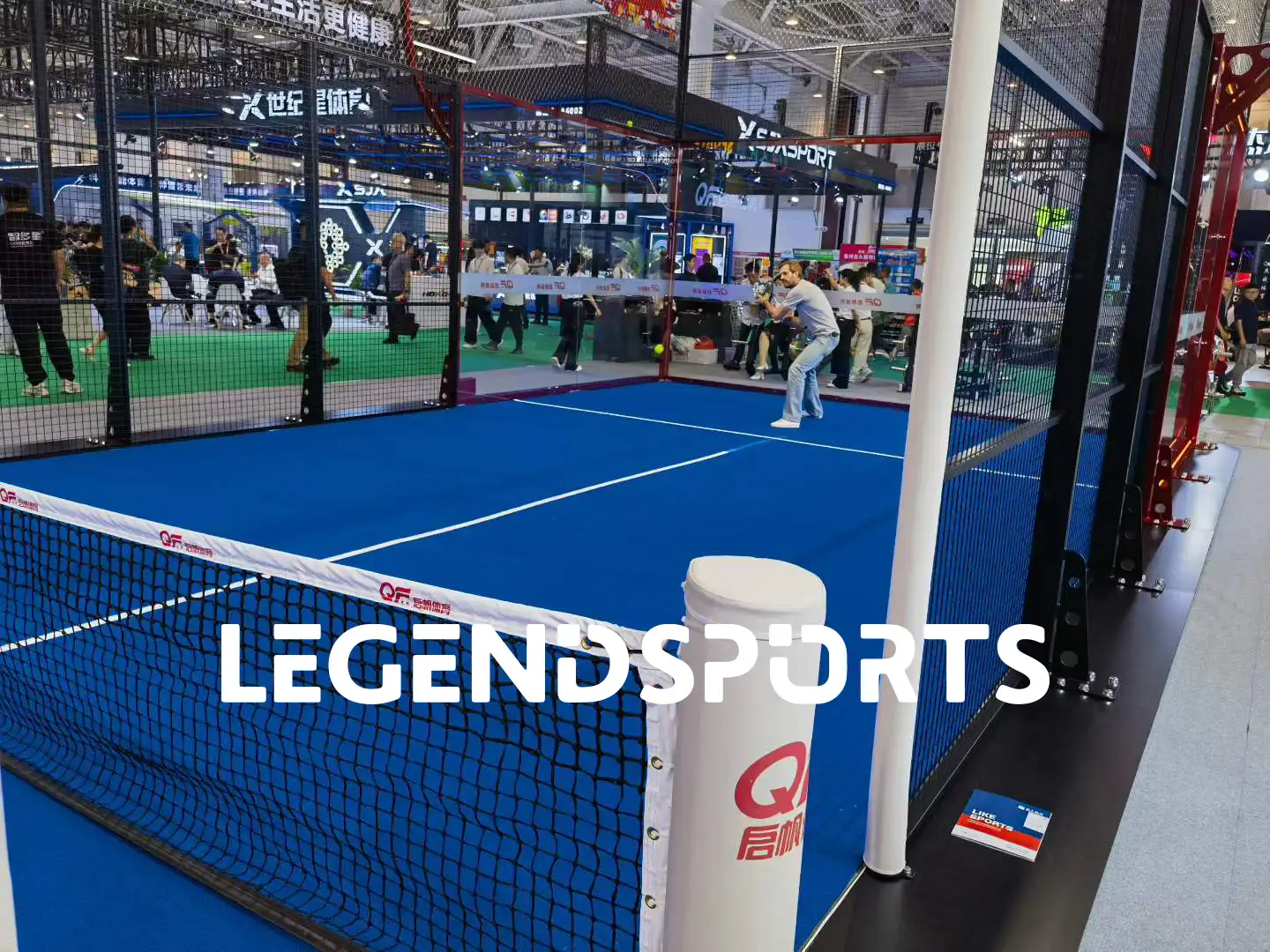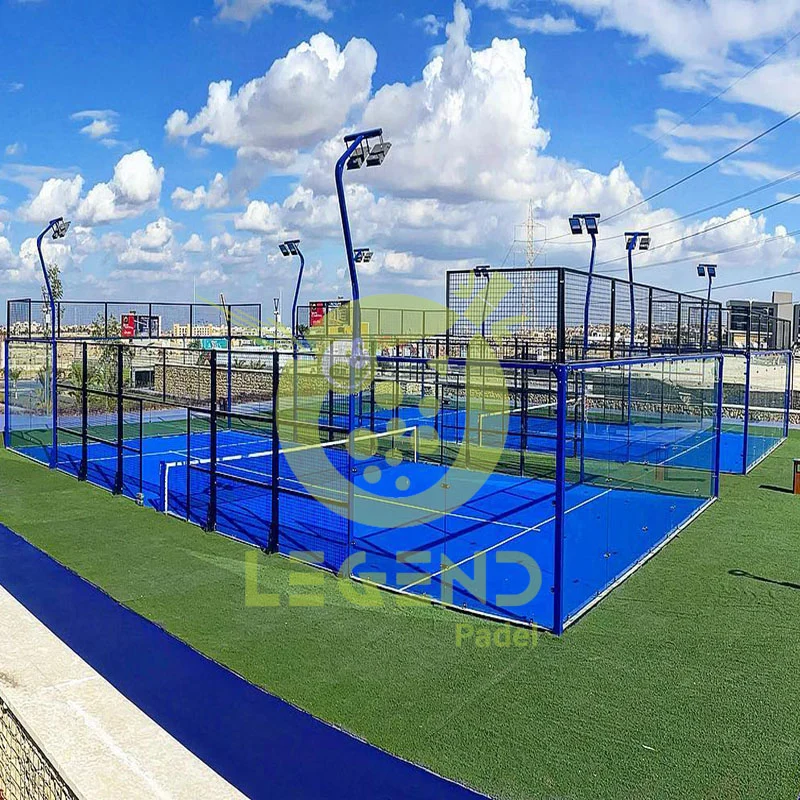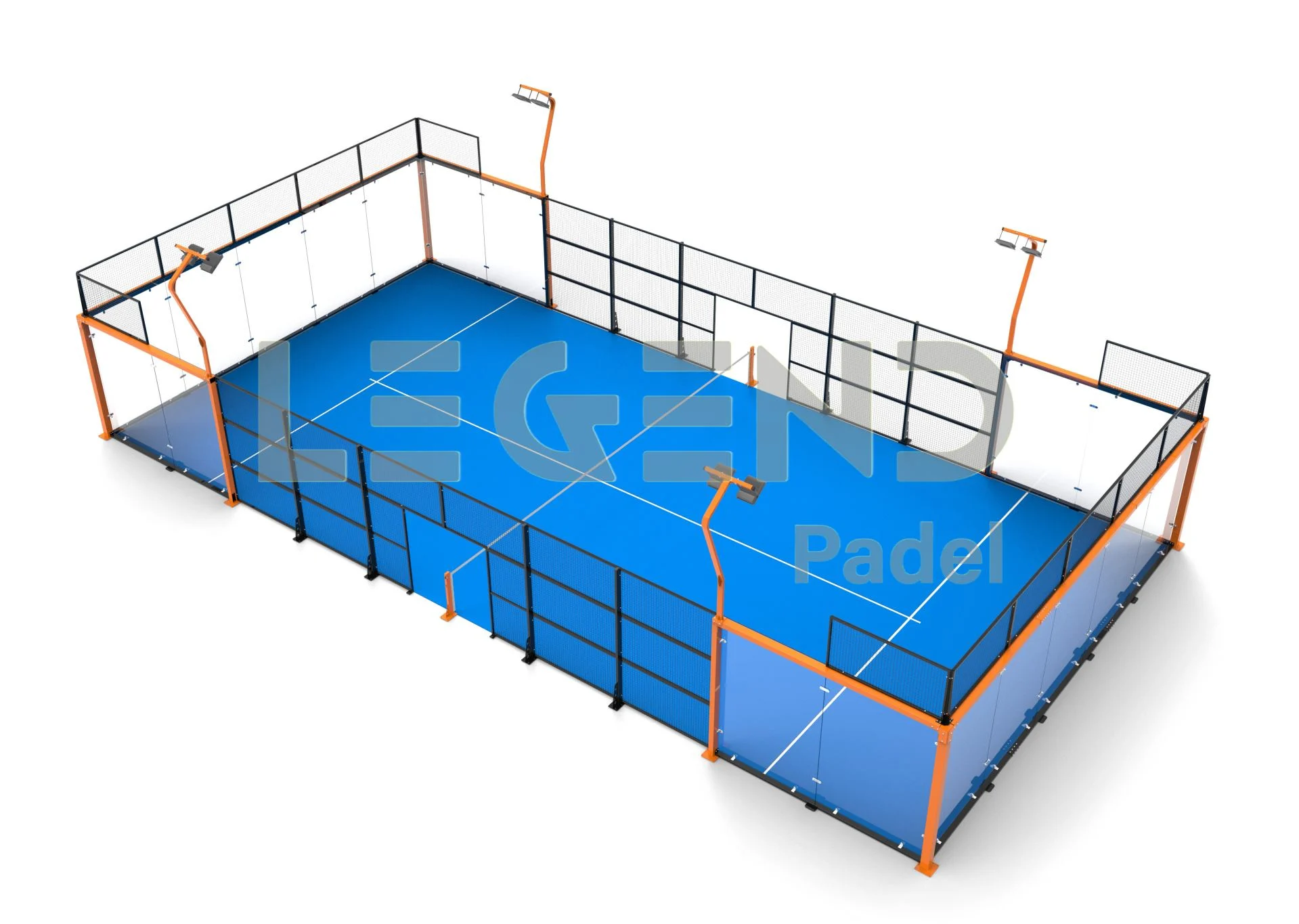



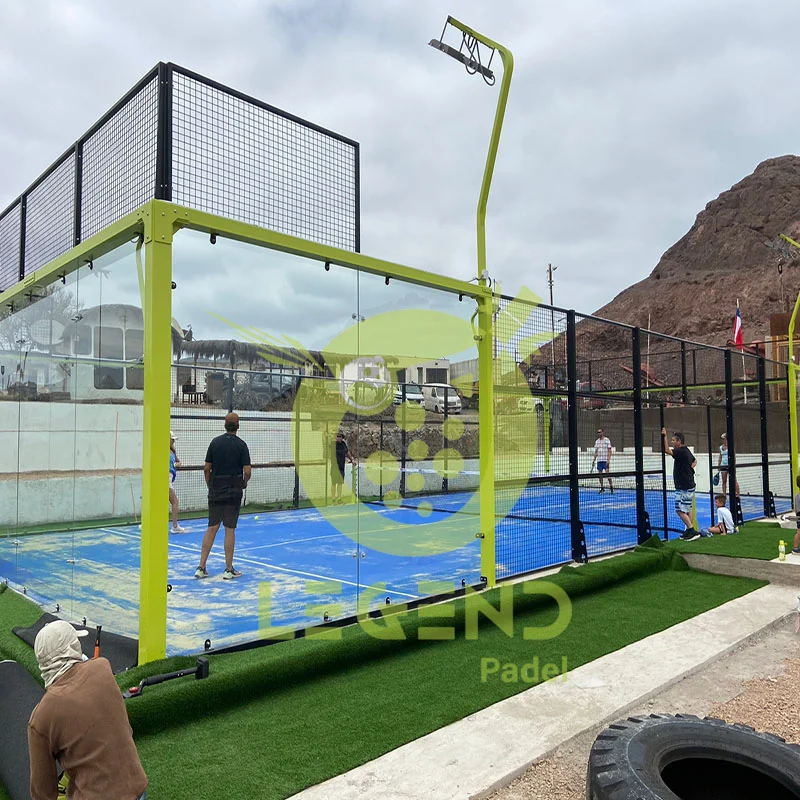
An RFQ should make suppliers answer the same questions. “One panoramic court” is not a specification: it leaves room for different glass, steel, turf, lighting, delivery terms, and acceptance tests. The ten fields below turn an attractive catalogue image into a comparable purchase. Give every bidder the same site drawing and ask them to identify deviations in a separate column.
Specify the Site and Court Layout
1. Playing Dimensions and Clearance
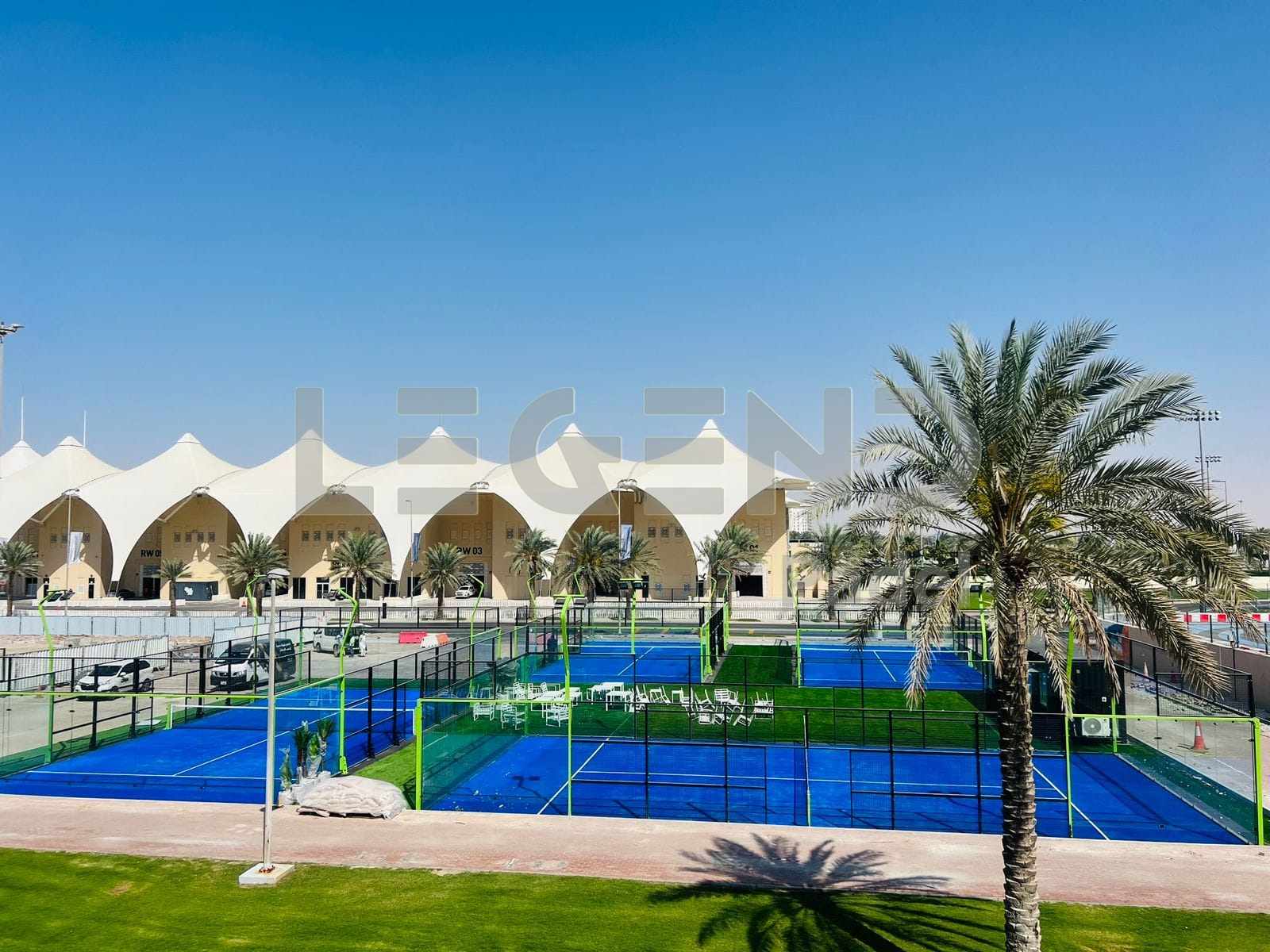
State the intended doubles or singles layout and request a dimensioned plan showing the playing rectangle, door positions, run-off, and access. A standard doubles competition area is 20 m by 10 m, while at least 11 m by 21 m of total floor area allows for peripheral space. The distinction should appear on the RFQ drawing, not just in a sales description.
For an indoor venue, record the lowest overhead obstruction. Allow at least 8 m indoor roof height, with 9-12 m stated for a competition court. State the actual clear height and intended competition level so a supplier can flag incompatibilities before quoting.
2. Foundation and Anchoring Interface
Attach survey information and ask for base tolerances, anchor pattern, fixing method, loads, and a drawing showing who designs the slab. Identify drainage and any constraints on penetrating an existing floor. The buyer’s engineer should confirm the site-specific foundation; a generic kit drawing cannot establish ground suitability.
Where flexibility matters, the Padel Court Modular Foundation System is a product option to compare. The RFQ should still require its anchoring and interface details, transport scope, and evidence that the proposed base works on this site.
Specify the Enclosure
3. Steel Sections and Surface Treatment
Request a member schedule with section sizes, wall thicknesses, connection details, corrosion protection, and finish. Ask for drawings and the applicable design loads rather than a generic “heavy-duty” claim. Define whether the quote includes exposed-site requirements or an indoor-only configuration.
LEGEND SPORTS lists the Max Pro Panoramic Padel Corte-PD03 as a named model. It has larger and stronger structural columns within a 20 m by 10 m court than the reference panoramic version. An RFQ can ask bidders for the actual section schedule, so the difference is measurable instead of inferred from a model name.
4. Glass and Mesh Details
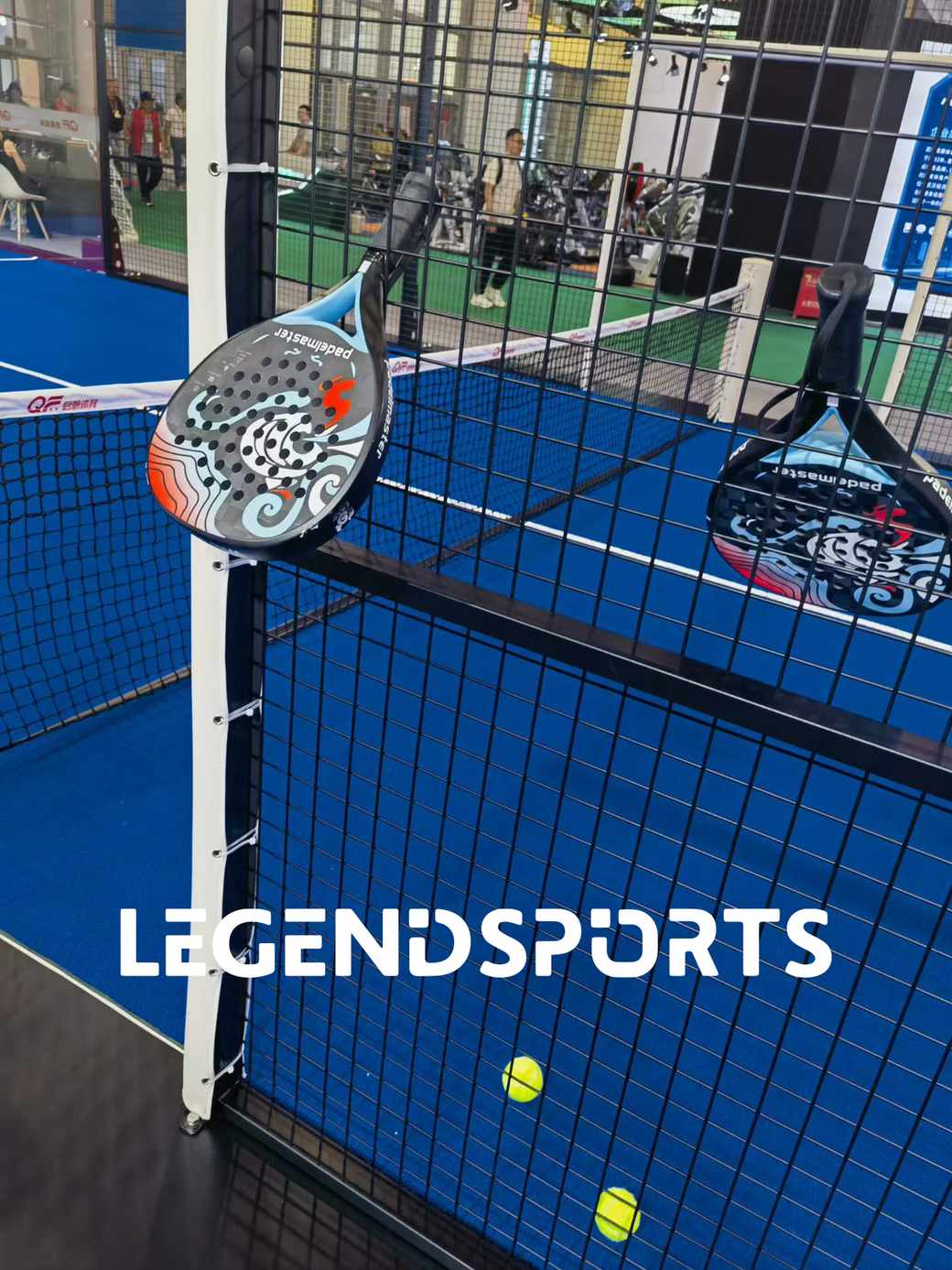
Specify glass type, thickness, panel dimensions, edge treatment, fixing, and replacement procedure; ask for mesh gauge and aperture as applicable. One general glass specification lists 12 mm glass with a panel size of 1955 by 2955 mm. Ask the supplier to confirm the offered model’s precise panel schedule.
The PD04 configuration has 18 tempered-glass panels specified at 2995 by 1995 mm and an optional laminated-glass choice. These dimensions differ from the general specification, so do not silently merge them. Require a model-specific drawing and bill of materials before purchase.
Specify the Playing System
5. Turf and Infill
Ask for fibre type, pile height, stitch density, backing, roll layout, infill material and quantity, colour, and maintenance instructions. A single “artificial grass included” line cannot support a fair comparison or later replacement.
The PD04 configuration specifies 12 mm textured-filament artificial turf with double PP+PU adhesive, 46,200 stitches per square metre, 13,600 Dtex yarn, and a 3/16-inch gauge, filled with 60-100 mesh silica sand. The RFQ should state which of these details are included in the offered turf, with a datasheet for the exact variant.
6. Lighting and Electrical Interface
State the intended use and ask for fixture model, quantity, power, mounting positions, controls, cable boundary, and a lighting layout. Require the supplier to identify what the local electrician must provide. Installation and commissioning should be separate, priced tasks.
The specified PD04 configuration includes eight 200 W LED floodlights at a 6 m mounting height and a stated 300 lux output at 6500 K. That is a model-specific claim, not a guarantee for an unfamiliar venue. Request a project-specific calculation and acceptance measurement.
Specify the Installation Package
7. Drawings and Component Schedule
Ask for an indexed drawing pack, bill of materials, hardware list, installation sequence, and revision number. Specify the approval milestone before manufacture and the method for managing substitutions. The schedule should separate included items from optional colours, glass alternatives, and branding.
The PD04 configuration offers turf colours, steel finishes, branded logos, and tempered or laminated glass choices. We can discuss customised options as a source factory, but the signed RFQ response must identify the chosen variant and price it explicitly. An unselected catalogue option is not a contract deliverable.
8. Packing, Freight, and Assembly
Request crate dimensions, weights, glass protection, container plan, Incoterm, delivery point, unloading requirements, installer responsibilities, and a realistic assembly schedule. Assign the risk of transit damage and missing parts before dispatch.
Shipping to a buyer’s local seaport can be arranged after the port is specified and the cost checked. That does not mean customs clearance, inland transport, unloading, or local installation are included. The Móvil Pro Padel Corte-PD05 also merits separate assembly and floor-interface questions because its self-fixing design makes assembly and disassembly easier.
Specify Acceptance and Ownership
9. Testing and Handover Evidence
Ask for a snag-list process, dimensional checks, anchor inspection, glass inspection, lighting test, and a signed handover record. State who corrects defects and what evidence closes each issue. If the venue needs a particular governing-body standard, name the applicable edition and require evidence rather than assuming a court label proves compliance.
10. Warranty, Spares, and Maintenance
Request separate warranty terms for steel, glass, turf, and lights, with exclusions, claim procedure, spare-parts availability, and service response. Include consumables and labour in the ownership comparison.
Regular floor cleaning, replenishing the sand layer, checking the lighting system, and checking screws are maintenance tasks. Request written intervals and methods for the exact supplied components. A clear handover pack makes that work possible after the installers leave.
Preguntas frecuentes
Q: What should a padel court RFQ include first?
A: Start with a site drawing, the intended court type, playing dimensions, clearances, and the proposed foundation interface. Suppliers then quote against one physical brief.
Q: Should a padel court RFQ specify glass thickness?
A: Yes. Ask for the glass type, thickness, panel schedule, fixing details, and model-specific drawings rather than relying on a generic catalogue description.
Q: Why does a padel court RFQ need turf details?
A: Fibre, backing, pile height, infill, and maintenance affect what is supplied and how it is replaced. Require a datasheet for the actual quoted system.
Q: Does a padel court RFQ need a lighting calculation?
A: Yes, when lighting is part of the scope. A project-specific layout and acceptance method are more useful than fixture wattage alone.
Q: How can buyers compare padel court RFQ responses?
A: Use a compliance matrix listing every required field, deviations, exclusions, delivery terms, installation scope, and warranty. Compare complete installed offers at the same handover point.