

The Growing Popularity of the Padel Court in Urban Germany
Navigating Strict Local Neighborhood Regulations
As racket sports grow quickly across Europe, building a quality Un tribunal caído in crowded German cities has become a profitable yet difficult task. Investors and club operators often face strict local rules about sound levels. The sharp, repeated noise of the ball hitting rackets and walls forms the main barrier during the city approval process. Urban planners demand close adherence to decibel limits. This makes noise control a legal requirement for any new padel court construction.
The Shift Toward Innovative Indoor Padel Facilities
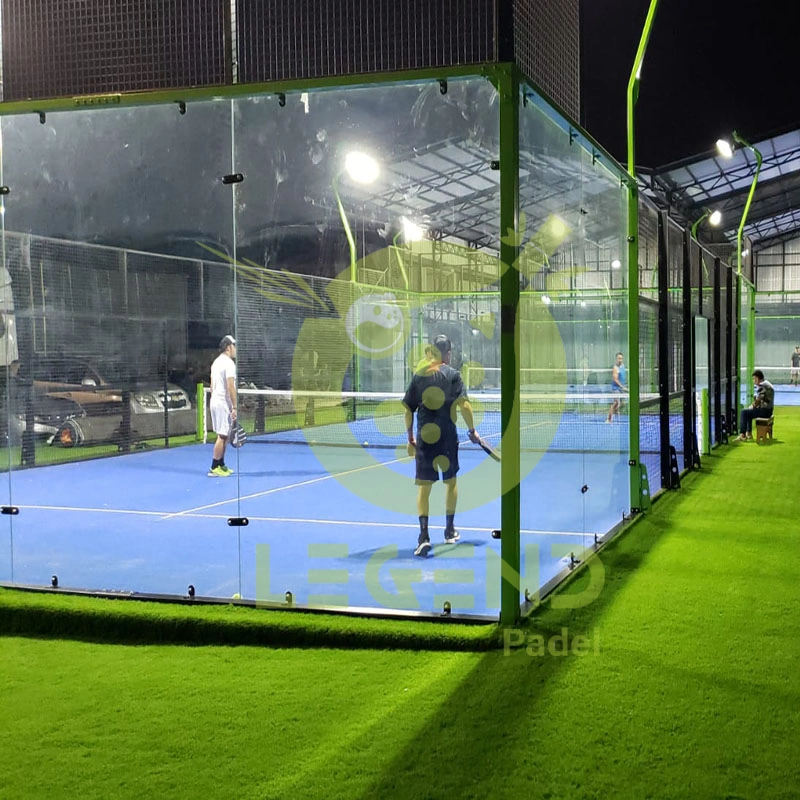
To bypass strict outdoor acoustic restrictions and unpredictable weather, there is a noticeable shift toward developing indoor padel facilities. However, moving the game inside introduces a new set of acoustic challenges, specifically regarding reverberation and echoes within closed halls. Without proper acoustic engineering, the enclosed space amplifies the sound, ruining the playing experience and potentially still violating building noise codes. Therefore, integrating smart structural dampening right from the manufacturing phase is critical.
Understanding Acoustic Challenges in High-Density Areas
The Science Behind Impact Vibrations and Echoes
To effectively mitigate sound, we must understand its source. In this sport, noise primarily stems from impact vibrations. Walls are usually made of tempered glass, and when a high-speed ball strikes these solid surfaces, the kinetic energy transforms into acoustic waves that travel outward and through the metallic framework. If the structure lacks shock-absorbing properties, these vibrations resonate, creating the loud booming sounds that nearby residents complain about.
Why Standard Court Designs Fail Urban Approval Tests
Common or older structural designs often use rigid connections between the glass panels and metal posts. This absence of dampening produces excessive resonance. In addition, lightweight frames can shake during intense play or strong winds. They add secondary mechanical noise. As a result, these traditional setups frequently fail the strict acoustic tests required by German urban authorities. Club owners then face project delays and costly retrofitting work.
Modern Engineering Solutions for Optimal Noise Reduction
Advanced Shock Absorption Systems in Premium Courts
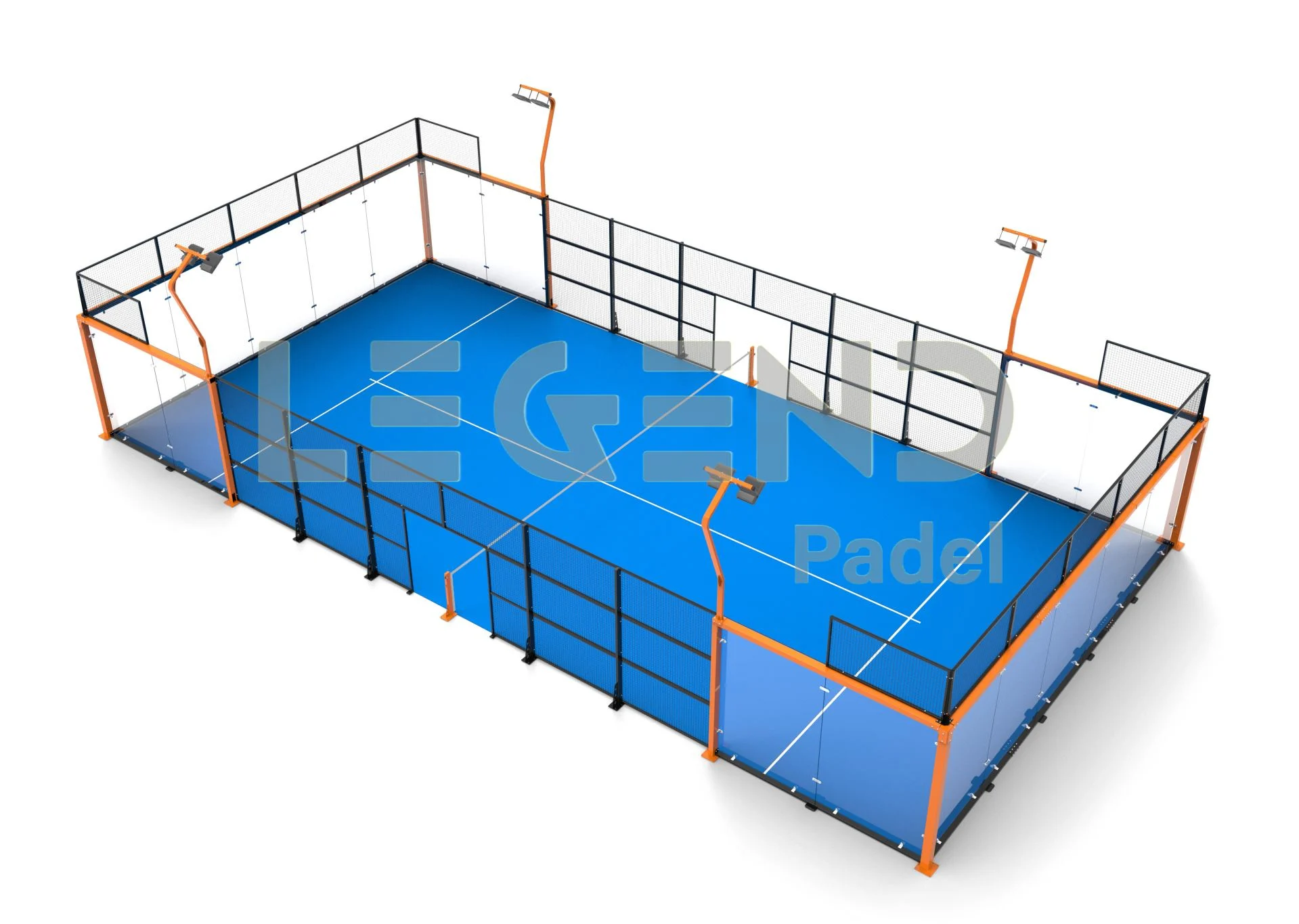
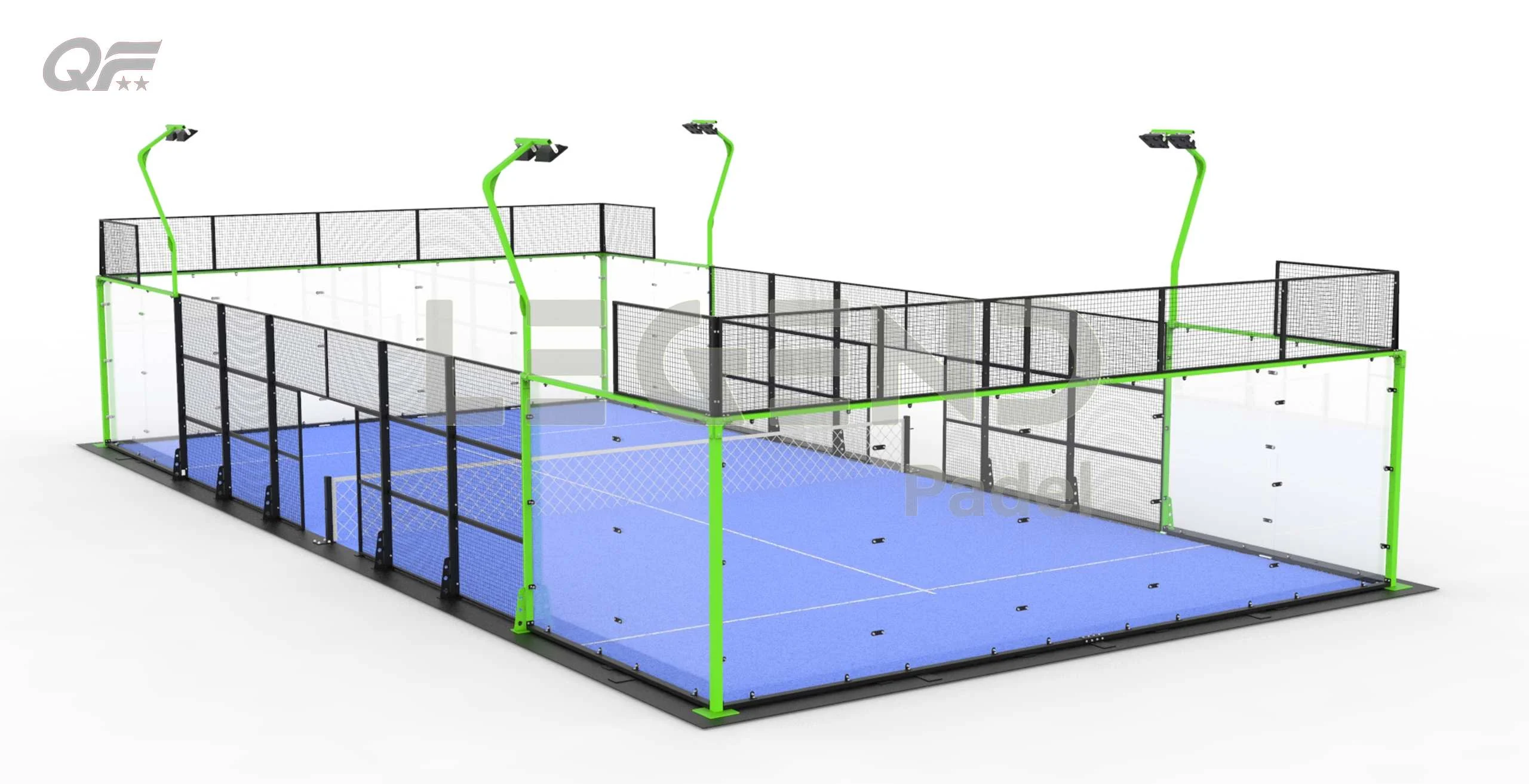
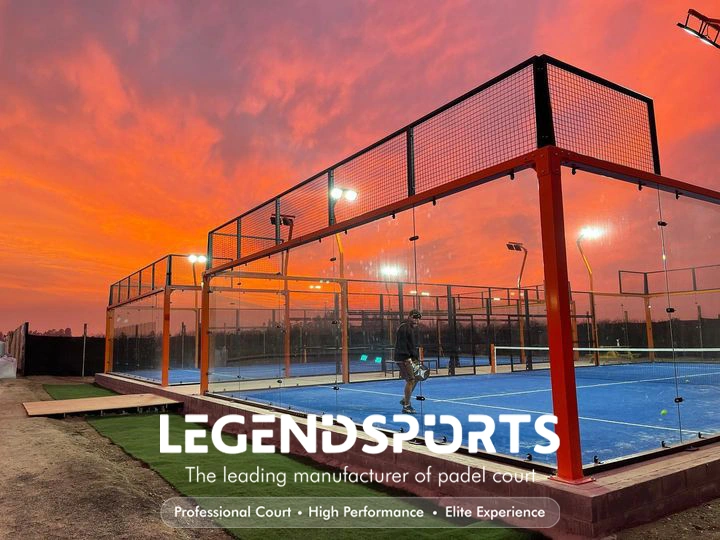
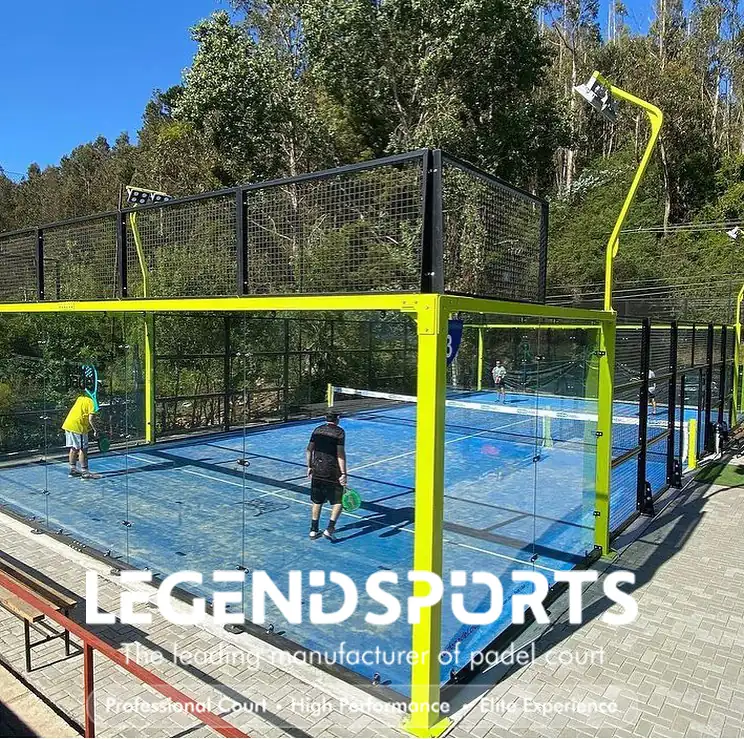
These challenges need precise engineering. At LEGEND SPORTS, our premium padel court solutions consider acoustics from the beginning. Our flagship PD03 model addresses structural resonance directly. It includes rubber shock pads placed between the glass and steel columns. These reduce the impact of vibration noise by 15% – 20%. The walls use premium tempered glass with CE certification. This glass absorbs deformation from high-pressure wind and ball impacts. These details ensure the PD03 delivers a superior, quieter playing experience.
Streamlined Modular Construction to Reduce Local Disruption
Noise pollution is not limited to gameplay. Construction noise also worries urban neighborhoods. We provide a modular pre-assembly design. We ship highly engineered components that fit together smoothly. An ordinary construction team can finish assembly in just 3-4 days. They use our included 3D video guidance and detailed manuals. This approach cuts the time heavy machinery and loud tools stay on site. It eases tensions with the local community.
Ensuring Year-Round Durability in the Demanding German Climate
Wind Resistance Strategies and Eurocode 1 Standards
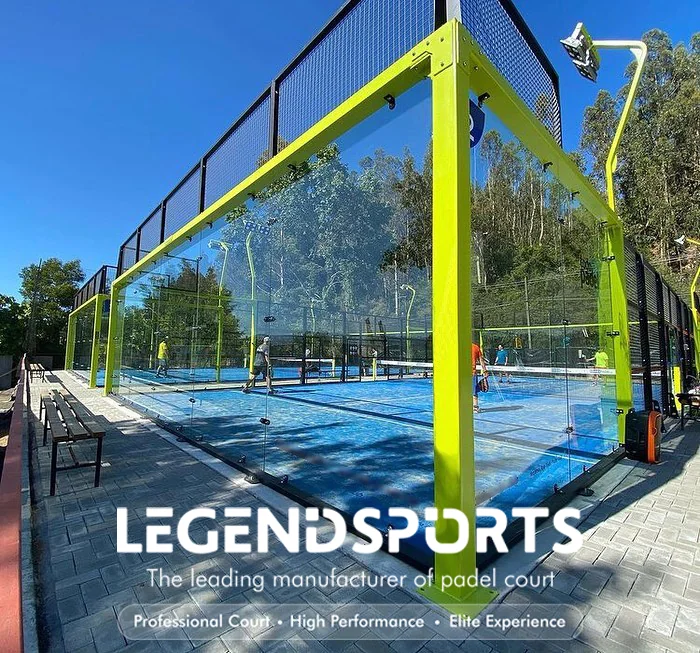
A structurally sound padel court stays quiet. Loose components will rattle in the wind. Our court designs follow the wind load requirements in the Eurocode 1 (EN 1991) standard. To guarantee stability against German storms, the Max Pro Panoramic Padel Corte-PD03 uses 150mm*150mm*3mm premium steel pipes for its corner columns. These pipes are the thickest among all models. This heavy-duty framework removes rattling noises and structural flexing.
Adapting to Freezing Winters and High-Moisture Environments
German winters require strong materials. We use a hot-dip galvanizing process. This ensures all steel materials resist salt spray and humid air. They remain rust-free for over 15 years. For the playing surface, we select modified polyethylene (PE) turf fibers. These maintain flexibility in temperatures from -40℃ to 60℃. They avoid becoming brittle and breaking in freezing conditions. The framework is calculated to support static snow loads. After heavy rain, our permeable turf backing allows the court to reopen for matches within 30 minutes.
Upgrading the Padel Experience with LEGEND SPORTS
Fully Customized Aesthetics for Premium Club Branding
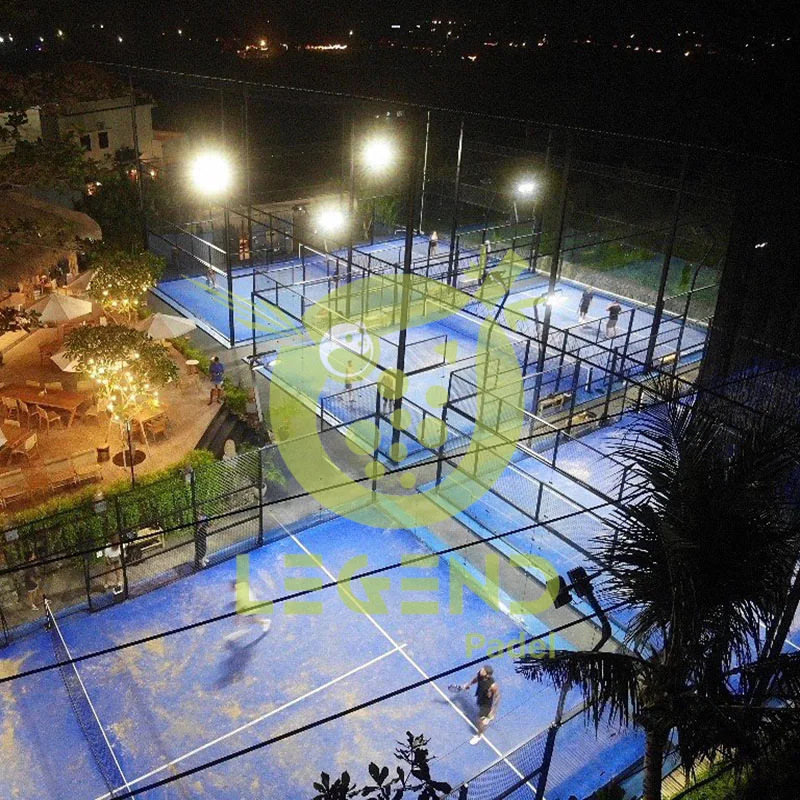
German investors value good appearance as much as solid engineering. We offer highly customized options to improve your club brand. You can select customized court colors using RAL codes. You can add laser-cut club logos. You can also choose specific light pole designs. To handle dark German winters, our courts include professional 200W or 400W LED lights with anti-glare technology. These provide high illumination uniformity that protects players’ vision.
Streamlined Logistics and Reliable After-Sales Support
Sourcing equipment from abroad should not create stress. LEGEND SPORTS offers a production cycle usually within 4 weeks. We support our engineering with a 5-10 year warranty on the steel structure and a 5-year warranty on the turf. We also keep a full inventory of spare parts. These include screws, lighting fixtures, and single glass panes. This stock enables rapid global replacements when required.
Preguntas frecuentes
Q: What is the most effective way to reduce noise when planning an urban padel court?
A: The most effective method uses advanced shock absorption systems inside the structure. For instance, the LEGEND SPORTS PD03 model includes specialized rubber shock pads between the steel columns and glass panels. This engineering absorbs kinetic energy. It can reduce impact vibration noise by up to 15% – 20%. These changes make municipal approval much smoother.
Q: How long does it typically take to install a modular padel court?
A: Modern engineering makes installation very efficient. With a modular pre-assembly design, a standard construction team can complete the court in just 3 to 4 days. They follow our 3D video guidance and installation manuals. This rapid setup reduces local disruption and construction noise.
Q: Can a standard padel court withstand harsh freezing temperatures and heavy snow?
A: High-quality modern courts are engineered for these climates. The turf uses modified PE fibers that stay flexible from -40℃ to 60℃. This prevents brittleness. In addition, the robust steel frameworks are calculated to bear the static snow loads common in harsh winters.
Q: Are customized design options available to match our premium club branding?
A: Yes, they are. Highly customized features are available to match your premium branding. Operators can select customized RAL colors for the structure. They can integrate laser-cut club logos. They can also choose specific lighting pole designs. These options create a unique appearance.
Q: Do modern outdoor padel court structures meet European safety standards for strong winds?
A: Yes, top-tier structures pass rigorous tests. Our designs follow the wind load requirements in the Eurocode 1 (EN 1991) standard. Models like the PD03 use thick steel profiles such as 150mm*150mm*3mm corner columns. This ensures complete stability during high winds.