


British weather does more than interrupt matches. Rain, strong wind, low temperatures, and limited winter daylight can disrupt coaching schedules, leagues, staffing, and player retention. This is why the indoor padel court UK market is increasingly turning existing buildings into reliable, year-round sports venues.
Why Is the UK Indoor Padel Court Conversion Boom Accelerating in 2026?
British Weather Is Turning Court Availability Into the Real Advantage
An all-weather padel court protects bookable hours from sudden cancellations. It allows clubs to schedule junior programmes, coaching sessions, corporate events, and evening leagues with greater certainty.
The real advantage is not simply keeping players dry. It is providing dependable access during the hours when customers are most likely to play.
Player Demand Is Outgrowing Reliable All-Season Padel Court Supply
The 2025 FIP World Padel Report recorded Great Britain passing 1,000 courts in mid-2025 following rapid recent growth. The next market challenge is therefore not only adding courts, but increasing the supply of reliable playing hours.
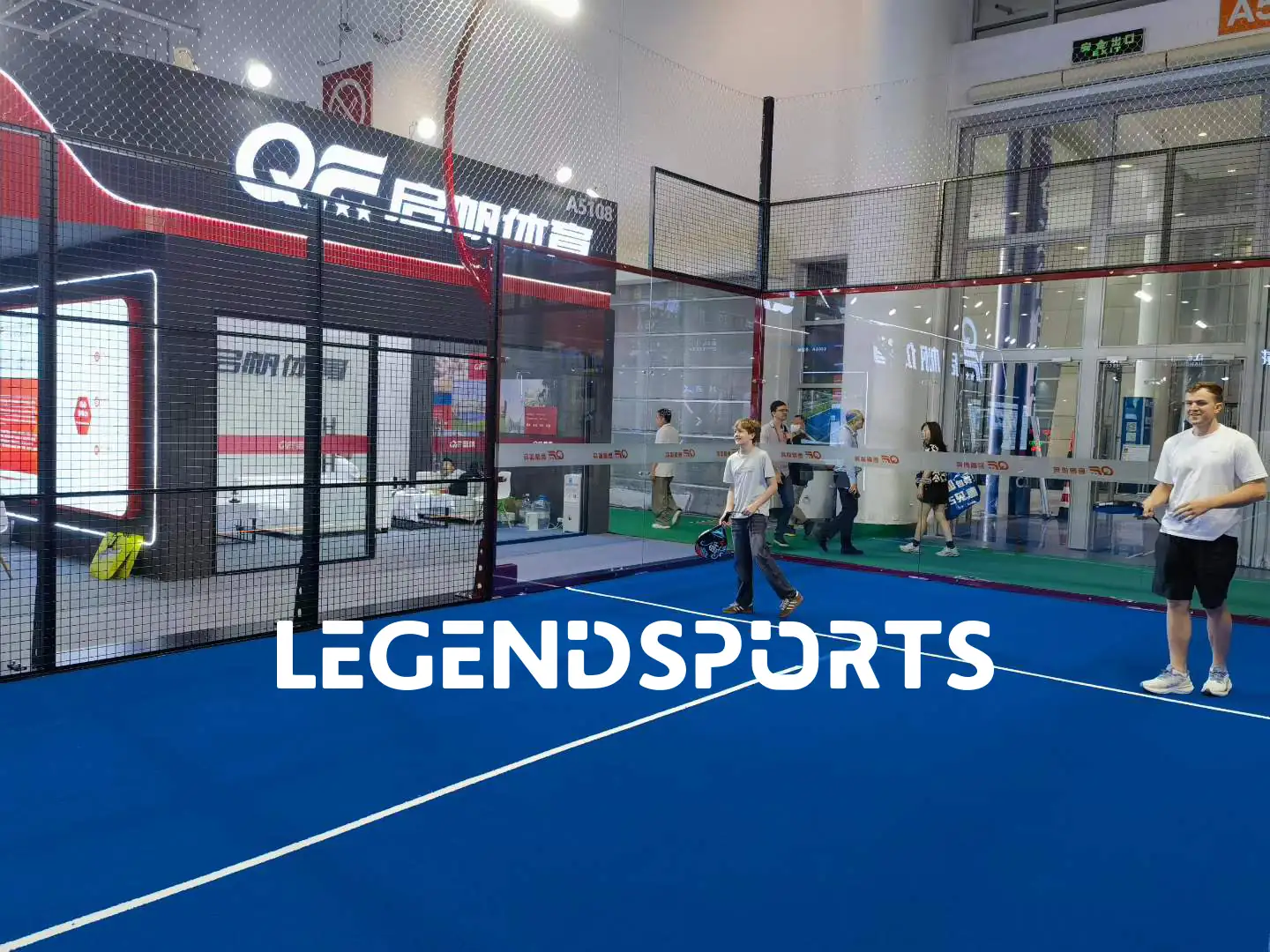
Existing Buildings Offer a Faster Route to New Padel Court Capacity
A well-planned indoor padel court conversion can give an underused property a new purpose without starting an entirely new venue project. However, developers must assess clear height, internal obstructions, access, planning status, and supporting space before choosing a site.
Which Buildings Are Best Suited to an Indoor Padel Court Conversion?
Warehouses and Industrial Units Offer the Clearest Starting Point
A warehouse padel court can benefit from a wide internal area, practical delivery access, and enough space for multiple courts. Columns, beams, suspended services, and lease conditions still need detailed review.
Former Retail, Leisure, and Racket-Sport Buildings Can Also Work
A commercial property conversion may also be possible in former leisure facilities, indoor racket-sport buildings, or high-clearance retail units. The best building is not always the largest. A smaller open space with fewer obstructions may accommodate a more practical layout.
What Do Recent UK Padel Court Conversion Cases Reveal?
Smaller Community Sites Can Work Beyond Major Cities
Recent projects show that indoor clubs can succeed outside major cities when they respond to a clear shortage of local courts. Two- or three-court facilities may support coaching, social play, and local leagues without requiring a large destination venue.
Multi-Court Warehouses Can Become Broader Sports Hubs
A warehouse conversion to a padel club can combine standard courts with coaching areas, social spaces, and competition facilities. For a premium central court, the LEGEND SPORTS Extreme Super Panoramic Padel Court-PD06 provides a more open viewing experience suited to events and high-profile matches.
How Do You Test Whether a Building Can Fit a Profitable Padel Club?
Start With the Full Padel Court Footprint, Not Just the Playing Area
A standard padel court measures 20 m × 10 m. Once peripheral space is included, approximately 11 m × 21 m should be considered for each standard court.
The layout must also include circulation routes, emergency access, reception, storage, changing facilities, and spectator areas.
Clear Height Matters More Than the Building’s Highest Point
For indoor padel court ceiling height, the lowest obstruction is more important than the roof peak. Beams, lights, ventilation equipment, and suspended fittings should remain outside the ball trajectory. We recommend at least 8 m for indoor projects, with more clearance for competition use.
Multi-Court Layouts Must Balance Playing and Non-Playing Space
A five-court padel club layout should not simply place five rectangles side by side. Court orientation must work with player circulation, reception visibility, coaching zones, and social areas.
Where part of the building is narrower, our LEGEND SPORTS Single Padel Court-PD07 can use a 20 m × 6 m area for one-on-one play or individual coaching.
What Technical Upgrades Create a Better Indoor Padel Court Experience?
Is the Existing Floor Base Ready for a Padel Court?
The base should be level, stable, and suitable for secure installation. Poor preparation can affect ball response, court alignment, and maintenance requirements.
How Can Padel Court Lighting Avoid Glare and Blind Spots?
Effective padel court lighting should support lobs and overhead shots without placing bright fixtures directly in players’ sightlines.
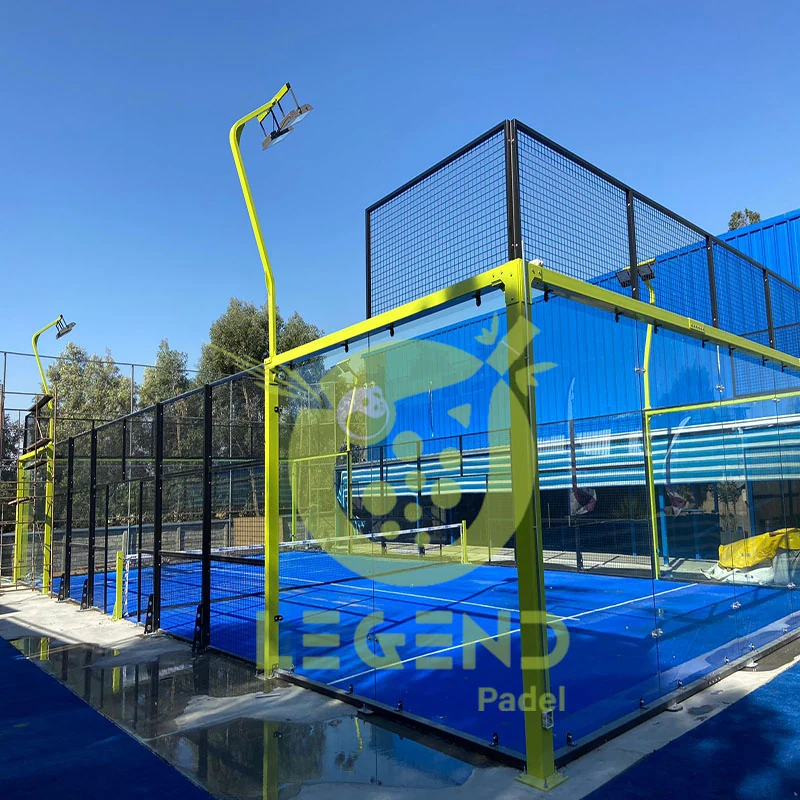
Our LEGEND SPORTS Pro Panoramic Padel Court-PD04 includes eight 200 W LED floodlights, 12 mm artificial turf, and 12 mm tempered glass. Walls are usually made of tempered glass, while mesh sections complete the enclosure and maintain airflow and visibility.
Why Do Ventilation and Humidity Control Matter Indoors?
Good indoor padel court ventilation helps manage heat, moisture, and condensation. Ventilation capacity should reflect court numbers, peak occupancy, opening hours, and the size of reception and changing areas.
How Can Acoustic Design Reduce Padel Court Noise?
A padel court noise assessment should influence court orientation, entrance placement, sound-absorbing zones, and separation from nearby properties. Noise should be addressed during planning rather than after opening.
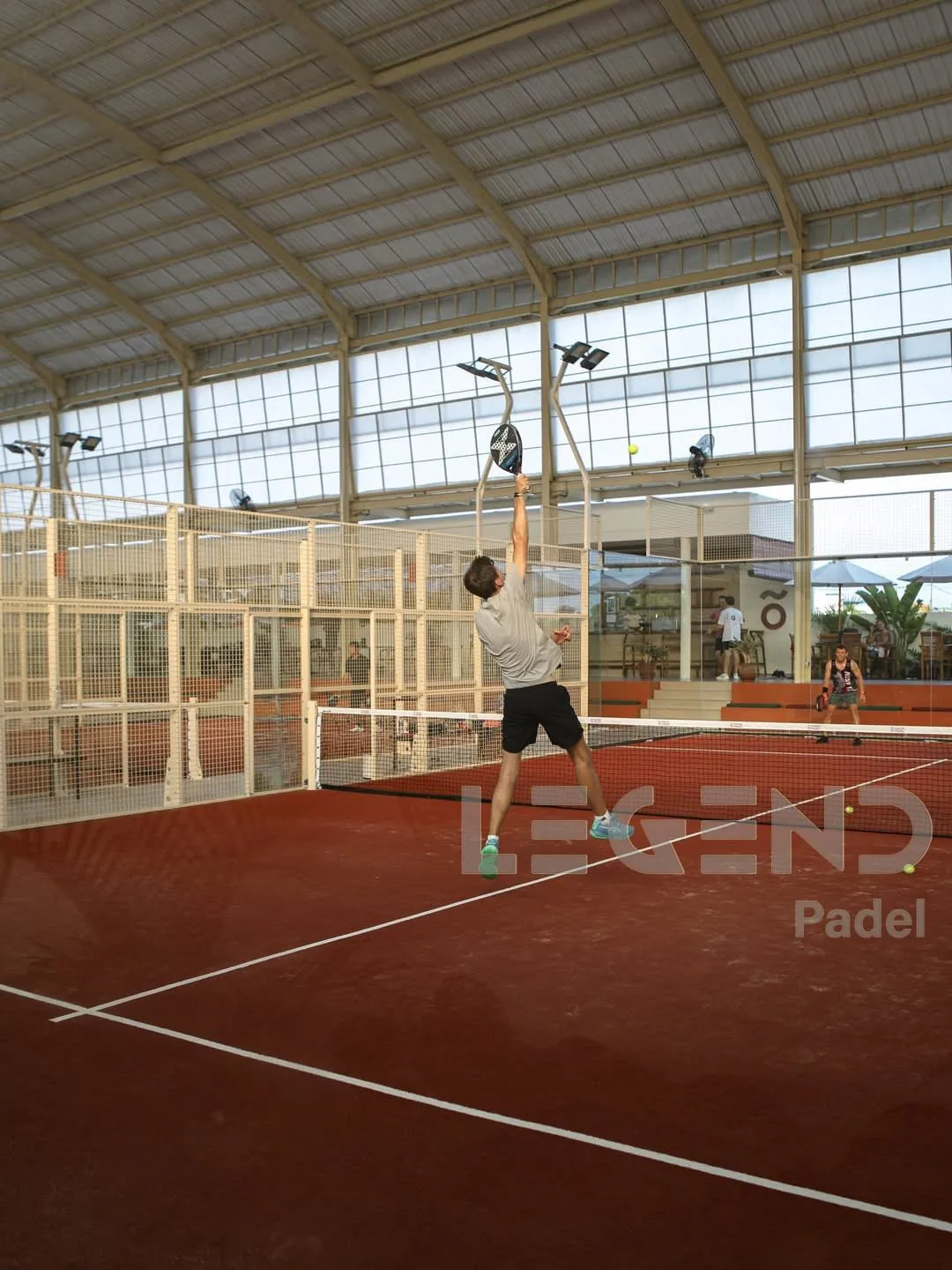
What UK Planning and Compliance Issues Can Delay a Padel Court Conversion?
Does a Warehouse Need Change-of-Use Approval for a Padel Club?
A padel court planning permission UK review should take place before signing a long lease or ordering equipment. A building previously used for storage or industrial activity may require formal approval before operating as an indoor sports venue.
How Should Fire Safety and Accessibility Shape the Layout?
Escape routes, emergency lighting, accessible circulation, venue capacity, and sanitary facilities should be included before court positions are finalized.
Can Noise, Parking, and Opening Hours Affect Approval?
Late opening hours, vehicle movements, parking demand, and entrance activity may affect approval. A balanced design can sometimes create better long-term results than maximizing the number of courts.
What Determines the Cost, Payback Period, and ROI of an Indoor Padel Club?
How Does a Padel Court Conversion Compare With a New-Build Facility?
Padel court conversion cost includes planning, preparation, court equipment, lighting, ventilation, installation, and customer facilities. Existing buildings may reduce some work, but hidden access or compliance issues can change the budget.
Which Revenue Streams Improve Indoor Padel Court ROI?
Indoor padel court ROI can be strengthened through court hire, memberships, coaching, junior programmes, leagues, events, retail, and refreshments. Year-round availability helps protect these income streams from weather disruption.
What Factors Have the Greatest Effect on the Payback Period?
A padel club payback period depends on rent, occupancy, pricing, staffing, energy use, and maintenance downtime. Conservative, expected, and high-use forecasts provide a more credible view than one fixed payback claim.
Can Smart and Modular Padel Courts Reduce Operating Risk?
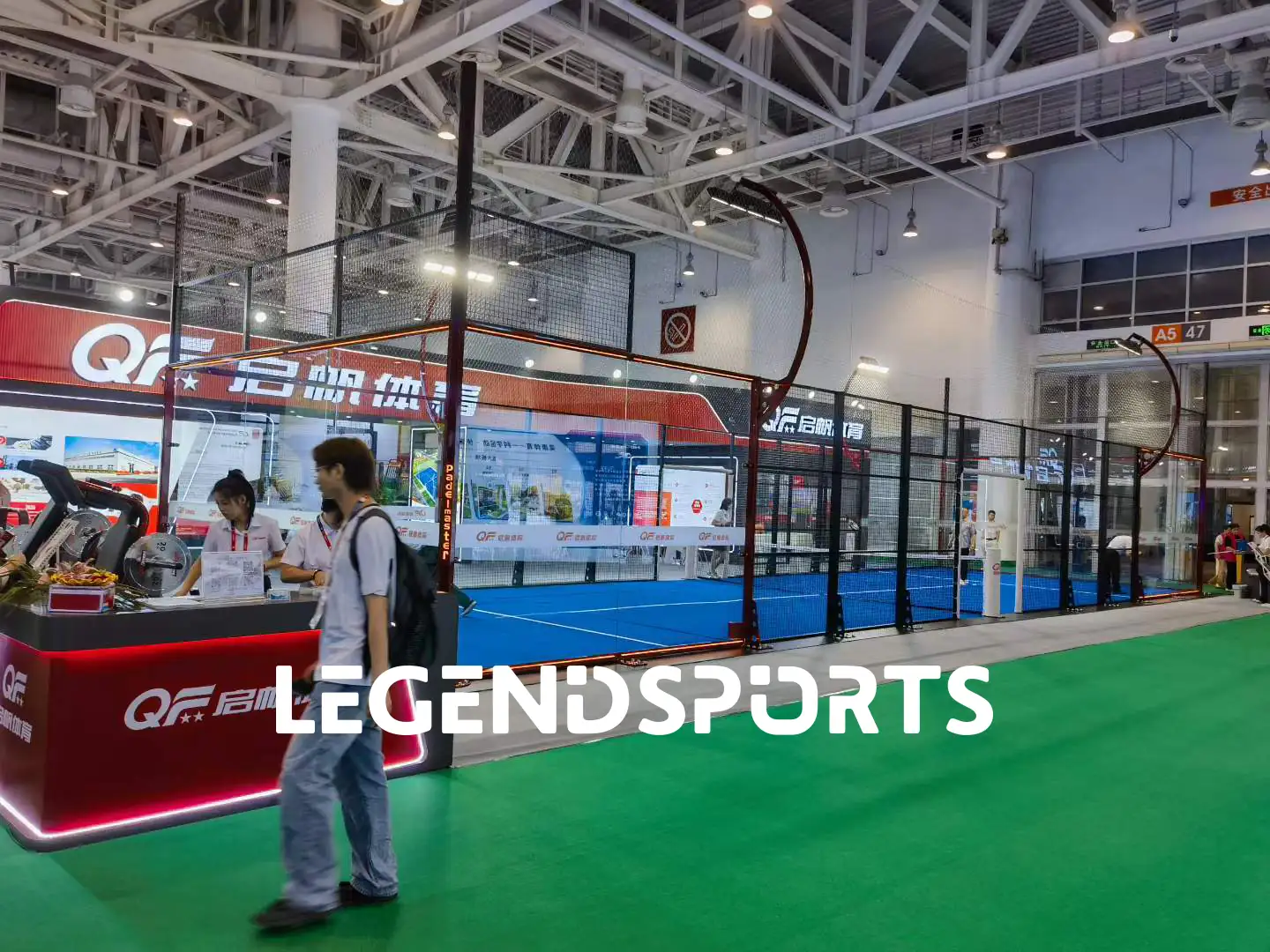
Digital features can simplify access and improve the player journey. Our LEGEND SPORTS Smart Padel Court-PD04E integrates an electric door, LED scoring, and monitoring playback, supporting coaching analysis, organized matches, and digitally managed venues.
We also provide customized layouts, colours, logos, glass options, and configurations to match the building, target users, and operating model.
FAQ
Q: What is the recommended indoor padel court ceiling height?
A: A clear height of at least 8 m is recommended for most indoor venues, while competition-focused projects may benefit from additional clearance.
Q: How much space is required for a warehouse padel court?
A: A standard court measures 20 m × 10 m, but approximately 11 m × 21 m should be allowed once peripheral space is included.
Q: Is planning permission for a padel court in the UK required for every conversion?
A: Not every project follows the same process, but changing a storage or industrial building into an indoor sports venue may require formal approval.
Q: What usually has the greatest effect on padel court conversion cost?
A: Building condition, court count, clear height, installation access, lighting, ventilation, planning requirements, and customer facilities are major cost factors.
Q: How can indoor padel court ROI be improved?
A: Clubs can increase utilization through off-peak pricing, coaching, leagues, junior programmes, events, memberships, and digital access systems