

The Padel Boom: Why German Clubs Need Weather-Resilient and Indoor Solutions
The Shift Towards Indoor Facilities and Canopy Innovations
The need for a good padel court is growing fast across Europe. German sports clubs are expanding their spaces to fit this quick game. Yet German winters last long and remain hard to predict. Investors now focus on strong indoor facilities and canopy-covered setups. They must calculate the static snow load for the roof. This step ensures the framework can safely hold the weight of winter snow. Such planning allows for play all year. It also improves the facility’s utilization rate.
Meeting FIP Standards for Future-Proof Play
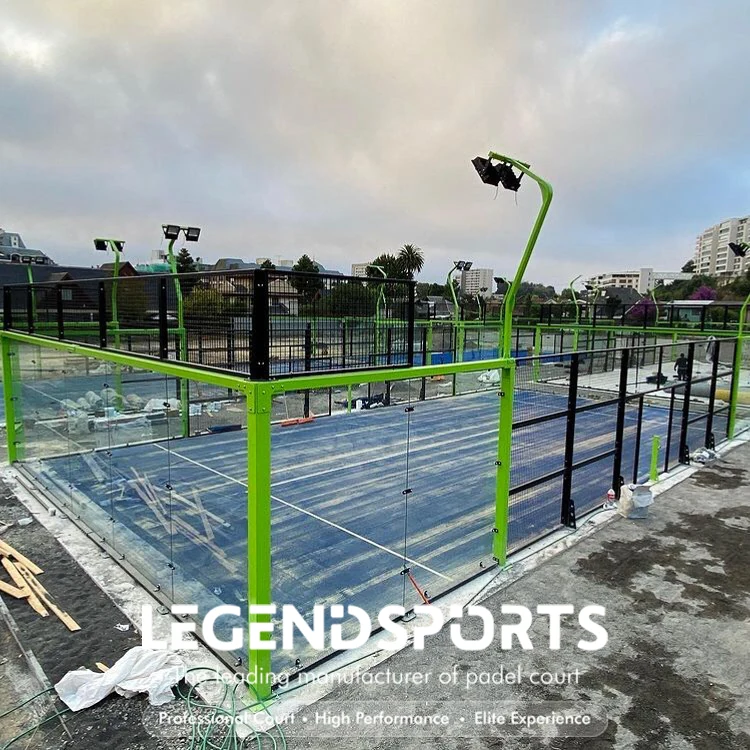
Building a professional padel court does more than add a new feature. It protects your investment for the future. Following the International Padel Federation (FIP) standards remains essential. This allows clubs to host official tournaments. It also delivers a high-quality experience for players. A standard method gives a consistent ball bounce. It provides proper safety clearances. Players enjoy an authentic feel that brings them back.
Understanding Padel Court Costs: How to Maximize Your Budget
Debunking the Myth of Expensive Local Sourcing
Many club owners think they must buy materials locally to get good quality. This is not always true. Direct supply from China can lower your padel court construction costs greatly. At LEGEND SPORTS, we supply premium facilities. Their technical parameters match or exceed European standards. Our direct supply model keeps costs 20% to 35% lower than local European dealers. This cost saving lets investors spend more on facility amenities and marketing.
Faster Lead Times for Quicker Club Launches
Time matters in the commercial sports sector. Some European brands need lead times of 6 to 8 months. Our manufacturing process finishes the production cycle in just 4 weeks. Even with ocean freight, a complete padel court can reach Germany in just over two months. This speed allows faster club openings. It brings quicker returns on investment.
Overcoming Strict City Regulations and Customization Needs
Acoustic Innovations for Urban Approvals
Navigating urban planning permissions in German cities can be challenging, particularly concerning noise pollution. We address this head-on with innovative acoustic engineering. Walls are usually made of tempered glass, and our courts feature specialized rubber shock absorption pads installed between the glass and steel pillars, which effectively lowers the vibration noise by 15% to 20%. This reduction makes securing community building approvals significantly easier for urban outdoor padel courts.
Deep Customization for Brand Identity
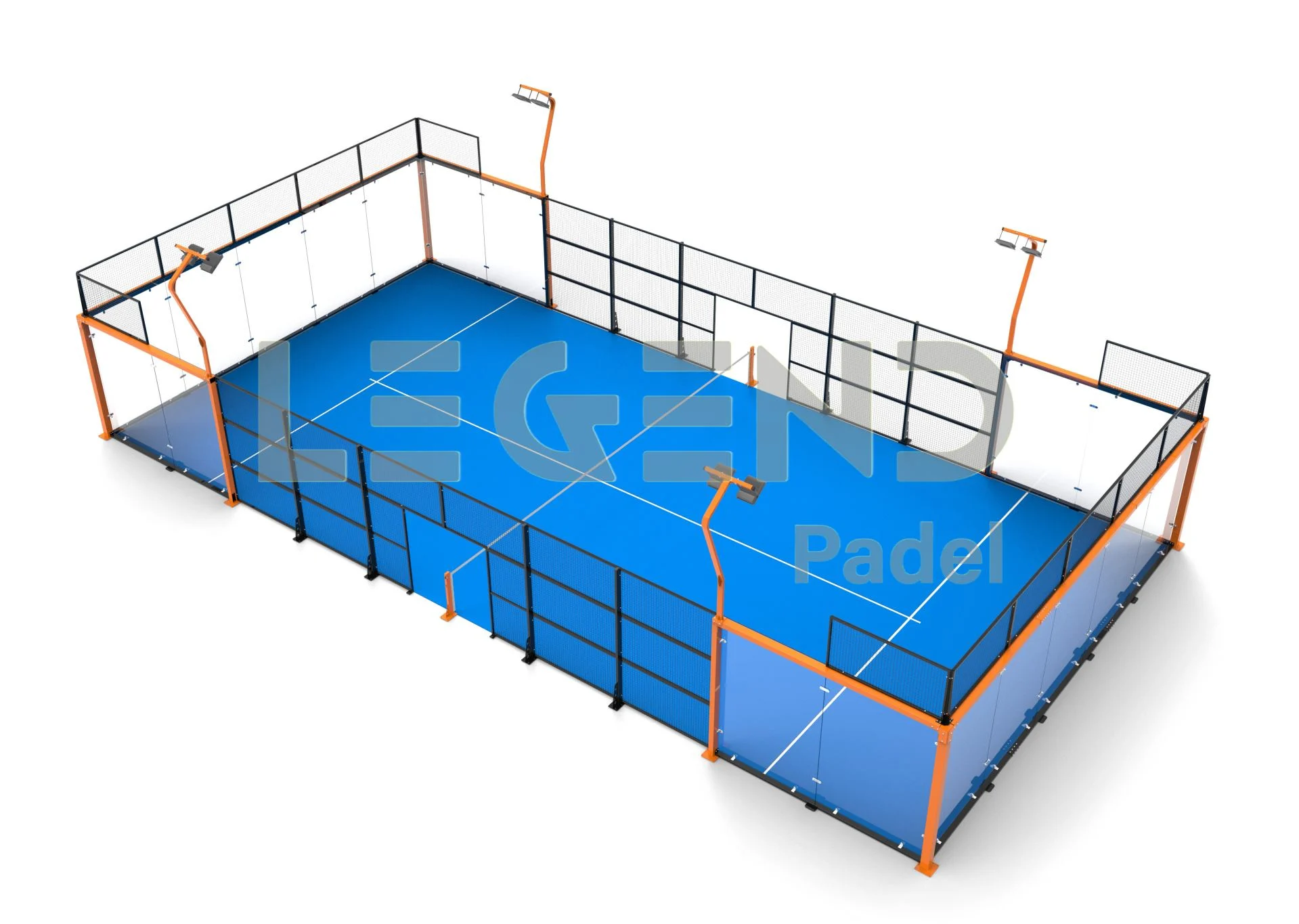
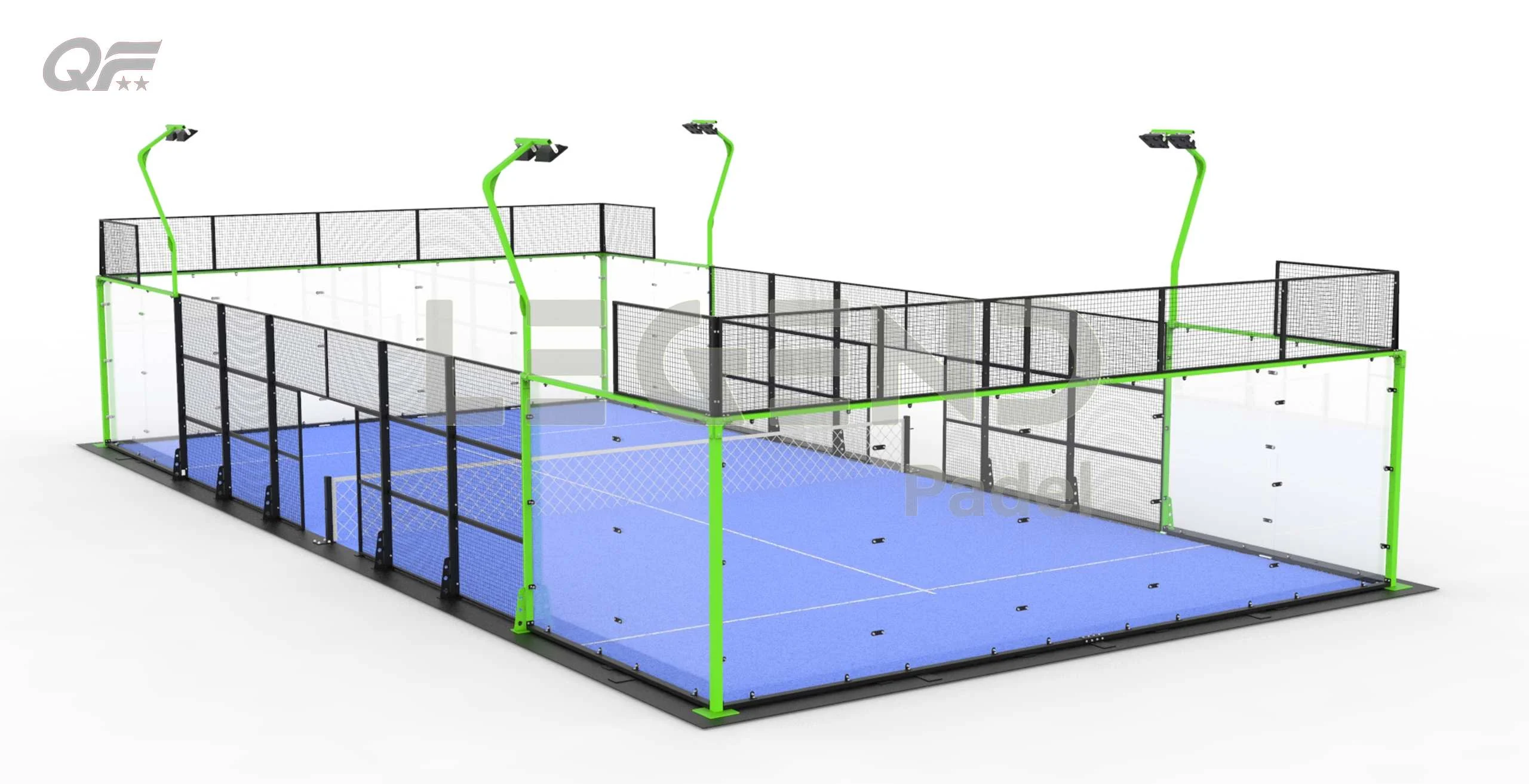
German clients want a unique brand identity. We therefore provide deeply customized services. You may need a specific RAL color code for your customized padel court steel framework. You can request laser-cut club logos on the pillars. You can also ask for unique lighting pole designs. Our manufacturing brings your exact vision to life.
Engineering Courts for the Unpredictable German Climate
Conquering Wind Storms and Heavy Snow
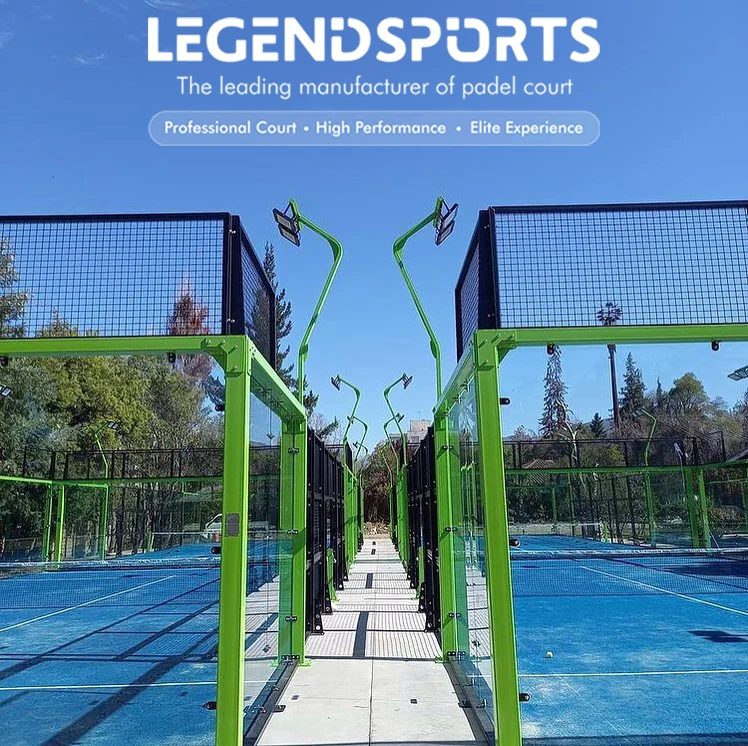
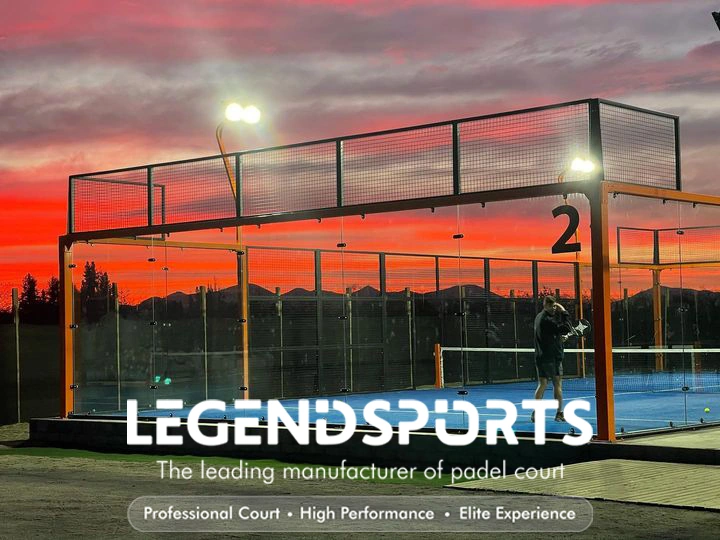
Bad weather needs strong durability. Our structures meet the wind load requirements of the Eurocode 1 (EN 1991) standard. We highly recommend our flagship Max Pro Panoramic Padel Court-PD03. It has the thickest steel pipes among all our models. The PD03 features massive 150 mm x 150 mm x 3 mm premium steel pipes for corner pillars and 150 mm x 100 mm x 3 mm beams. The walls consist of metal mesh and glass. We use CE-certified premium tempered glass. This glass absorbs deformation from high-pressure winds. In addition, our turf uses modified polyethylene (PE) fibers. These fibers stay fully flexible from -40℃ to 60℃. They never become brittle or break in freezing German winters.
Anti-Corrosion Technologies for Wet and Rainy Seasons
To combat Germany’s damp climate, all our steel components undergo a hot-dip galvanizing process, protecting them from salt spray and humid air to guarantee they remain rust-free for over 15 years. Every fastener is made from 304 stainless steel to prevent localized rust spots. Furthermore, our turf features a highly permeable backing design that allows water to drain rapidly, meaning your padel court is ready for play just 30 minutes after heavy rainfall.
Smart Lighting Solutions for Dark Winter Afternoons
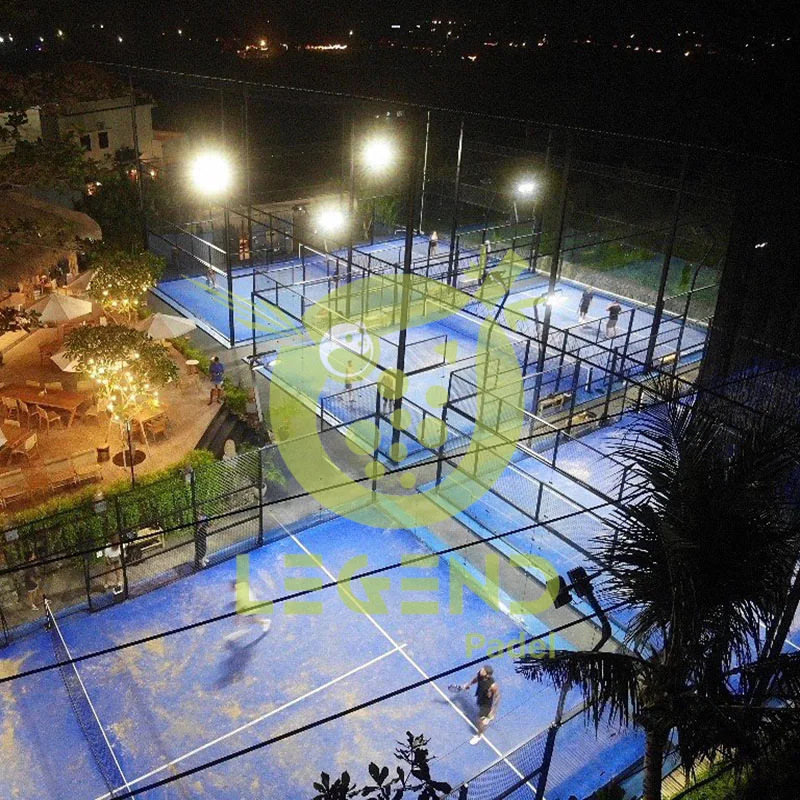
Shorter days in winter should not reduce court availability. We supply 200W or 400W professional LED lighting systems. These systems create natural daylight with good uniformity. The lights use anti-glare technology. This protects players’ vision during long winter nights. Their low energy use meets EU energy subsidy standards. It keeps operational costs low.
Why Modular Construction is Revolutionizing Court Installation
Erasing Cross-Border Sourcing Fears with Plug-and-Play Designs
We know many people worry about buying from other countries and installing the courts. To make it easier, we use a modular pre-assembly design. This design lets four complete padel court kits fit perfectly into one 40ft HQ container. Each shipment comes with detailed German and English installation manuals. It also includes 3D video guidance. A standard local construction crew can finish assembly in just 3 to 4 days.
Comprehensive Warranty and Rapid Global Support
A good court needs strong support. We give a 5 to 10-year warranty on the steel structure. We also provide a 5-year warranty on the turf. Moreover, LEGEND SPORTS keeps a full global parts library. This means components like screws, lighting fixtures, or a single piece of glass can be sent quickly anywhere in the world. It reduces downtime.
FAQ
Q: How much space is required to install a standard padel court?
A: A standard court needs an internal playing area of 10 meters by 20 meters. We recommend a slightly larger space of around 11×21 meters. This extra room fits the structural framework, lighting poles, and safe player access zones.
Q: Does building an outdoor padel court require special planning permission in Germany?
A: Yes, most German municipalities require a building permit. Local councils usually check structural integrity and noise levels first. Our advanced acoustic dampening technologies make it easier for clubs to meet these strict noise regulations.
Q: How do you maintain an indoor padel court to ensure longevity?
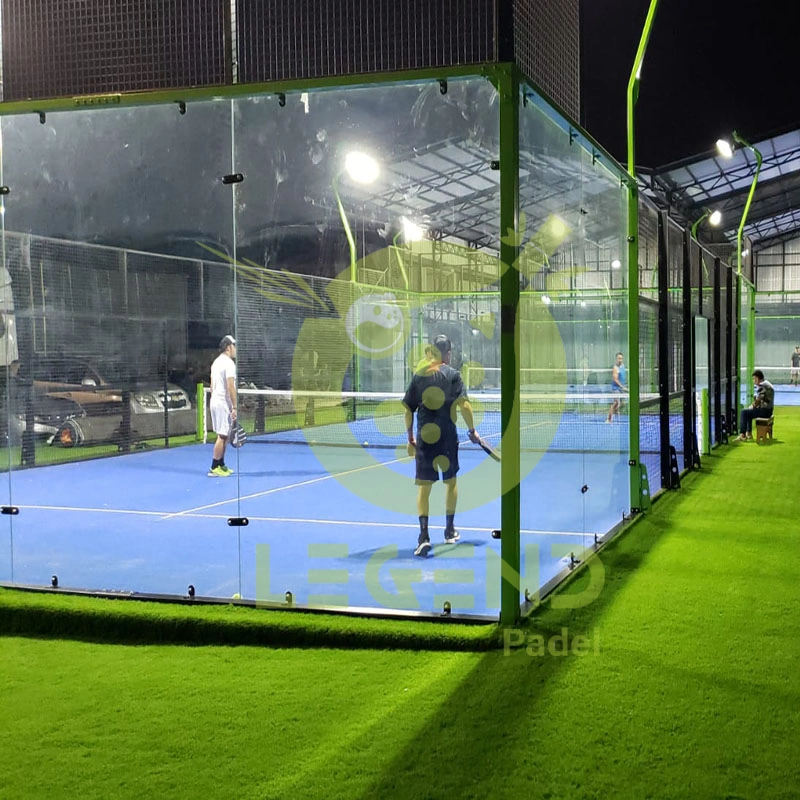
A: Maintenance is relatively straightforward. It involves regularly sweeping the turf to remove debris, redistributing the silica sand for optimal grip, and cleaning the tempered glass walls. Since indoor environments are protected from harsh weather, the structural components require minimal upkeep beyond routine visual inspections.
Q: Can a padel court be customized to match our club’s specific branding?
A: Yes, we can do this. We offer fully customized options. You can select specific RAL colors for the steel structure. You can add laser-cut logos. You can also choose special turf colors. These choices help the facility match your club’s visual identity perfectly.
Q: How long does the installation of a new padel court typically take?
A: Our modular pre-assembly design makes the setup process quick. The groundwork needs to be ready first. After that a typical local construction crew can assemble the whole framework. They also add the glass and turf. They finish this task in just 3 to 4 days. The crew uses our detailed manuals and 3D video guides.