


A UK indoor padel project can have an attractive court-kit quote and an unaffordable building plan at the same time. Direct manufacturer sourcing can reduce one part of the procurement chain, but it cannot remove local construction, approvals, or the cost of operating a venue. The 40% in this headline is a comparison to test with like-for-like bids, not a typical saving or a guaranteed outcome.
Define the Indoor Project Before Pricing
Check the Building Envelope
Measure clear height at the lowest beam, light, duct, or sprinkler, not just the ridge. Confirm column positions, door access, floor level and loading, emergency routes, acoustics, and the available electrical supply. An apparently inexpensive warehouse may need substantial adaptation before it can host play.
A standard doubles court has a 20 m by 10 m playing area and needs at least 11 m by 21 m of total floor area including peripheral space. Allow at least 8 m of indoor roof height, with 9-12 m stated for a competition court. These are useful screening dimensions; building design and the applicable competition requirements still need project-specific review.
Distinguish a Court Kit from a Venue
An indoor court kit is not the shell, lease, changing rooms, ventilation, fire strategy, reception, or parking. Ask whether an offered price covers supply only, installation on a prepared slab, or a complete operating facility. Treat planning and change-of-use advice as local professional work, not as something automatically resolved by buying a kit.
Where an existing floor is to be retained, the Mobile Pro Padel Court-PD05 is a relevant named option to investigate. Its self-fixing design is intended to protect the original floor and make assembly and disassembly easier. A structural professional must still assess the actual floor and installation method.
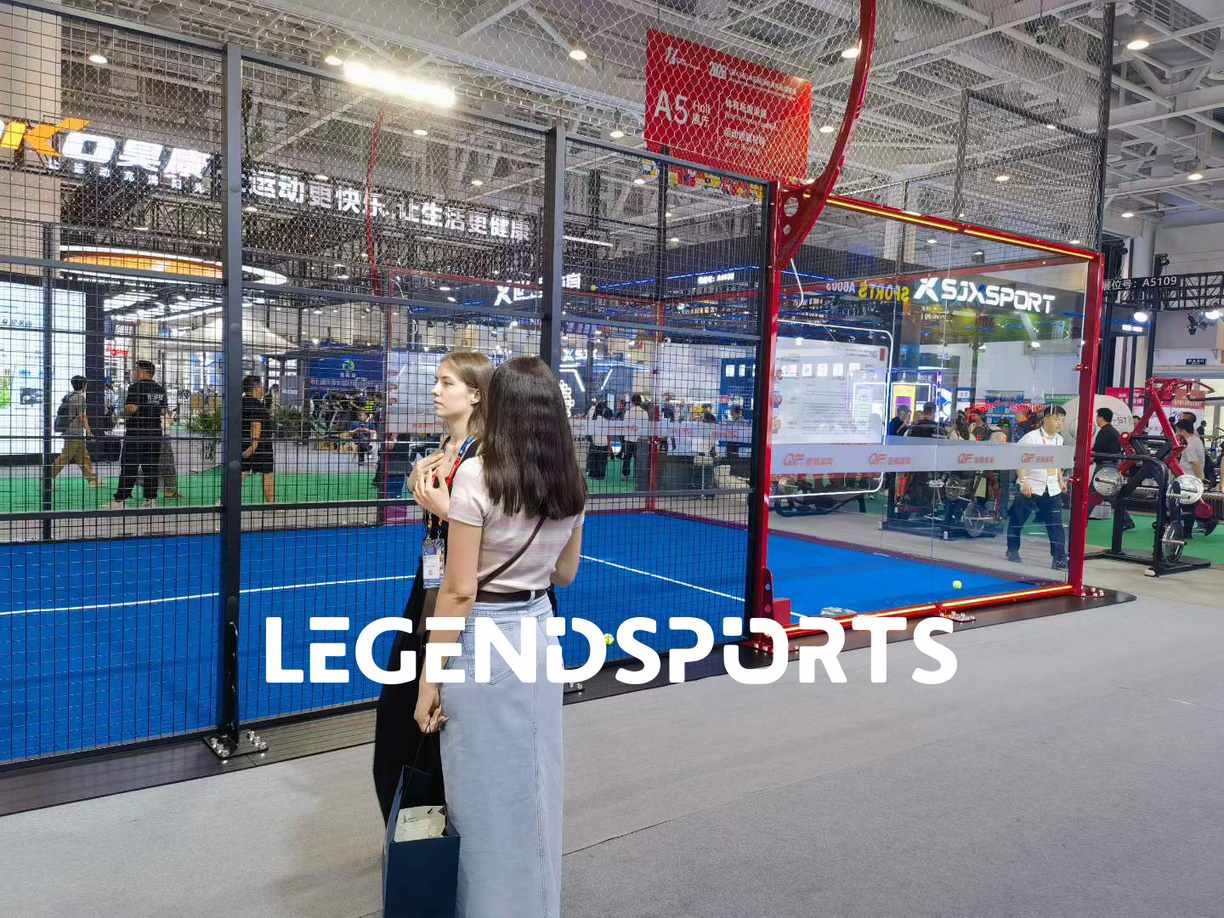
Where the UK Indoor Budget Goes
Court Components and Installation
Request separate prices for structure, glass, turf and infill, net, lights, packing, shipping, unloading, and assembly. Ask for the proposed steel sections, glass thickness, turf system, and warranty documents. Two “panoramic” quotations need not contain the same materials or installation services.
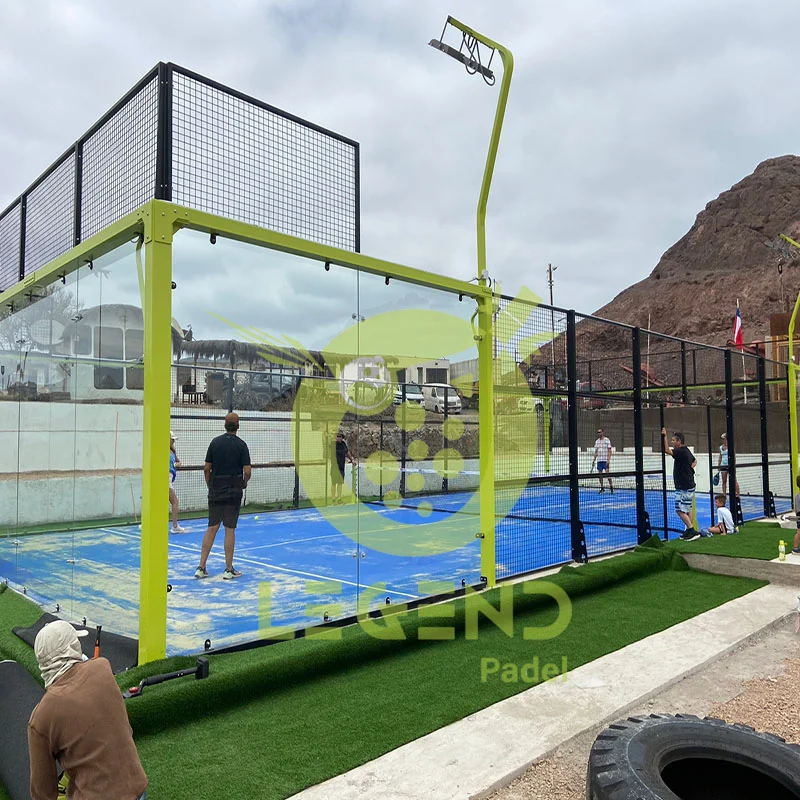
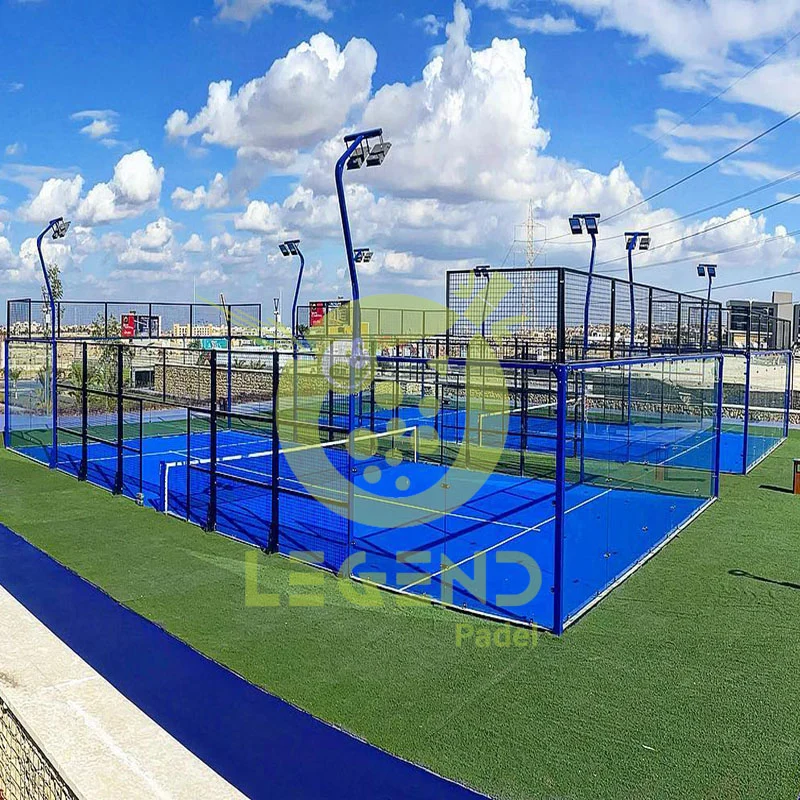
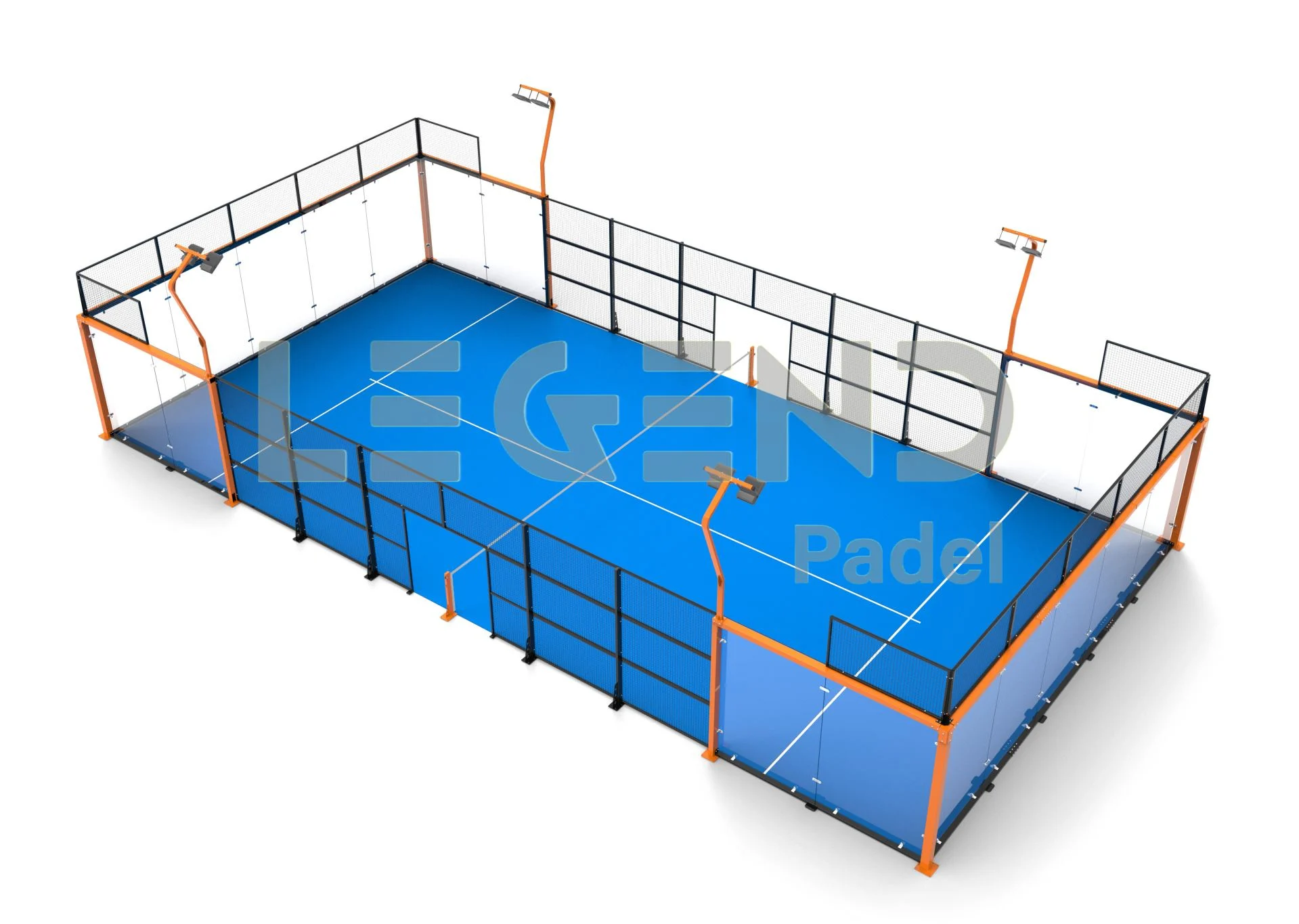
LEGEND SPORTS lists the Pro Panoramic Padel Court-PD04 with a 20 m by 10 m playing area. Its specified configuration includes 12 mm tempered glass panels, 12 mm textured-filament artificial turf, and eight 200 W LED floodlights at 6 m height. These model details provide comparison fields, not a substitute for the exact signed bill of materials.
For PD04, the glass choice includes tempered and optional laminated panels. Put the selected type on the component schedule.
Building Works and Running Costs
Budget for a sound floor, appropriate anchors, electrical distribution, ventilation, lighting controls, heating strategy, acoustic treatment, and accessible circulation as required by the premises. A court under an existing roof may avoid building a new canopy, but the roof and its services are not free. Insurance, business rates, rent, cleaning, and maintenance also sit outside most kit quotes.
Regular floor cleaning, replenishing the sand layer, checking the lighting system, and checking screws belong in the maintenance plan. Include a plan for these tasks and replacement parts in the operating forecast. A lower initial component quote can lose its advantage if local service arrangements are unclear.
What Direct Manufacturer Sourcing Changes
Compare Like-for-Like Court Specifications
Buying directly can expose the factory price and make optional finishes easier to itemise. It does not mean every direct bid beats every local turnkey bid. Send the same technical schedule to both suppliers and require each to state the court type, glass, turf, lights, documentation, lead time, and exclusions.
The PD04 configuration offers turf colours, steel-structure finishes, branded logos, and tempered or laminated glass as customisation choices. Our factory can discuss those options against a written specification, but a buyer should price each selected variant and confirm its availability in the current offer. Do not compare a base kit with a separately upgraded local package.
Assign Freight and Local Responsibilities
Name the Incoterm and the actual delivery point. The factory can help ship to a local seaport and check the cost when the buyer identifies that port. Customs brokerage, duties or tax treatment, inland transport, unloading, and UK installation must be assigned separately unless a signed quote includes them.
Ask for a packing list and unloading requirements before choosing an installer. Confirm who checks the slab and anchor layout, who handles damage in transit, and who signs the finished court off. A single responsibility grid is more useful than a headline discount.
Test the 40% Saving Claim
A Worked Comparison, Not a Promise
Suppose a local kit-and-install package is quoted at a hypothetical GBP 50,000, while a manufacturer kit quote is GBP 30,000. The kit line is 40% lower: (50,000 – 30,000) / 50,000. That arithmetic does not show a 40% saving on the indoor project. The two quotes have different scopes until freight, import costs, installation, and local works are added.
If the direct route requires a hypothetical GBP 5,000 for shipping and handling and GBP 10,000 for local installation, the comparable direct subtotal becomes GBP 45,000. Against the GBP 50,000 package, the difference is GBP 5,000, or 10%, before checking any remaining differences. These numbers are examples only, not market prices or a forecast for a UK venue.
Calculate the Landed, Installed Total
Create two columns with the same court specification and the same completion point. Add kit, freight, import charges, site works, building services, installation, testing, and contingency. Then check what each supplier will remedy if glass, anchors, or lighting fail acceptance. Only a matched total can support a percentage saving.
An indoor project may also consider a separate Padel Court Roof where it is constructing covered courts rather than converting an enclosed building. That product is a different scope: verify the structural design and local approvals instead of folding a roof price into a court-kit comparison.
FAQ
Q: What do indoor padel court costs in the UK include?
A: The total can include a court kit, shipping, building adaptations, foundations or anchors, electrical work, installation, and venue operating costs. Ask each bidder for a scope and exclusions list.
Q: Can direct sourcing cut indoor padel court costs by 40%?
A: It may make a kit line cheaper in a particular comparison, but 40% is not a verified general saving. Calculate the landed and installed total against an equivalent local quote.
Q: What ceiling height does an indoor padel court need?
A: Allow at least 8 m indoor roof height, with 9-12 m stated for a competition court. Measure the lowest obstruction and confirm the project’s governing requirements.
Q: Does an indoor padel court kit include installation?
A: Not by default. The contract should identify assembly, lifting, electrical connection, testing, and responsibility for the prepared floor.
Q: Which costs remain local when importing an indoor padel court?
A: Customs, inland haulage, building work, local installation, and statutory approvals may remain with the buyer. Check the delivery term and obtain local quotations before ordering.