



Compare the court with last month’s record. Enter each changed zone and observation in the padel court maintenance plan, then use supplier instructions to decide next action. The walk records visible changes; it doesn’t certify court safety. See something that could make play unsafe? Keep players clear and report it. The place and inspection date belong beside the observation, before you move on.
What Should a Monthly Padel Court Inspection Cover?
Spot hazards before routine court cleaning
A displaced panel deserves attention before a dirty entrance. So does a sharp edge, loose gate hardware, exposed cable, or failed light. Would you open for the next booking? If any one could injure someone, close the affected section. Routine padel court cleaning comes after those immediate concerns.
Give each monthly walk a set route
Walk outside to inside: perimeter, playing surface, then gates, lights, and access points on the way back. Reuse that route next month. Can’t identify the installed court? If records omit the type, compare with the パデルコート製品ラインナップ. Ask the supplier to verify installation before ordering parts.
How Should Operators Check the Playing Surface and Drainage?
Check turf for wear, loose fibers, or shifted infill
At service boxes and corners, slow the walk enough to look at the turf; include the joins and gate approach. A raised seam? Bare patch? Fibers coming loose, or infill moved? Mark the spot. Log the court zone and size of the affected patch too. Clear debris only by the turf’s approved method.
A wet patch needs context. Note when the rain stopped and where the patch sits. Water leaving the turf may return toward the enclosure. A returning pool, soft ground, or movement needs an installer or site professional’s attention; send those observations and compare the spot after the weather changes.

Check for debris, drains, and rainwater around the court
Look from stable ground at the drain opening, leaving your hands outside it. Clear leaves only if site procedures assign that task. Log repeat blockages by place and date. Outside the fence, map runoff toward the court, fresh cracks, or washed soil. If pooling returns after cleaning, send those dated observations when requesting an on-site review. Another visit after rain lets you compare the location again.
Which Glass, Mesh, and Structural Points Need Attention?
Check court glass, joints and fixings
With glass, consider keeping players clear before considering cleaning. A crack means contacting the supplier or a qualified installer. From ground level, photograph chips, displaced panes, damaged seals, or missing fixings at a safe distance, without touching the panel.
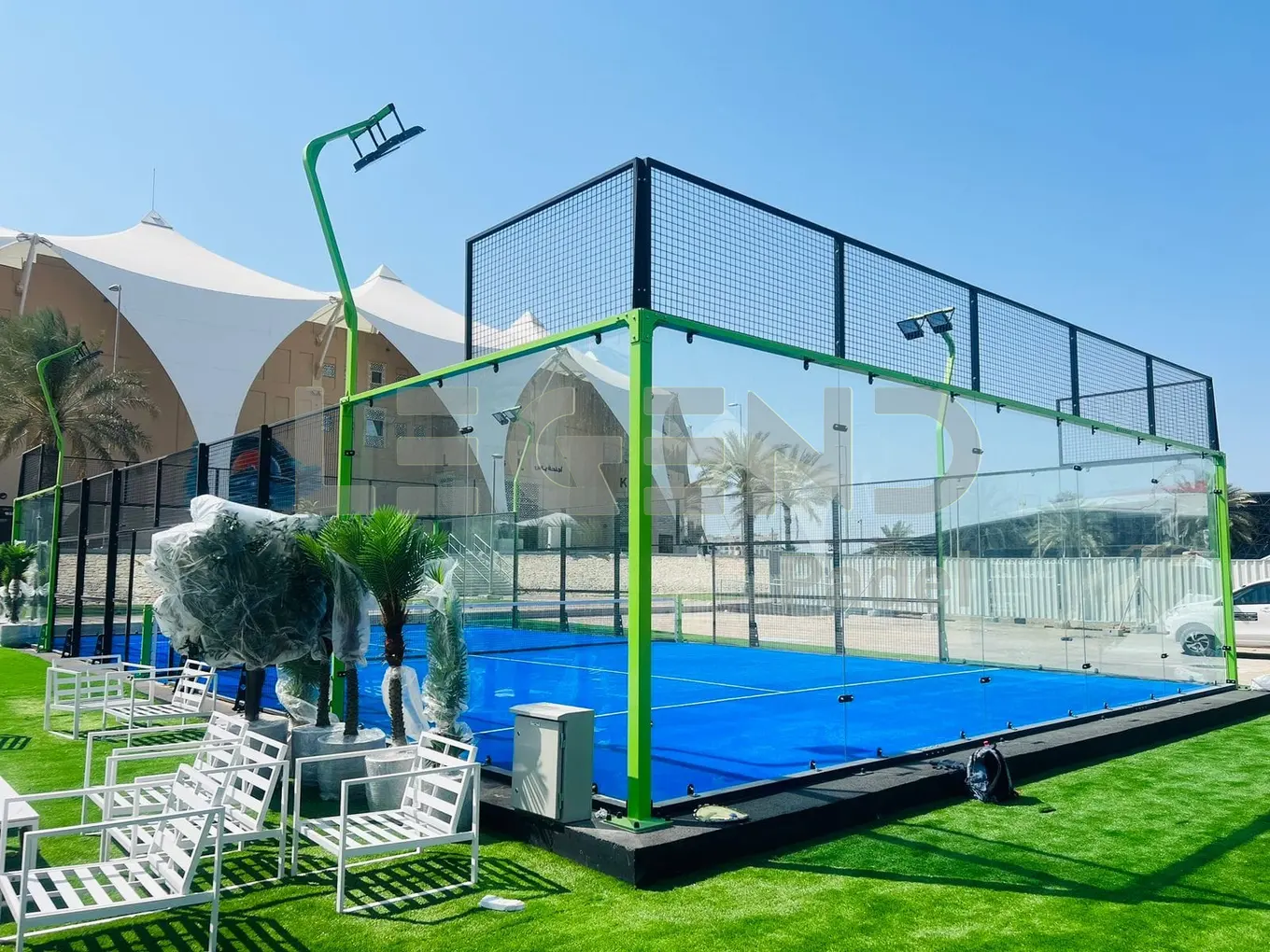
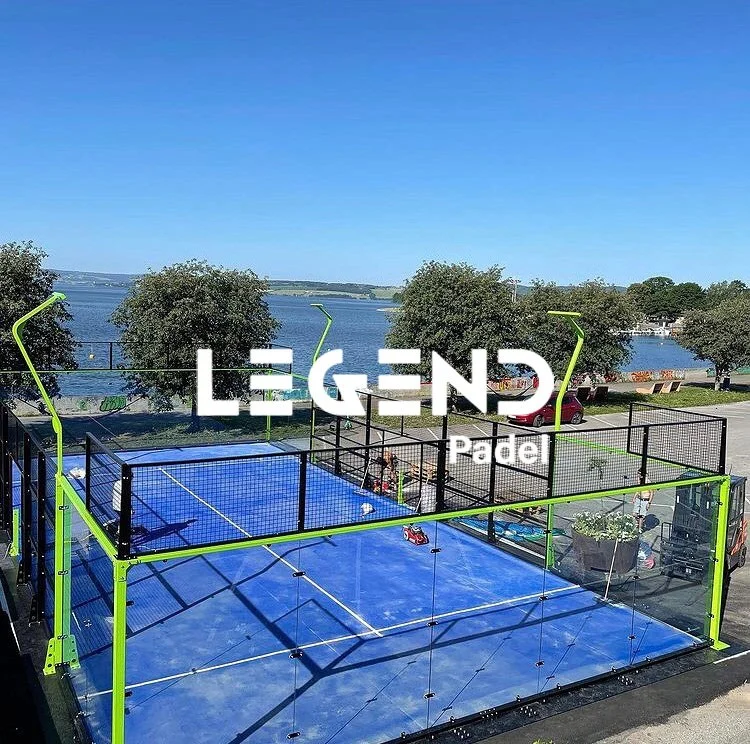
At LEGEND SPORTS, we offer configurations with galvanized steel structures and powder coating, alongside 12 mm tempered glass, artificial turf options, and LED lighting. Check the installed combination against your records.
Match the glass specification, steel structure and finish, turf, and lights to the installation records. Missing a record? Don’t guess. Your supplier can clarify that point. Configuration details identify components; using them to decide a wear limit or service life goes beyond that information. Use the installation instructions before choosing cleaners, parts, or repairs. If those are missing, photograph the visible condition and ask the supplier before naming components.
A specification describes components, rather than maintenance. Before ordering parts or choosing repairs for a full panoramic padel court configuration, find the installation documents that identify your system. Ask the supplier if records don’t identify the installed configuration. A listed option doesn’t prove a particular court includes it or set a maintenance due date. Confirm details against the records for that installation.
Inspect mesh, gates and court access
Try the gate without forcing it. Does the latch catch? Is a hinge worn, the mesh bent, a join loose, or an edge sharp? Note where. An entry for an unsecured gate belongs with maintenance before the next scheduled walk, with its location attached.

How Can Clubs Turn Inspection Findings into a Maintenance Plan?
Log each defect’s location, urgency and photo
What would a colleague do on reading ‘monitor’? Agree a meaning: play continues pending recheck. Your ‘urgent review’ label might require keeping the area clear pending qualified assessment. Write a usable entry, such as ‘south gate, latch misses, photo attached, action owner assigned.’ Complete that example with the component, date first seen, what changed, and a deadline.
An unfinished item still needs a person and a date for returning. Log both answers. A mark on a court sketch locates repairs. An interrupted walk leaves gaps; note what rain, a booking, or an incident prevented you checking. List what you missed. After work, note the repair and check that area again. At shift change, keep each pending repair’s status, owner, and revisit date beside the original finding. The next operator can locate and check it.
Finish repairs, check the area, then reopen
A scuff can wait; a sharp edge or loose latch cannot. Mark each job with its zone, owner, and due date. When a repair is complete, note who checked the affected area before players return. Include the court zone and a note.
When you contact us, name the court system, affected part, and what changed. Photos help. We offer maintenance guidance, spare parts, turf or glass replacement support, expansion or upgrades, and technical consultation. Your contract sets the scope. We can direct questions to our support team; the supplier or installer confirms the repair for that installed court.
Read the supplier’s answer beside your note: if it says ‘south gate’, the reply needs to concern that component and location. A response about another gate does not resolve the logged issue. Keep both with the ‘monitor’ or ‘urgent review’ status until checked, then record the work and check the area before players return.
The same need to identify the installation applies below the playing surface. Movement beneath a court needs its installer or a site professional, including projects using a padel court modular foundation system. Knowing the installed system gives discussions of parts or cleaning a confirmed starting point.
FAQについて
Q: How often should a padel court be inspected?
The padel court maintenance schedule should follow your supplier’s plan. Keep the monthly walk for recording what you can see. It sets no legal or engineering inspection interval. Don’t wait for that appointment after rough weather, an impact, a player’s report, or a visible change. Walk again for any new visible concern.
Q: What should a padel court maintenance checklist include?
Record the court zone and fault. Assign the follow-up to someone by name and give a revisit date. A photo can help another shift locate the same fault. Cover turf, drainage, glass, mesh, gates, fixings, lighting, and access.
Q: How do operators clean a padel court safely?
Loose litter can be collected safely, and drain openings viewed. The court’s instructions determine whether water, brushes, cleaners, or powered equipment are appropriate.
Q: When should a padel court be closed for repairs?
Keep the affected section clear if you find damaged glass, a sharp edge, or a gate that doesn’t latch. Reopening should follow a qualified person’s check of that area.
Q: Who should repair damaged padel court glass or turf?
Take glass or turf damage to your supplier or a qualified installer. Replacing glass or realigning the structure requires someone equipped to assess the court’s installed system.