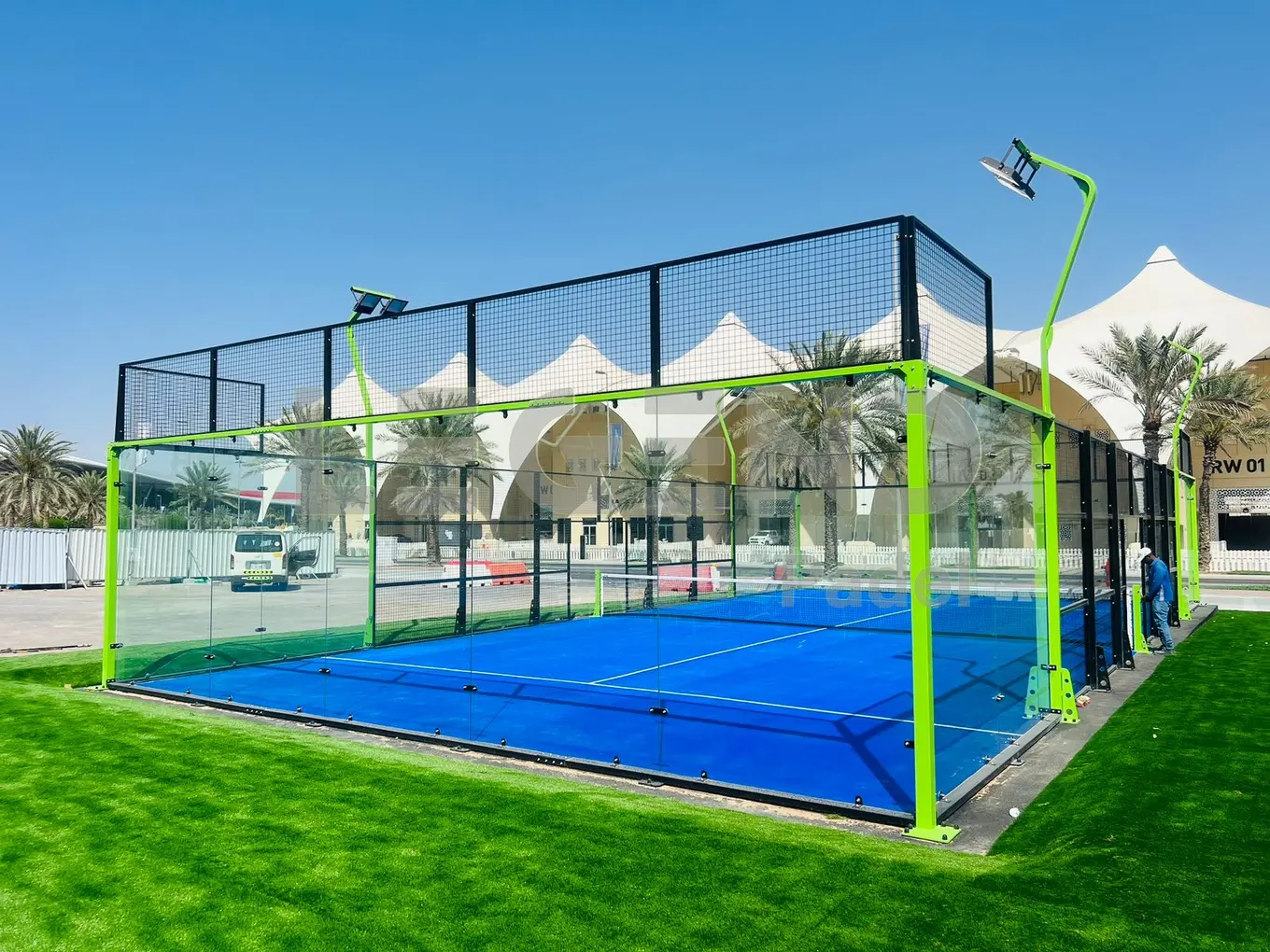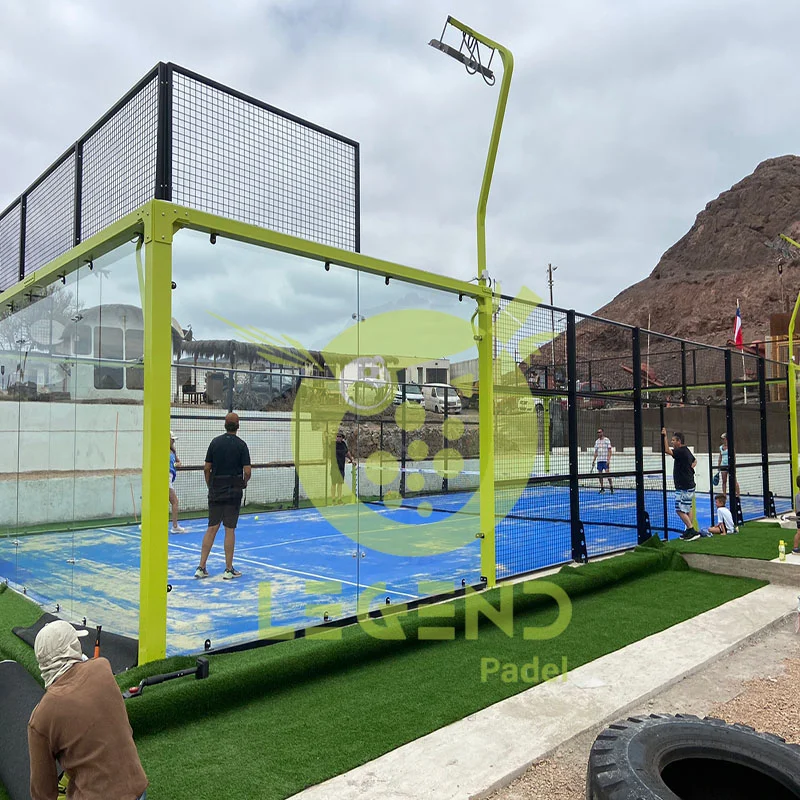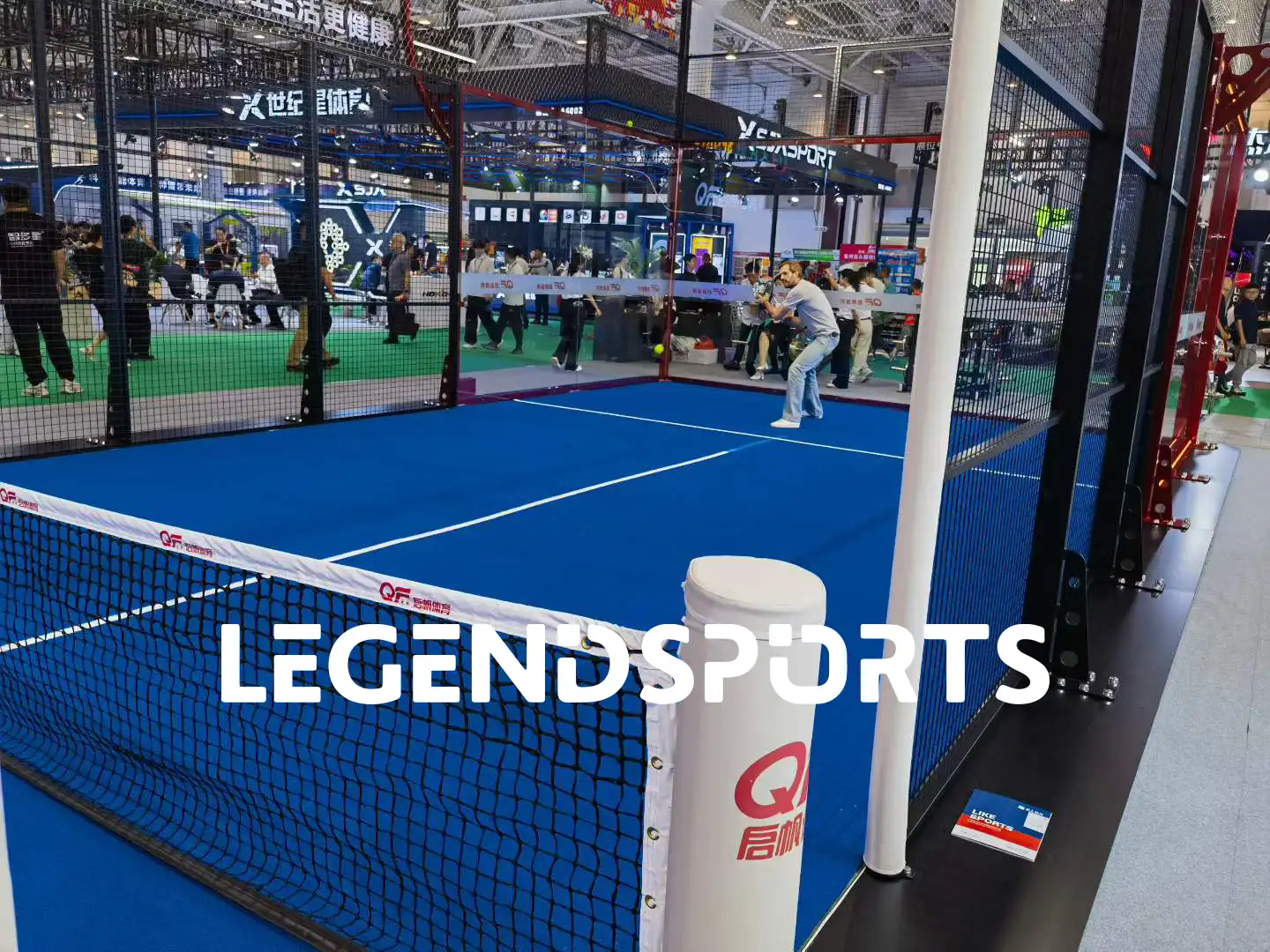



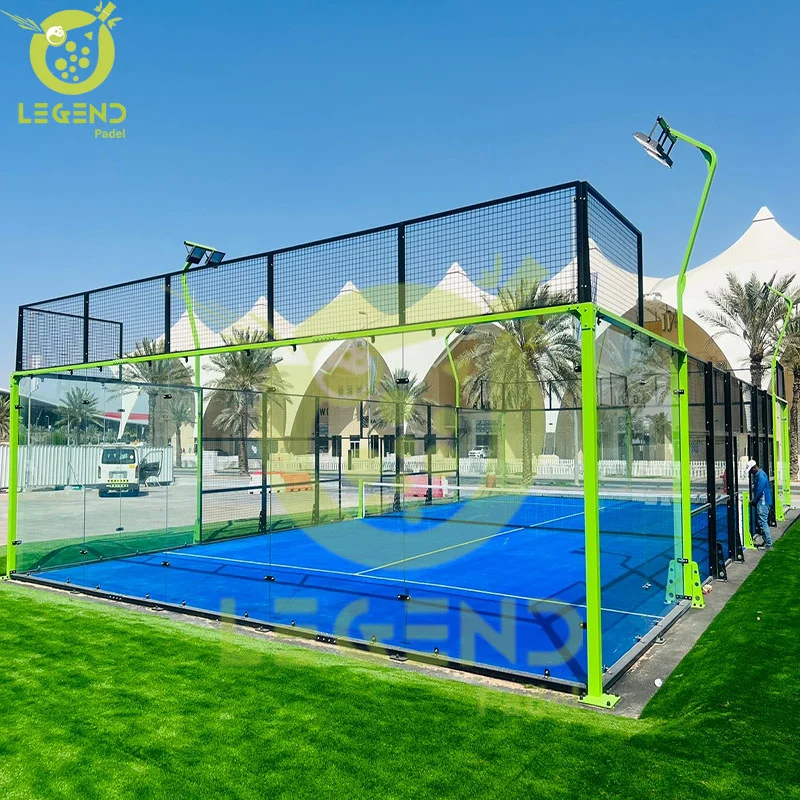
A modular design Padel Court system forms a key foundation choice for challenging sites. Uneven ground, limited access, and an existing hardstanding can make a standard foundation plan hard to manage. The practical buying question is this. How does the suggested foundation handle surveyed levels, court compatibility, and local work? It is not about whether a supplier makes a general saving promise.
Why Uneven Sites Change the Foundation Brief
Start with the elevation problem
The product is made to build a level padel court on uneven and sloped ground. Its adjustable support feet have a 150-800 mm range. They are intended to compensate for elevation differences. They help create a level foundation platform. They reduce extensive ground leveling. They adapt to different site conditions.
That capability still needs a site assessment. It does not remove every need for drainage design. It does not remove every need for access preparation or local engineering. For a German club comparing an existing yard with a new development, the first record should be a survey. This survey shows high points, low points, finished levels, and the route for materials.
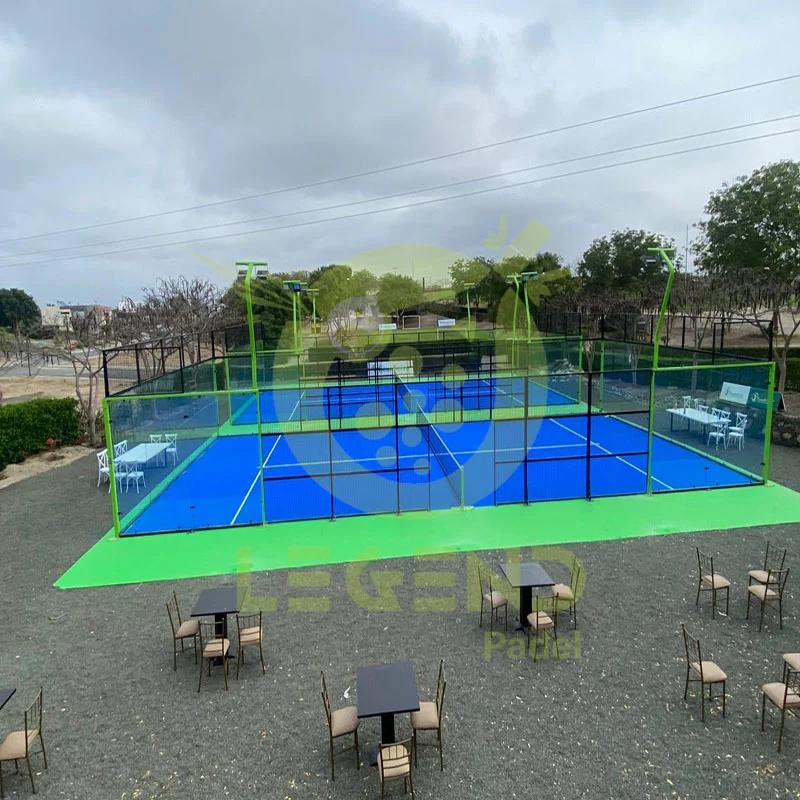
Ask what the system does not decide
A modular foundation can address level differences within its stated range. But it does not set the operating programme. It does not determine who prepares the surrounding site. Ask the supplier to identify the boundary between modules, drainage, ramps, steps, power, and the final playing surface.
See the modular padel court foundation system when building the product comparison. The page is a product reference. The site survey remains the project control document.
Use Adjustable Supports Against a Real Survey
Connect the support range to finished levels
Survey the high and low points first. Survey the drainage path, access route, and proposed court level before asking for a layout. The 150-800 mm range should be shown against those points. This comes with an explanation of where support feet sit and how the finished edge meets the surrounding ground.
A useful RFQ includes the survey assumptions and level datum. It should also identify who confirms any retaining, drainage, or access work that sits outside the foundation supply.
Keep player and service routes level enough to use
The foundation creates a defined platform. But the surrounding site still affects entrances, ramps, steps, water management, spectator movement and maintenance access. Walk the route from unloading point to court. Walk the route from reception to the playing area. A technically level court can still be difficult to operate if the approach is ignored.
We recommend recording those routes in the same drawing set as the foundation. This ensures revisions do not separate the court from its daily use.
Know What the Modular Frame Contains
Check the steel framework and connections
The foundation uses a welded modular steel framework with an outer frame of 50 x 150 x 3.0 mm high-quality steel tube. It has internal beams of 40 x 80 x 3.0 mm high-quality steel tube. It has purlins of 30 x 50 x 2.0 mm high-quality steel tube. One complete foundation consists of 30 modular steel frames connected with 304 stainless steel fasteners.
These are configuration facts to check against drawings and a material schedule. They are not a blanket performance promise for every project. Ask how modules are labelled. Ask how damaged parts are handled and which replacement details the operator should keep.
Confirm the surface and court interface
The foundation surface uses 140 x 20 mm high-quality solid plastic boards installed across the steel foundation frame. The standard configuration is QF-BQ04 Padel Court. Customized configurations are available for other padel court models according to court dimensions, structural requirements, and project conditions.
The court compatibility statement should identify the court dimensions. It should identify fixing points, finished level, and any project-specific changes. A surface board does not solve every drainage, access, or ground issue by itself.
Ask for the exact interface drawing before the foundation is released to production. This is particularly useful when an existing site has a non-standard edge. It is also useful when a club wants more than one court type over time.
Where a Modular Padel Court Can Fit
Compare club, resort and development contexts
The listed application scenarios are hotels and resorts, sports clubs, commercial developments, uneven outdoor sites, sloped areas, existing spaces with elevation differences, and flexible sports projects.
Those scenarios are a starting point for a site discussion. A hotel may prioritise guest circulation and appearance. A club may prioritise timetable capacity. A commercial development may need a phased layout. The foundation decision should follow the use case. It should not follow a generic claim that every project is equally suitable.
Include access and future phases
Check turning space, unloading, storage, working clearance, and the route for maintenance equipment. If a second court may be added later, reserve compatible access. Record the relationship between the first foundation and the next phase. A modular approach can make coordination clearer. But future work still needs a controlled layout.
LEGEND SPORTS provides pre-sales consultation and project planning for padel court projects. The planning scope includes site condition analysis for indoor, outdoor, rooftop, and renovation projects. It includes padel court type recommendations and multi-court layout planning.
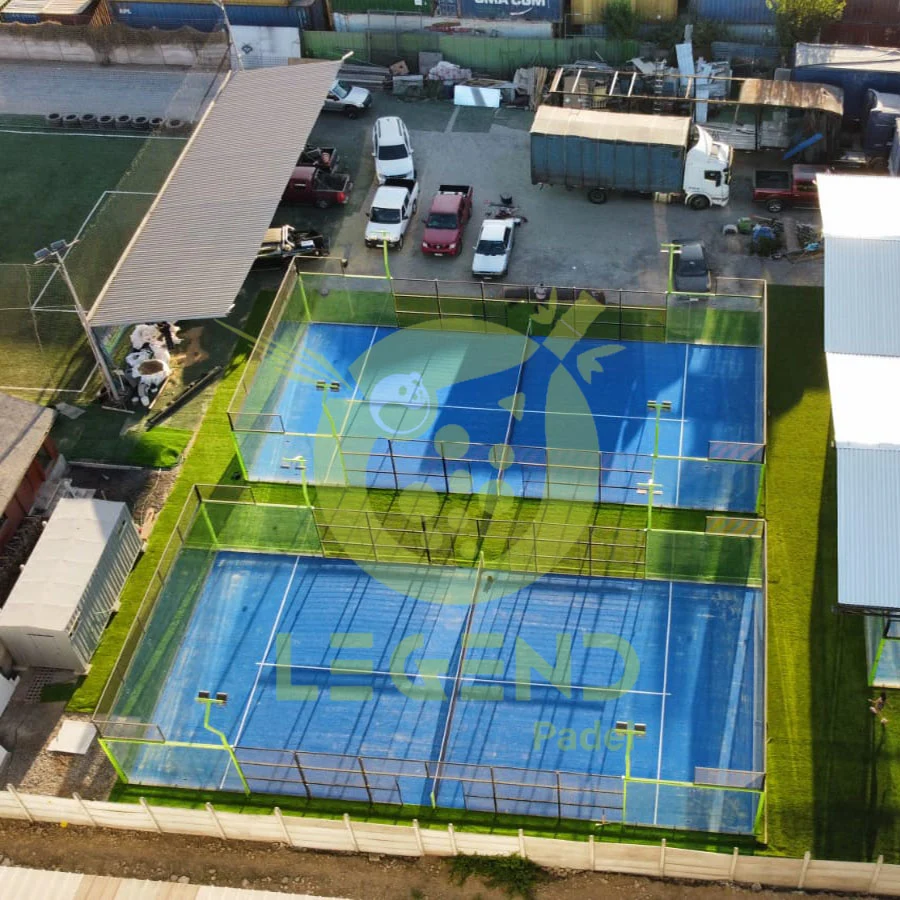
Move From Survey to Assembly With Clear Owners
Follow a documented workflow
The project workflow is clear. First, share project details. Then evaluate site and foundation requirements. Next, develop a customized foundation design. Then manufacture and quality-control the foundation components. Finally, deliver the modular components and provide installation support.
The listed assembly sequence is to position the modules. Then connect the frames. Next, adjust the support feet. Then level the foundation. Finally, install the padel court. Ask for drawings, a step-by-step manual, video guidance, and the technical contact before production.
Define local tasks before dispatch
A modular system does not mean every civil or site task disappears. Confirm drainage, edge treatment, power, access preparation, equipment unloading, and any local installation coordination. Keep those items outside the supplier scope. This allows a German club to brief its contractor without guessing what the modules include.
For a practical sequence, see the padel court foundation installation guide.
Compare a Modular Foundation Quote
Technical questions
Ask for the surveyed level range. Ask for support-foot positions, steel tube schedule, frame count, fastener specification, surface-board details, court interface and maintenance access. Request a drawing revision that shows the finished level and surrounding routes.
Commercial and handover questions
Ask which packing, unloading, assembly guidance, local work, and acceptance checks are included. Record what happens if the site survey changes. Record who approves a revised configuration. The padel court products page can help compare court categories. But the quotation should identify the actual system and its boundaries.
Preguntas frecuentes
Q: What is a modular design Padel Court system?
A: It is a court foundation made from connected modules with adjustable supports. It is designed to create a level platform on sites with elevation differences.
Q: Can a modular foundation be used on sloped ground?
A: It is designed for uneven and sloped ground within the stated 150-800 mm support range. This is subject to a project survey and local site review.
Q: What does one complete foundation contain?
A: The stated configuration uses 30 modular steel frames connected with 304 stainless steel fasteners. It also includes the specified surface boards.
Q: What should a buyer request before ordering?
A: Request the survey assumptions, level drawing, material schedule, court interface, assembly guidance, responsibility split, and acceptance checks.