

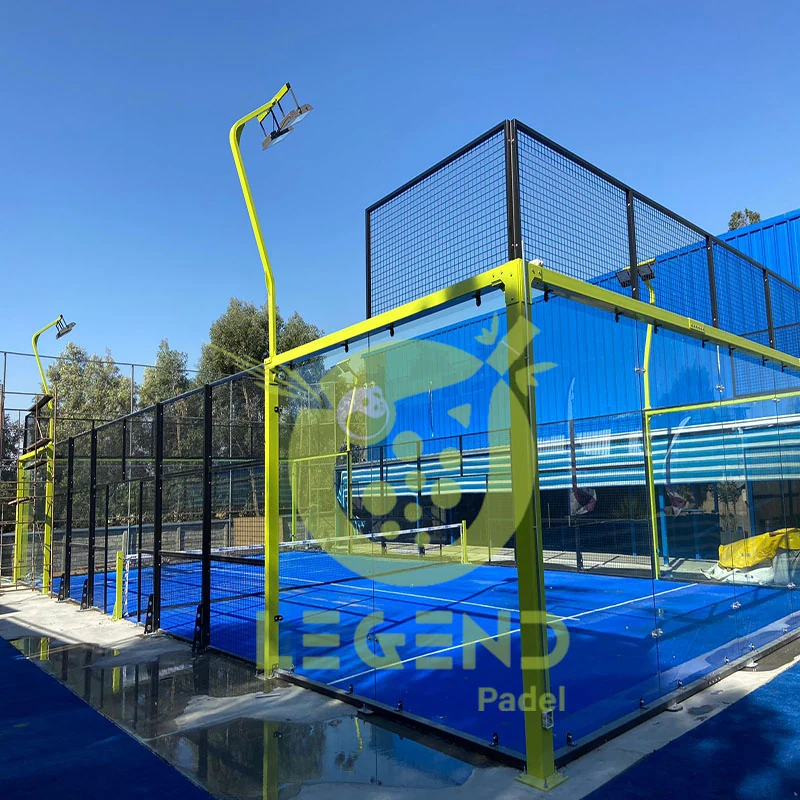
Germany is no longer an experimental padel market. The FIP World Padel Report 2025 estimated 875 courts and 350,000 amateur players; another industry report found German gross booking value per court rose 48% in 2024. Yet a purchase quote does not show whether a project will open on time or produce reliable playing hours.
A useful padel court budget follows the whole asset: equipment, site work, freight, assembly, approvals, utilities, and maintenance. This guide builds a realistic padel court cost in Germany from purchase to handover. The practical goal is not the lowest invoice; it is the lowest risk-adjusted cost for each bookable hour after German weather, approvals, energy, and maintenance are included over ten years.
How Much Does a Padel Court Project Cost in Germany?
Separate the Court Package from the Total Project Cost
The equipment package normally covers the frame, tempered-glass panels, netting, turf, net, lighting, and fittings. The total project cost also includes surveys, structural calculations, site preparation, drainage, electrical work, unloading, local labor, permits, and contingency. Ask suppliers to mark every line included, excluded, or provisional so each German padel court budget is comparable.
Use a Two-Court German Benchmark Carefully
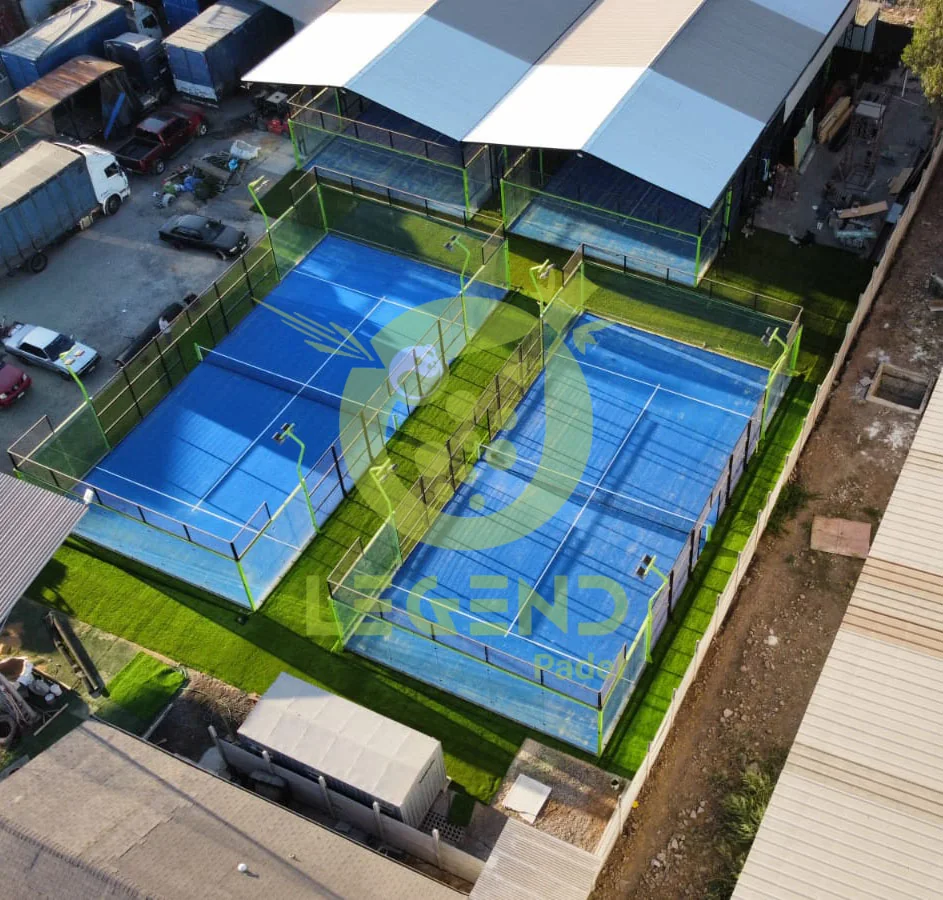
A German two-outdoor-court example totals €129,000 net: €58,000 for courts and installation, €68,000 for site foundation works, €1,500 for floodlight electrical work, and €1,500 for unloading equipment; engineering and delivery are included.
It is a benchmark, not a quotation. Soil, access, city requirements, and specifications change the result.
Indoor vs Outdoor Padel Court Costs: Which Budget Model Fits Germany?
What Raises Outdoor Padel Court Cost?
An outdoor padel court may avoid hall rent and ventilation upgrades, but it brings more climate exposure. Budget for drainage, wind and snow calculations, corrosion protection, glare-aware lighting, and weather allowances. Seasonal revenue means the least expensive build can have the highest cost per playable hour.
What Raises Indoor Padel Court Cost?
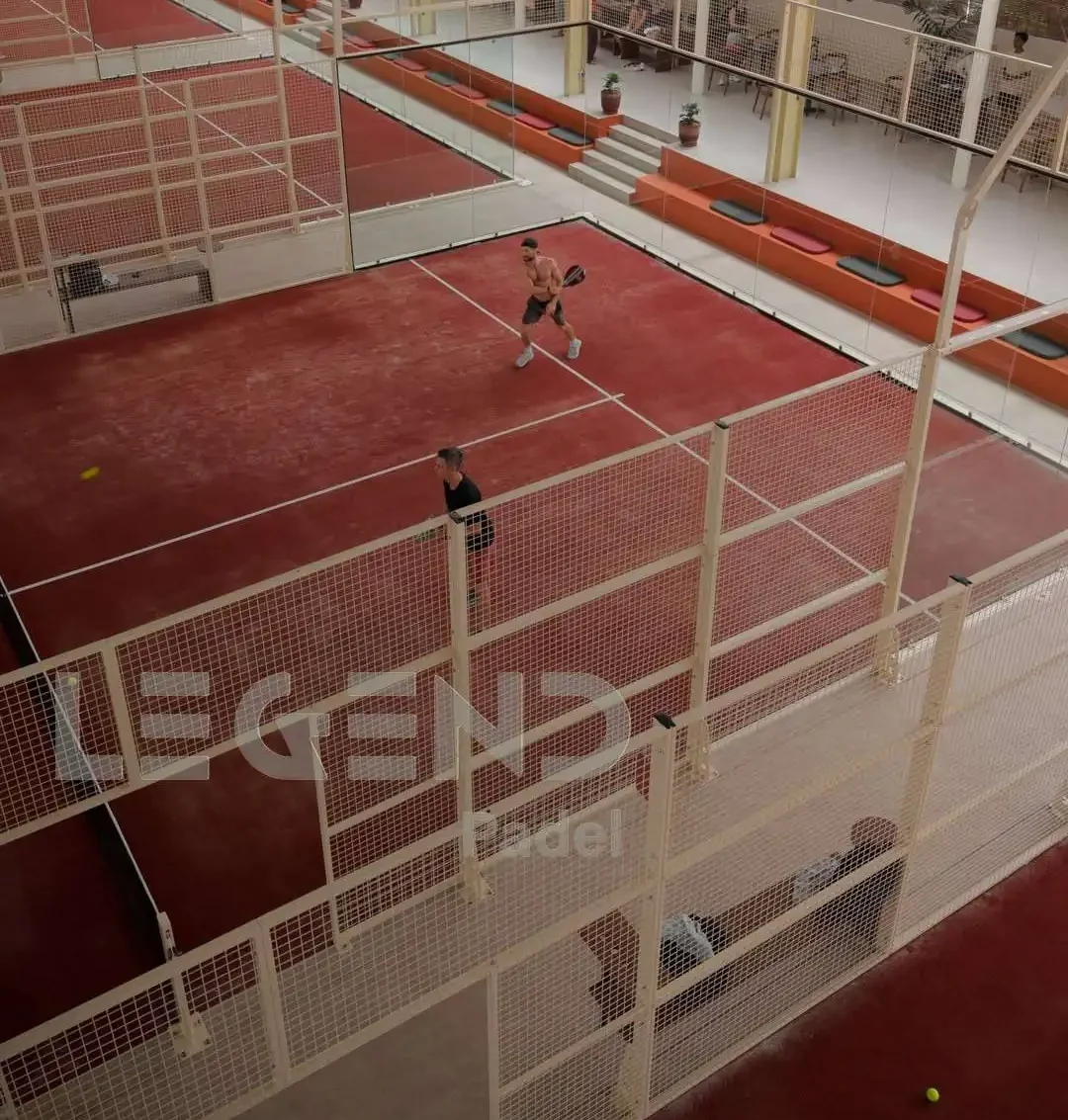
The cost of an indoor padel court begins with the building. Check clear height, fire routes, lighting, ventilation, acoustics, floor level, glass access, and landlord restrictions.
Reusing a warehouse or sports hall can avoid a new building program. One recent European case converted insulated storage into a two-court venue and attracted over 3,500 players in its first year, showing why controlled conditions can justify a higher fit-out.
Compare Cost per Playable Hour, Not Purchase Price
Model bookings through winter, rain, and dark afternoons. Indoor sites offer steadier availability; outdoor sites work where land, drainage, and neighborhood conditions are favorable. Choose the stronger ten-year ratio between capital cost, operating cost, and bookable hours.
Which German Climate and Approval Costs Belong in the Padel Court Budget?
Design for Rain, Freeze Cycles, Wind, and Snow
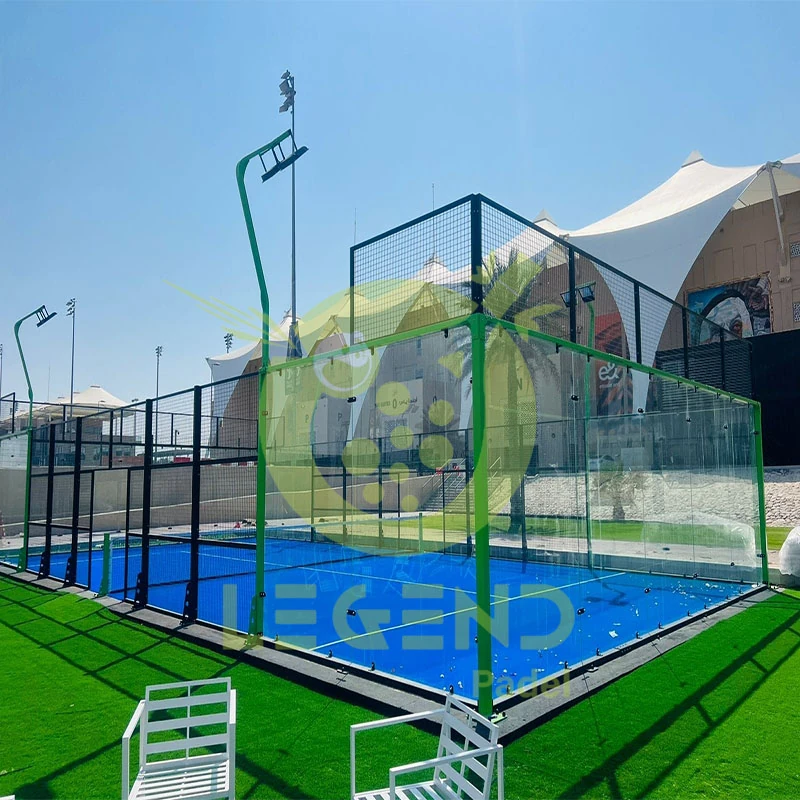
A climate-resistant padel court needs site-specific calculations, rapid drainage, protected steelwork, secure fasteners, and temperature-stable turf. Walls are usually made of tempered glass, with netting completing the enclosure.
For exposed projects, the Max Pro Panoramic Padel Court-PD03 uses 150 × 150 × 3 mm corner columns, 12 mm tempered glass, and eight 200 W LEDs. Its reinforced geometry supports, but never replaces, local engineering.
Price Noise, Lighting, and Permission Work Early
German urban projects can be delayed by noise, operating-hour limits, lighting spill, and approval. Commission an acoustic study before fixing the layout, orient impact zones away from neighbors, and specify vibration-isolating glass connections.
Confirm Delivery Access Before Ordering
Freight planning fails if a full-size vehicle cannot reach the unloading point. Confirm turning space, weight limits, glass storage, unloading position, and dry staging. Coordinating courts can reduce freight per unit; selected configurations allow our modular packing to place four courts in one 40-foot high-cube container.
From Purchase to Handover: What Does Padel Court Installation Include?
Site Survey, Layout, and Engineering
A reliable padel court installation in Germany starts with a measured survey. Freeze orientation, levels, clearances, drainage outlets, power routes, and structural actions before manufacturing. Verify indoor overhead clearance and emergency circulation; close outdoor site and climate assumptions before ordering.
Manufacturing, Shipping, and Assembly
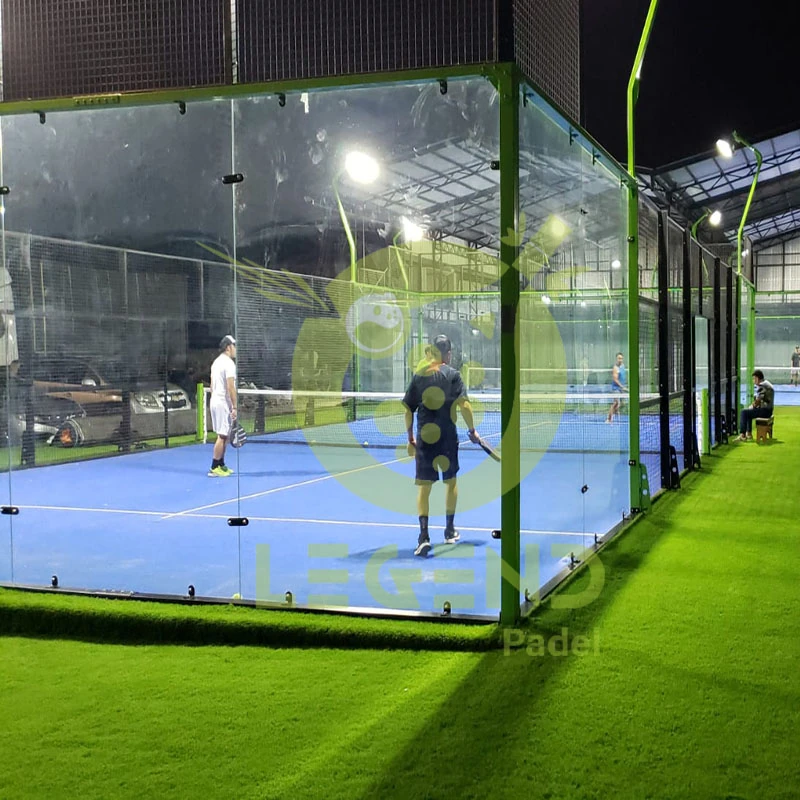
Manufacturing follows approved drawings and a numbered packing list. The team checks levels, installs the frame, positions tempered glass and netting, lays turf, fits the net and LEDs, and completes electrical connections.
With the site ready, a trained crew can typically assemble one modular court in three to four days using bilingual manuals and 3D guidance. See our Germany installation and climate-proofing guide.
Inspection, Documentation, and Handover
Handover verifies frame alignment, glass condition, fastener torque, turf finish, net height, lighting, drainage, and access. Record serials, spares, warranties, cleaning routines, and inspection intervals. A signed defect list and photographs support final payment and establish a maintenance baseline.
How Can Operators Lower Lifetime Cost Without Cutting Performance?
Match Each Court Model to Its Revenue Role
Courts need not share one specification. For daily bookings, the Pro Panoramic Padel Court-PD04 combines a 20 × 10 m layout, 12 mm tempered glass, textured 12 mm turf, and eight 200 W LEDs.
PD03 suits are exposed to outdoor positions. A central Extreme Super Panoramic Padel Court-PD06 adds clearer event and media views. This mix puts capital where it earns a return.
Use Customized and Modular Features Selectively
At LEGEND SPORTS, we use approved site data for a customized padel court configuration covering RAL frame colors, turf colors, logos, lighting, and packing.
For leased or temporary sites, the Mobile Pro Padel Court-PD05 reduces permanent intervention and preserves relocation value. Add scoring, recording, or booking integrations only when they support coaching, events, or measurable use.
Fund Maintenance Before Opening Day
Reserve annually for turf care, glass cleaning, lighting, fastener checks, repairs, and eventual surface replacement. Track energy and maintenance per booked hour, then adjust lighting and cleaning based on real usage. This turns padel court maintenance costs into a managed operating line.
FAQ
Q: How much does a padel court cost in Germany?
A: No single price is reliable. A two-outdoor-court German example reaches €129,000 net with supply, installation, site foundation works, electrical work, and unloading. A site-specific quotation should also cover approvals, drainage, access, labor, tax, and contingency.
Q: Is an indoor padel court cheaper than an outdoor padel court in Germany?
A: Project economics differ. Indoor projects add hall rent or fit-out, ventilation, fire, acoustic, and lighting work; outdoor projects add drainage, weather engineering, and seasonal revenue risk. Compare cost per bookable hour over ten years.
Q: How long does a padel court installation in Germany take?
A: Modular assembly can take three to four days per court after the site, power, access, and drainage are ready. Surveys, permits, manufacturing, freight, and local preparation occur before that short window.
Q: What approvals are needed for a padel court in Germany?
A: Requirements depend on the federal state and municipality. A project may need building approval, structural calculations, noise and lighting reviews, indoor fire documentation, and operating-hour conditions. Confirm the local route before ordering.
Q: Which padel court is best for German weather?
A: The right system depends on wind, snow, rain, exposure, and usage. Reinforced PD03 suits exposed outdoor sites; indoor operators may prioritize PD04 or relocatable PD05. Local engineering remains essential